
Black Friday for small shops: a loyalty plan that rewards your regulars
 Oleksii Andriiuk
Founder
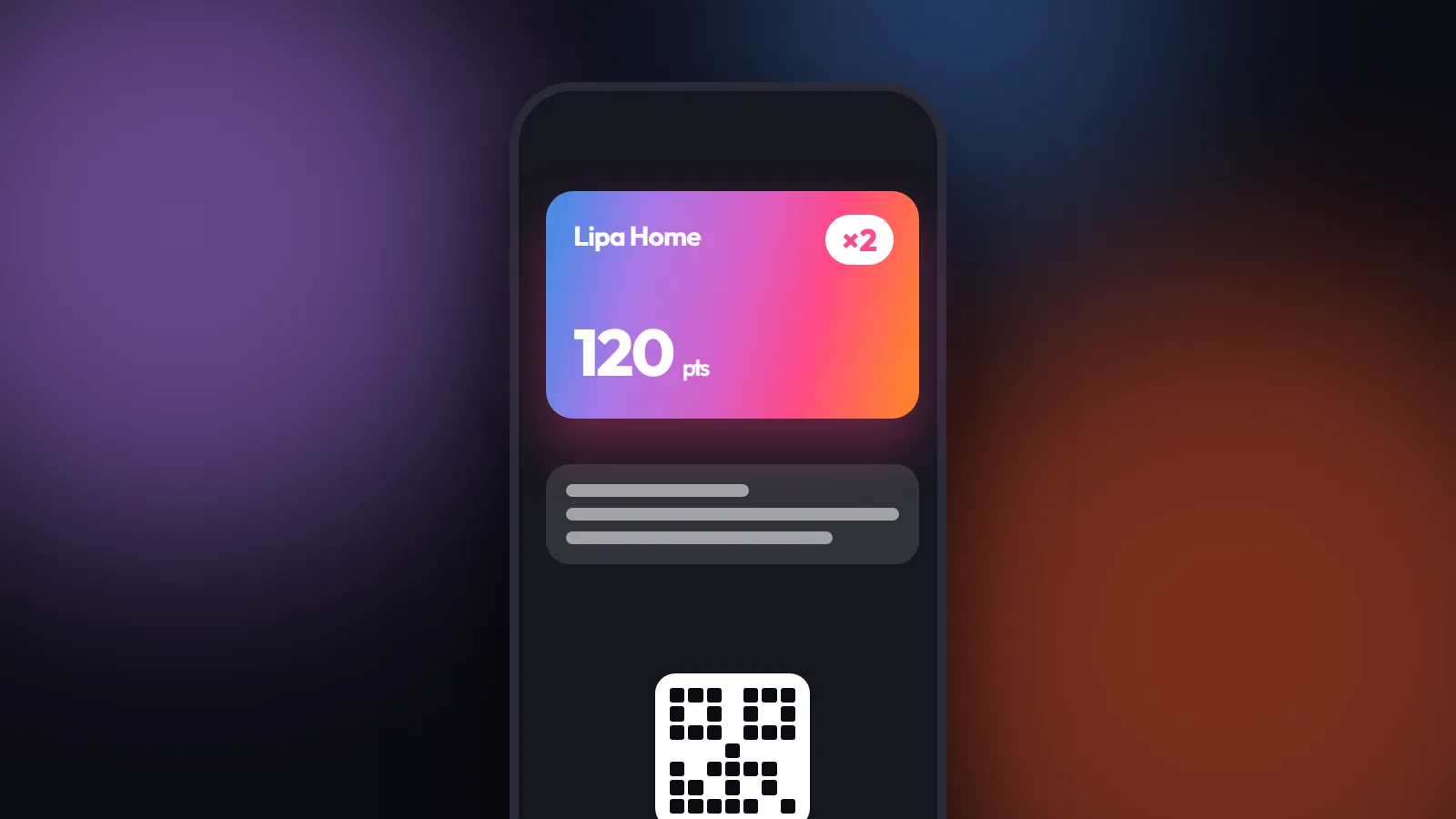
If you run a shop, Black Friday on 27 November 2026 asks you to hand 20 or 30 percent to people who may never walk in again. A better plan for most small shops is to keep your prices steady, give the regulars on your loyalty card double points from Thursday 26 to Sunday 29 November, and use the weekend to get new customers onto the card. Below is the dated plan from today to January, with four messages you can copy.
I'm Oleksii, I build Loyalius, and I'd rather see you spend a November reward on someone who has already bought from you than on a stranger who is hunting for the lowest price.
Why I would not discount everything
A blanket discount has two problems. It costs you the full amount on every sale, including the sales you would have made anyway. And it teaches people to wait: the customer who paid full price in October now knows what November looks like.
There is a trust problem too. While researching this post I found a RetailDetail report from November 2025 on a Dutch survey saying three-quarters of retailers misrepresent their discounts, and on a Belgian newspaper analysis that judged one in four promotions at big electronics retailers misleading (RetailDetail). The usual trick is to raise the price first and "cut" it later. Customers have seen enough of that to doubt every red sticker, yours included.
The EU has a rule for this: when you announce a price reduction, the earlier price you show has to be the lowest one from the 30 days before (Directive 2019/2161). A reward on a loyalty card is a different thing from a lower price on the shelf, but how your country treats a particular offer is a question for your national consumer authority or your adviser, not for me. This is not legal advice.
The maths, with example numbers
These numbers are an example, not a benchmark. Say a typical basket in your shop is 30 €, and 100 baskets go through on Black Friday weekend.
| 20 % off for everyone | Double points for cardholders | |
|---|---|---|
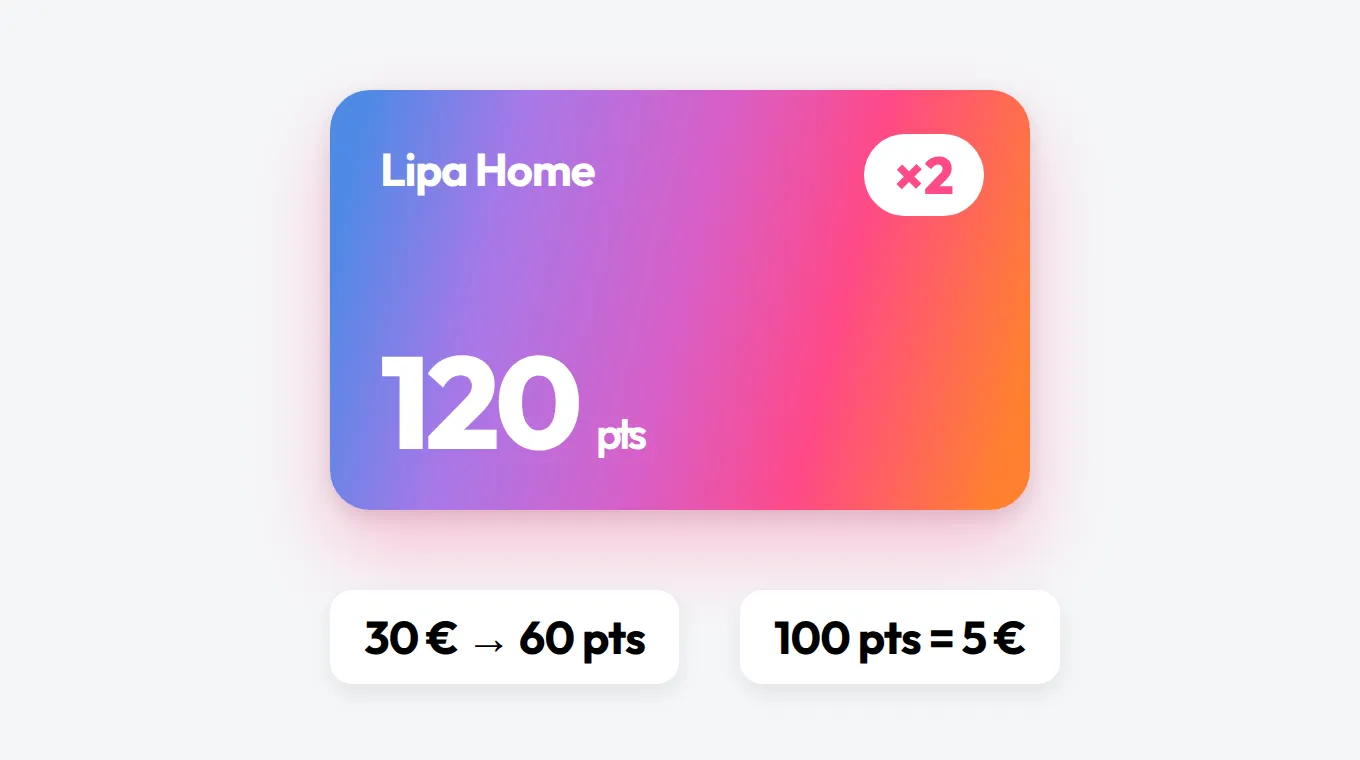
| What it costs per basket | 6 € | 3 € (60 points on a 30 € basket) |
| When you pay | At the till, on the day | Only when the points are spent, on a later visit |
| Who gets it | Everyone, including your weekly buyers | People on your card |
| What you keep | Nothing: they have no reason to return | A card in their Wallet and a balance to come back for |
Here I assume 1 point per euro and a reward of 5 € for every 100 points, so normal earning is 5 % back and double is 10 %. If 40 of the 100 baskets belong to cardholders, the weekend's reward bill is 40 × 3 € = 120 €, and not all of it will be claimed. The 20 % version costs 600 €. A discount may bring in more people, and that matters. But ask what you pay for each extra person, and whether you see them again in January.
The plan, week by week
One idea runs through the whole plan: cardholders first, everyone else welcome to join. The first three weeks are about getting as many people as possible onto the card before the weekend, because a message only reaches people who are on it.
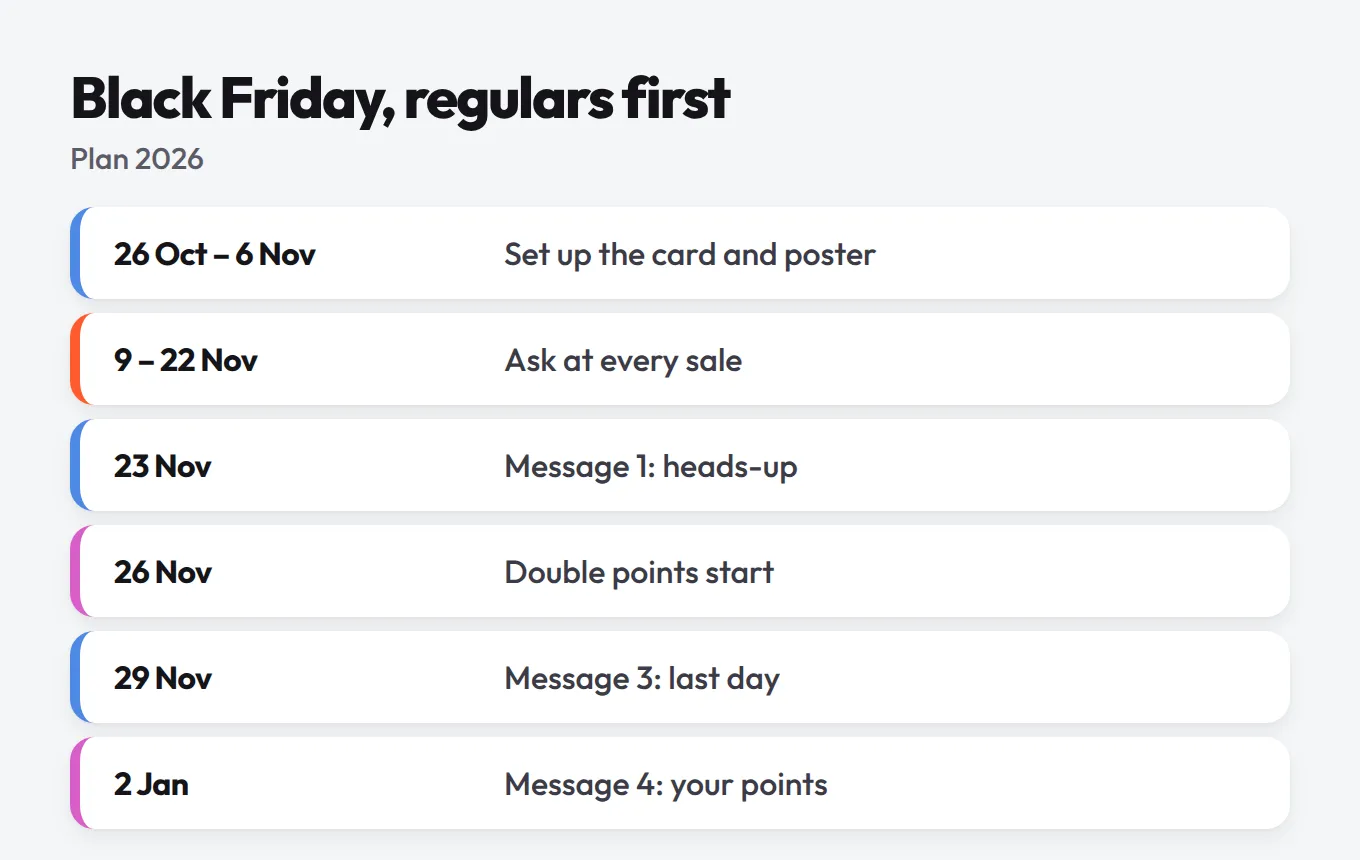
| When | What you do |
|---|---|
| Mon 26 Oct – Fri 6 Nov | Set up: pick the card, name the reward, print the QR poster, brief the team |
| Mon 9 – Sun 22 Nov | Ask at every sale; poster by the till |
| Mon 23 Nov | Message 1: the heads-up |
| Thu 26 Nov | Message 2: double points start |
| Fri 27 – Sun 29 Nov | Black Friday weekend; poster on the door; Message 3 on Sunday |
| Mon 30 Nov | Nothing. Let them breathe |
| Sat 5 – Sun 6 Dec | Optional: a small treat for St Nicholas Day, which people mark on or around 6 December in Germany, Czechia, Slovakia, Poland and Ukraine |
| Mon 14 Dec | Optional: a last-orders reminder if you sell gifts |
| Sat 2 Jan | Message 4: "your points are waiting" |
| Sun 31 Jan | Count what happened |
Set up in week one
Pick a points card, because points scale to a big basket and a small one, and double points is easy to say. Decide the reward in euros you are happy to pay out, and write it on the card in plain words. Then give your team one sentence to say at the till: "Do you have our card? It takes ten seconds, and this weekend it earns double." Staff who need to explain more than that will not explain it at all.
The offer
Double points for cardholders from Thursday to Sunday. People who join at the till during the weekend start earning double straight away, which gives the queue a reason to sign up. On our side, boosts like this are called earning boosts and sit in the Pro plan at the time of writing (pricing, October 2026). If your plan does not have them, keep earning normal and make Thursday the offer: cardholders hear first and get the first pick of the new stock.
Four messages to copy
A push message on a Wallet card shows up on the lock screen, so it has to work in one glance. Four messages in six weeks is plenty; I would not send a fifth. Change the shop name and the dates, keep them short, and send only to people who agreed to hear from you.
- Mon 23 Nov: "Black Friday week at Lipa Home: cardholders earn double points from Thursday 26 to Sunday 29 Nov. Just show your card."
- Thu 26 Nov: "It starts today, a day early for you. Double points on everything until Sunday."
- Sun 29 Nov: "Last day of double points. Thank you for being one of our regulars."
- Sat 2 Jan: "Happy new year! You have 120 points waiting at Lipa Home. Come in this month and turn them into a treat."
Message 4 is the one most shops skip, and it is the one that pays. January is quiet, and everyone you rewarded in November now has a reason to walk in.
What to count afterwards
Four numbers, written down on the Monday after: new cardholders signed up between 9 and 29 November; cardholder visits on the weekend compared with the same weekend last year; points given out against points spent by 31 January; and how many cardholders came back in January at all. If you are on Growth, the "Did it work?" report compares a messaged group with a held-back group, which tells you whether the messages did anything or people would have come anyway.
Your next 30 minutes
Open a notes app and write three lines: the reward you are happy to pay (in euros), the sentence your team will say at the till, and the date you will print the poster. Everything else in this plan can follow from those three. If you want to see how a card looks before you commit, the 14-day trial needs no payment card.