Loyalty program for a barber shop: a stamp card built for the haircut cycle
 Oleksii Andriiuk
Founder
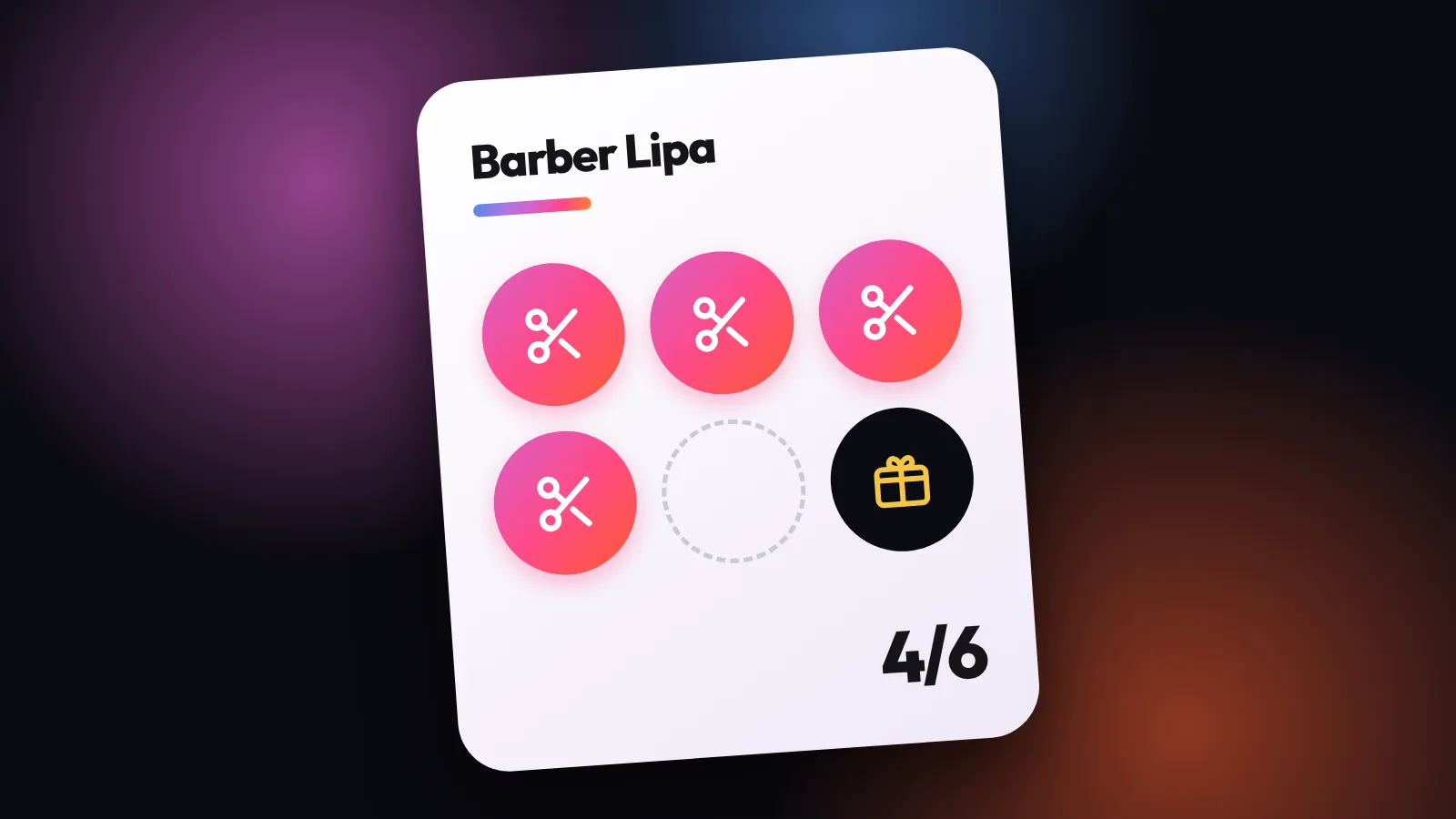
A barber's regular comes back every three to four weeks, and the one who skips a cycle is usually already sitting in someone else's chair. A loyalty program for a barber shop works when it follows that rhythm: a stamp card that fills in about six haircuts, a reward that costs you little, and one message to the customer who has gone quiet. Below is a setup you can copy and a weekly routine for the team.
I'm Oleksii, I build Loyalius, and I went looking this week for what barbers are told to do. The first results were mostly punch-card templates. A ten-stamp card is far away when your customer comes once a month, so I'd start somewhere else.
Why a barber shop is not a café
A café regular might come five times a week, so a ten-stamp card fills in a fortnight. A barber's regular is on a monthly clock. One barbershop write-up I read models a regular at 13 to 17 visits a year, which it labels an assumption, not a statistic, and it matches what most owners will tell you. At 13 visits, ten stamps take about nine months. Most people will have lost the card, or the interest, long before.
There is a second difference: your biggest cost is chair time, not product. A free coffee costs the milk and the cup. A free haircut costs a 30-minute slot you could have sold. That changes what you should give away, and when.
The card: six stamps, a reward you choose
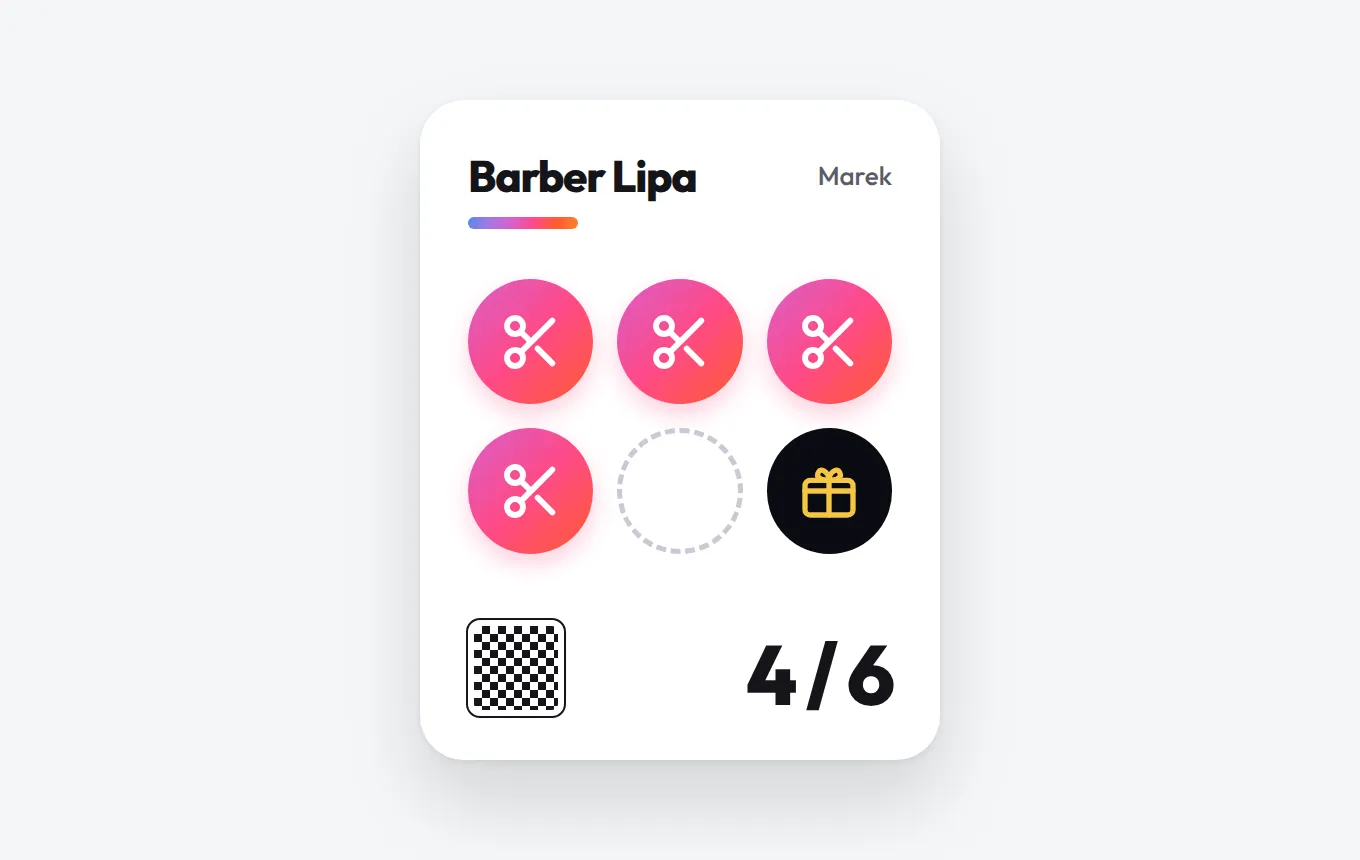
Here is the card I would set up for a shop with a 25 € haircut. One stamp per visit, six stamps, and the reward is a service you can fit into quiet hours: a beard trim, a hot-towel finish, or a wash and style.
The three obvious options, with example numbers (a 25 € cut, a regular who comes every four weeks, so 13 visits a year):
| Free cut at 10 stamps | Free cut at 6 stamps | Beard trim at 6 stamps | |
|---|---|---|---|
| Time to earn at 4-week visits | about 9 months | about 5-6 months | about 5-6 months |
| Rewards a year | 1.3 | 2.2 | 2.2 |
| List value given away a year | 32 € | 54 € | 22 € (at 10 € a trim) |
| Share of the customer's 325 € | 10 % | 17 % | 7 % |
| Takes a slot you could sell? | Yes | Yes | Only if you let it |
I'd pick the third. The numbers are an example, so put in your own prices, but the logic holds: a reward that takes a free 10-minute add-on instead of a full cut is cheaper, arrives sooner, and gives the customer something they would not have bought. And you can say when it applies: "valid Tuesday to Thursday before 3 pm" puts the cost in the hours that were empty anyway.
Do not make the card depend on one barber. Regulars often follow a person, which is natural, but the card should belong to the shop. If a barber leaves, the customer still has a reason to stay with the shop.
Getting the card into the habit
The card only works if people get it. The simplest place is the mirror: put the QR poster where the customer sits for twenty minutes with nothing else to look at. They scan it, add their name and a phone number or email, confirm a code, and the card lands in Apple Wallet or Google Wallet. No app, nothing to download.
Then give the team one sentence, said before the cape comes off: "Do you have our card? It takes ten seconds." If your till is connected, stamps come from the receipt. If it is not, the barber scans the card on any phone and taps once. Either way, the stamp is given at the chair, not remembered later.
One message for the customer who has gone quiet
Stamps do half the work. The other half is the person who was due ten days ago and did not book. Compare the two rhythms:
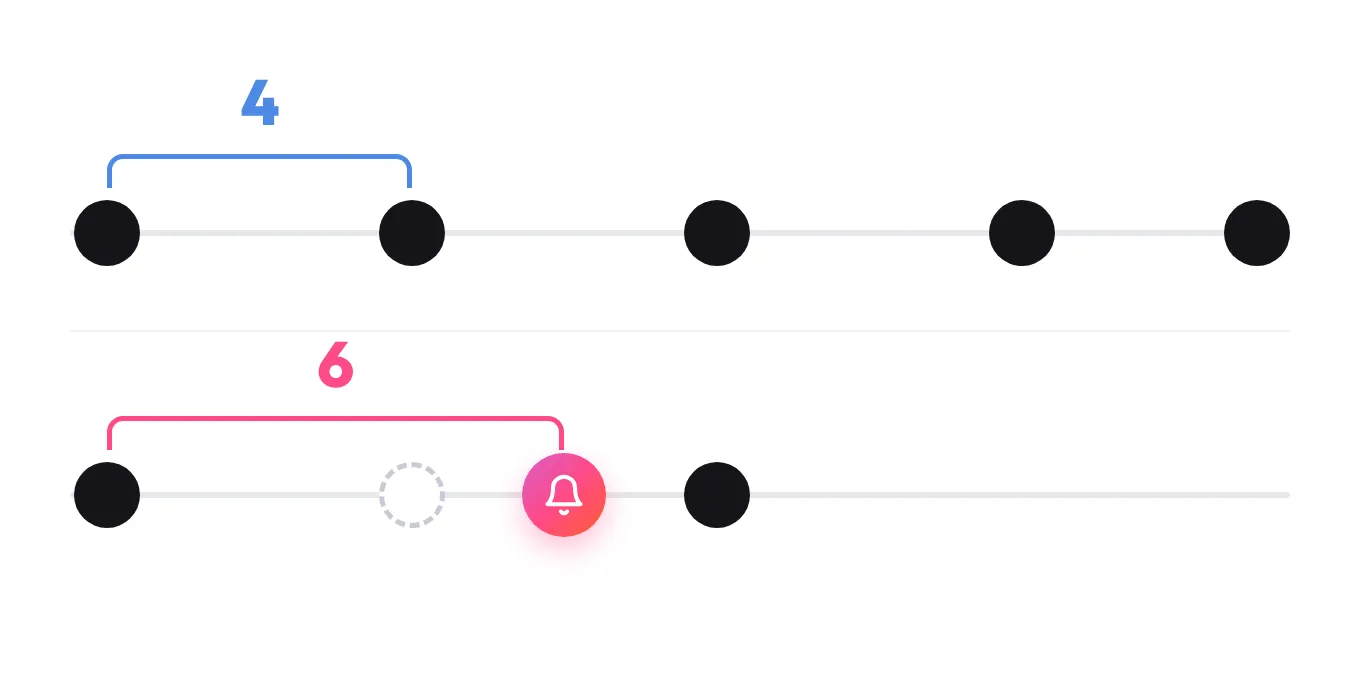
If the usual gap is four weeks, a message at six weeks is a nudge. At ten it is a goodbye. Set one win-back automation to fire after about six weeks without a visit, with a free stamp as the carrot. It lands on the lock screen as a push message on the card, which is one tap from booking.
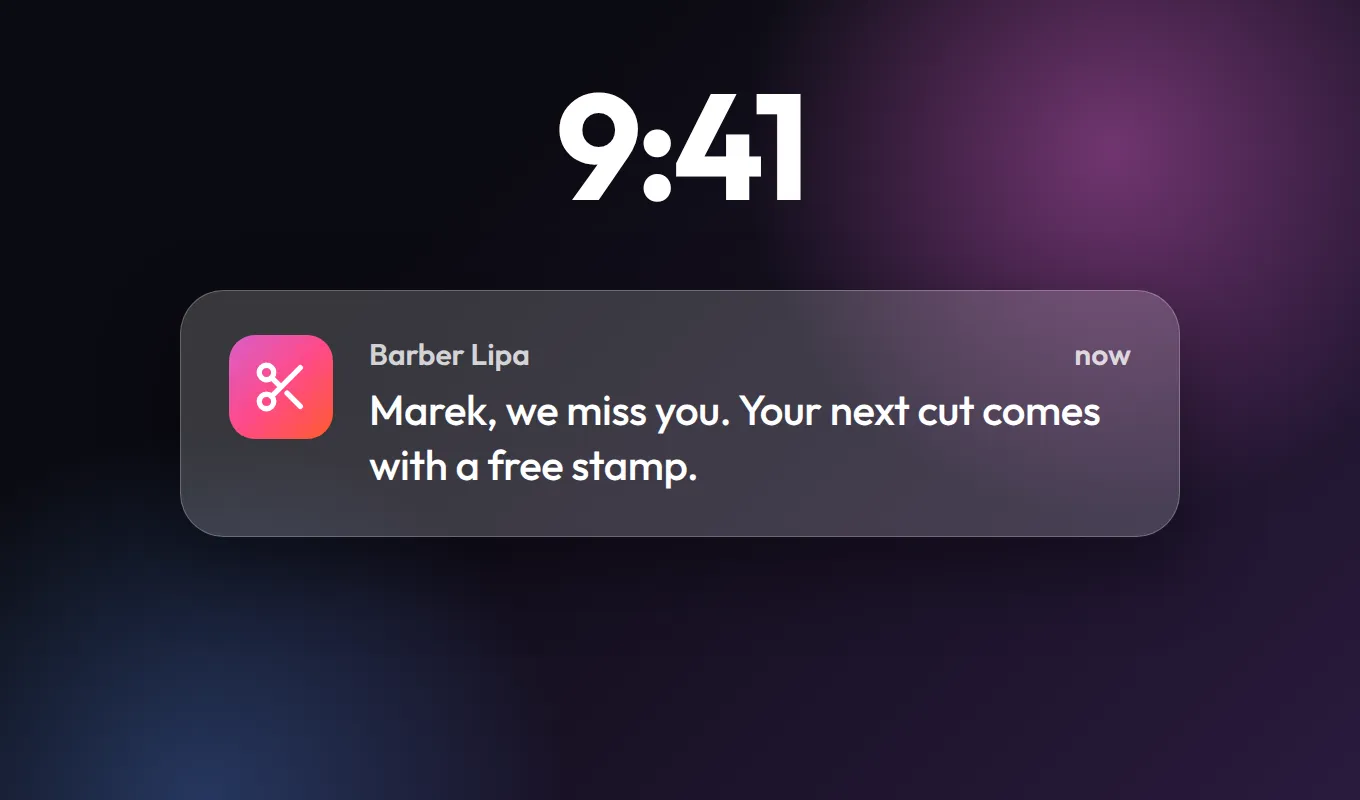
Keep it to one sentence and the customer's name. Send it only to people who agreed to hear from you; each customer picks what they receive. The GDPR defines consent as a freely given, specific, informed and unambiguous indication of what the person wants (Article 4, as of October 2026). Which exact rules apply to your shop is a question for your national data protection authority or your adviser, not for me. For how to write and time other messages, the Black Friday plan has four examples you can adapt.
A weekly routine for the shop
| When | What |
|---|---|
| Every cut | Ask about the card before the cape comes off; stamp at the chair |
| Monday | Check the poster is still at the mirror and the scan phone is charged |
| Wednesday | Look at the quiet hours in next week's diary; that is where the reward lives |
| Friday | Tell the team how many new cards came in this week |
| Once a month | Skim the list of people who stopped coming and decide whether the win-back wording needs a change |
What it costs
A single barber shop, however many chairs, is one location. The Starter plan is 19 € a month per location and includes stamps, push messages on the card, the QR poster kit, the staff scan app and two automations, which is exactly one win-back and one birthday treat (pricing, October 2026). The till connection comes with Growth. There is a 14-day trial and no payment card needed.
Start with the sentence
You don't need the whole plan on day one. Write the one sentence your team will say at the chair, decide which service is the reward and in which hours it is valid, and put the poster at the mirror this week. Everything else can wait until you see how many people ask.