
Gift cards for small business: 7 mistakes to fix before Christmas
 Oleksii Andriiuk
Founder
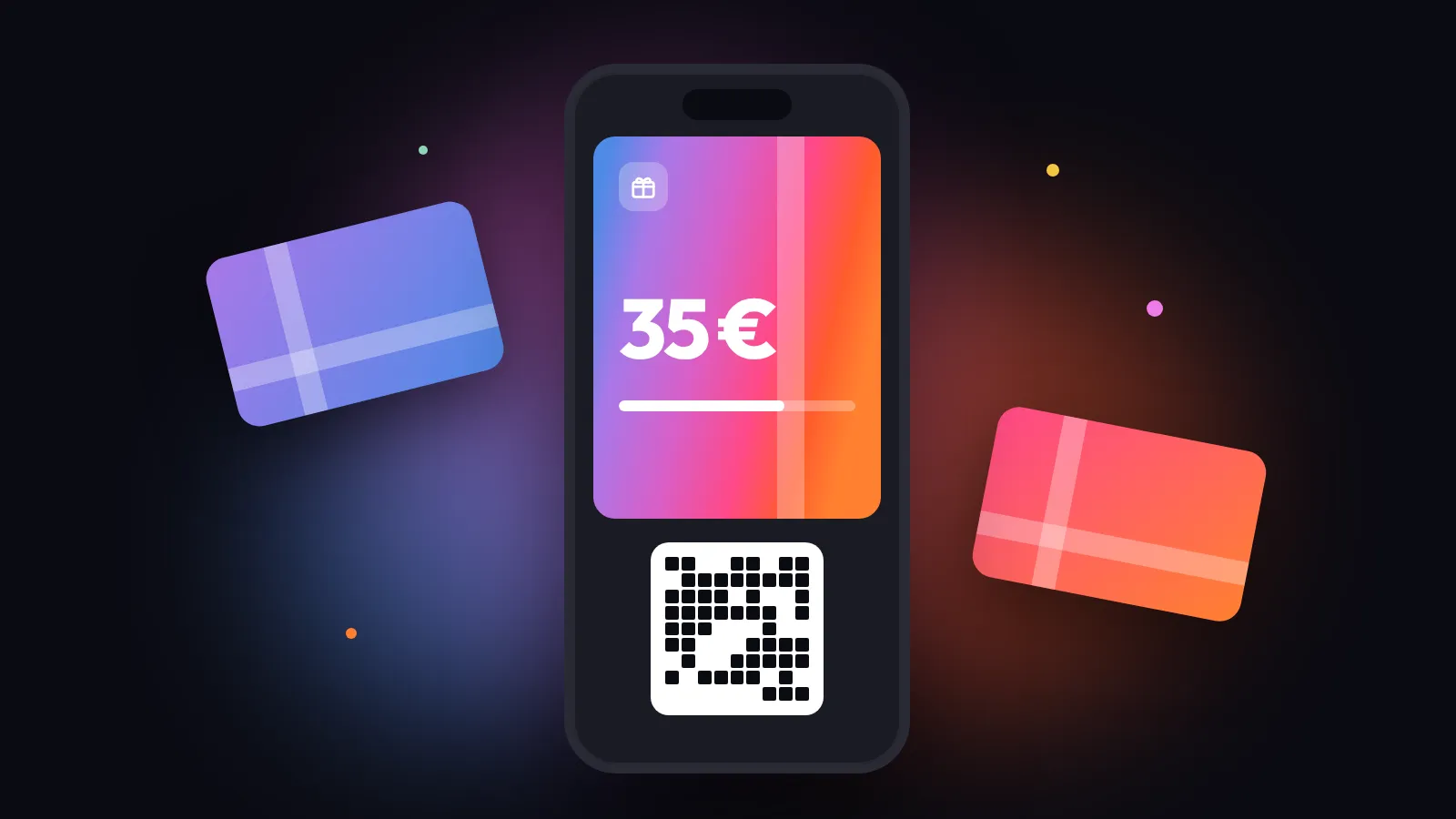
A gift card is the one Christmas product a small shop can sell without ordering any stock, and most of them sell in December. The usual mistakes are paper vouchers nobody can track, amounts that don't fit your prices, expiry dates that may not hold up, VAT booked at the wrong moment, and forgetting that the person who spends the card is a new customer. Fix these seven before December starts, and a gift card becomes a January visit, not only a December sale.
A gift card is an odd thing to sell. Someone pays you today for a visit from someone else, later, and you have no idea who that someone is. While researching this post I noticed that the clearest pages on how long a voucher must stay valid are written for shoppers, by consumer bodies. The shop owner gets the same rules, only later, at the counter, when a customer waves a three-year-old voucher at them. So here they are first, mistake by mistake, for the florist, the bookshop, the salon, the bakery and anyone else who will hear "do you do gift vouchers?" this December.
1. Paper vouchers kept in the till drawer
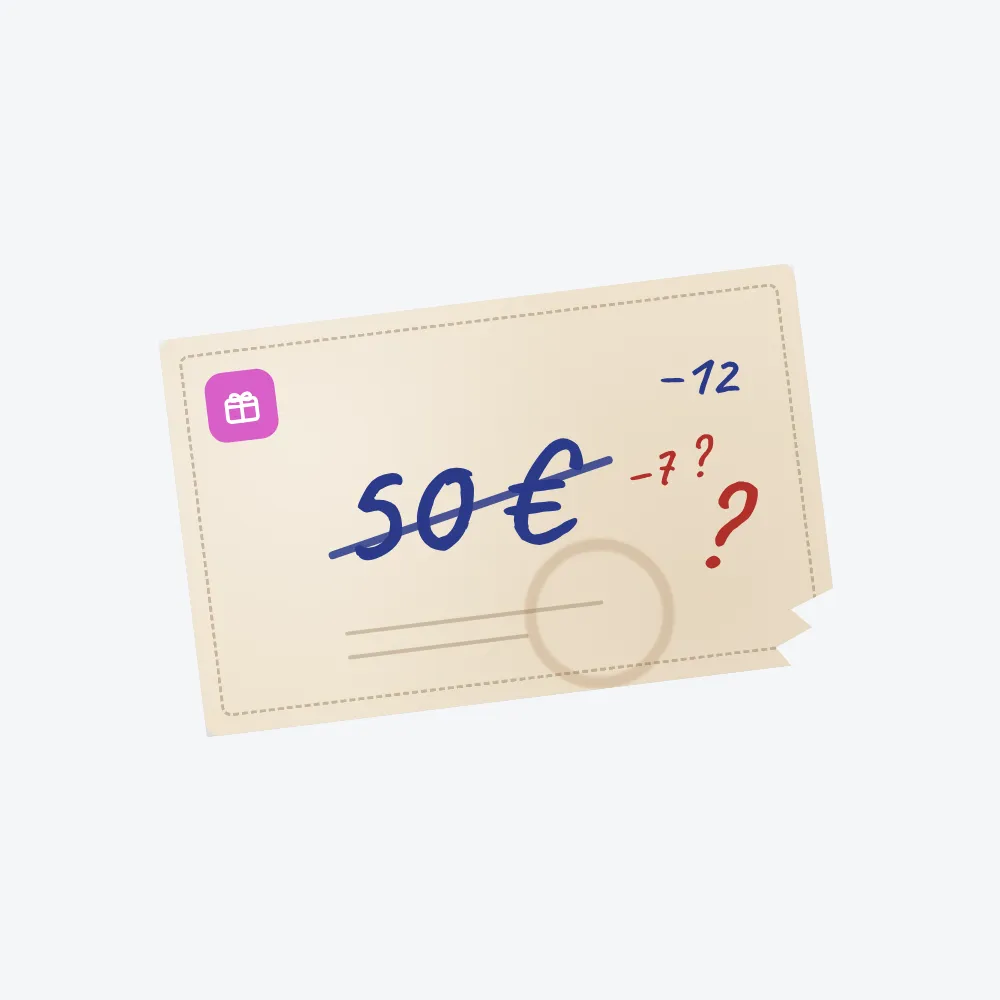
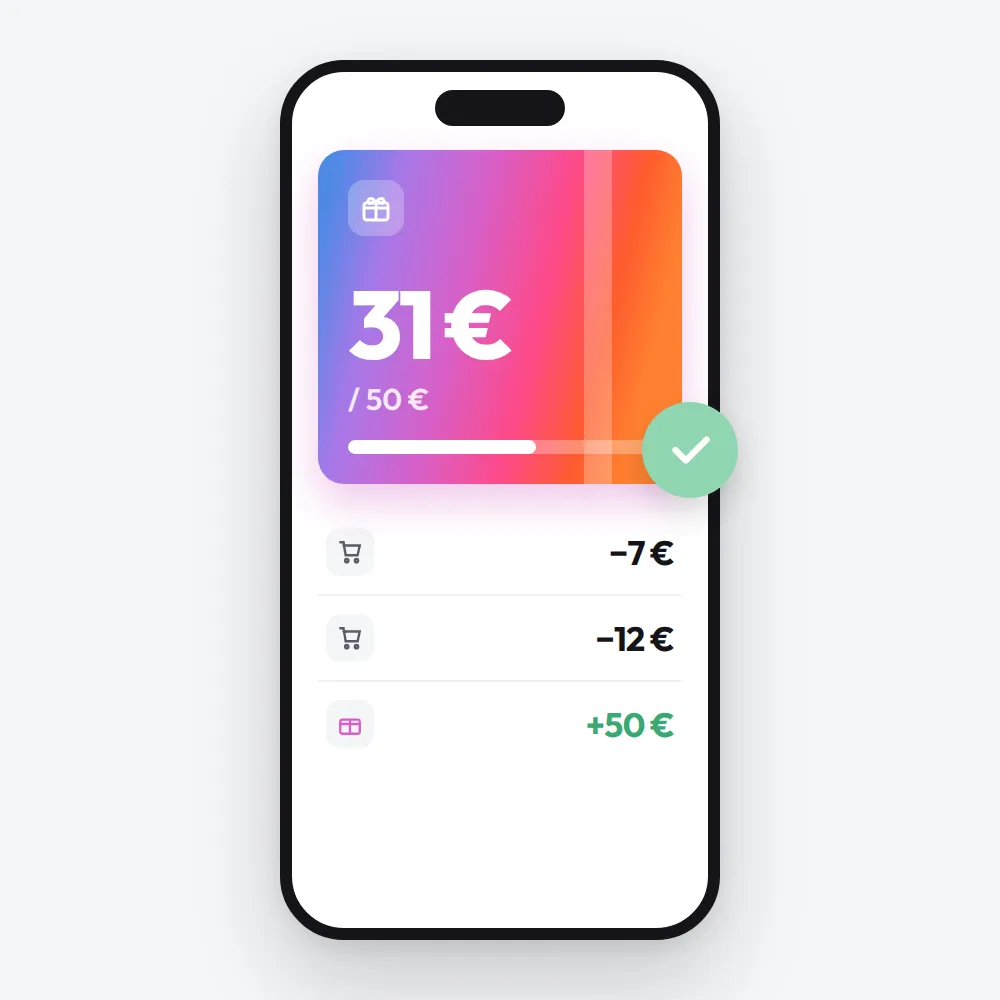
The classic set-up: a pad of printed vouchers, a number written in pen, a carbon copy (or not) in the drawer. It works until the first partial spend. Someone uses 12 € of a 50 € voucher, the cashier crosses out the amount, and three weeks later nobody can tell whether the 38 € on the paper is the truth. Paper also gets lost in coat pockets, and a lost voucher means a disappointed customer, not extra money for you.
Do this instead: keep the balance somewhere other than the paper. A digital gift card that lives in the customer's phone wallet shows what is left every time they open it, and your staff scan it instead of reading handwriting. In Loyalius, gift cards are one of the card types, and like all our cards they sit in Apple Wallet or Google Wallet and update in place.
2. Amounts that don't fit what you sell
A 50 € voucher in a salon where a cut and blow-dry costs 42 € leaves 8 € that buys nothing. A 20 € voucher at a florist whose smallest proper bouquet is 28 € means every redemption starts with an awkward "you'll need to add a bit". Round numbers feel natural to the buyer, but the person who has to spend them is the recipient.
Do this instead: look at your real prices and offer two or three amounts that match them. For the salon: 45 € (one cut and blow-dry, with a little left for a product) and 90 € (two visits). For the florist: 30 € and 60 €. If you sell services, you can also sell the service itself ("one cut and blow-dry") rather than an amount. Write on it whether it stays valid for that service after a price change, so January's new price list does not start an argument.
3. A one-year expiry date in small print
This is the mistake that can cost you most, because the rules differ by country and a short date may simply not count. Two examples, as of October 2026:
- Germany: the consumer advice centres say a voucher generally falls under the three-year limitation period, counted from the end of the year it was bought, and that courts have found a one-year limit on a shop's vouchers to be too short (Verbraucherzentrale, updated November 2025).
- Ireland: a gift voucher with an expiry date must be valid for at least five years from purchase, and a shorter date is treated as five years (CCPC).
Other countries have their own rules. I'm not a lawyer, and this is not legal advice.
Do this instead: check your national consumer authority's page before you print anything, then choose a period that is clearly on the safe side, or no expiry at all. Write it on the card in plain words, not in the terms. My view: a voucher that runs out after a year earns you a few euros once and an annoyed customer forever. Long validity costs you little: you owe the same amount either way, just for longer.
4. Counting December gift card money as December profit
When you sell a 50 € gift card, you have not sold 50 € of flowers or haircuts yet. You owe them. The flowers go out of the door in January, and they cost you January money.
VAT has its own logic here. EU rules split vouchers into two kinds (Directive 2016/1065): a single-purpose voucher, where it is already known at sale time where the goods or services will be supplied and how much VAT is due, is taxed when you sell it; any other voucher is multi-purpose, and VAT is due only when it is spent. A florist who sells only flowers and a shop that sells books, cards and coffee may land in different boxes. How your country applies this is a question for your accountant, not for me.
Do this instead: keep gift card sales on their own line from day one, so you can see at any moment how much you still owe in vouchers. Before your busiest week, ask your accountant one question: "Are our vouchers single-purpose or multi-purpose?" It takes them a minute and may save you an awkward VAT return.
5. Waiting for customers to ask
Many shops sell gift cards only to people who already know they exist. The rest walk out without a gift, or buy one somewhere else.
Do this instead: make them visible in the last three weeks before Christmas, which in 2026 means from about Monday 7 December to Thursday 24 December. A small sign at the till, one line on the door, and a sentence for the team: "If you're not sure what they'd like, a gift card works." Then think about the buyer on 23 December who has no idea what size her sister wears. A gift card is the right answer for that person, and she will be grateful you offered it. If you already message your regulars, one short message in mid-December is enough; the Black Friday plan has examples of how short such messages can be.
6. Forgetting who walks in with the card
This is the one I care about most. The buyer is often already your customer. The person who walks in with the gift card in January usually is not. Somebody else has paid for their first visit, and many shops treat that visit as the end of the transaction.
Do this instead: treat redemption as a welcome. When the card is scanned, tell them what is left, then offer your loyalty card in one sentence and put the first stamp on it today. With a QR poster at the till, joining takes the time it takes to pack the purchase.
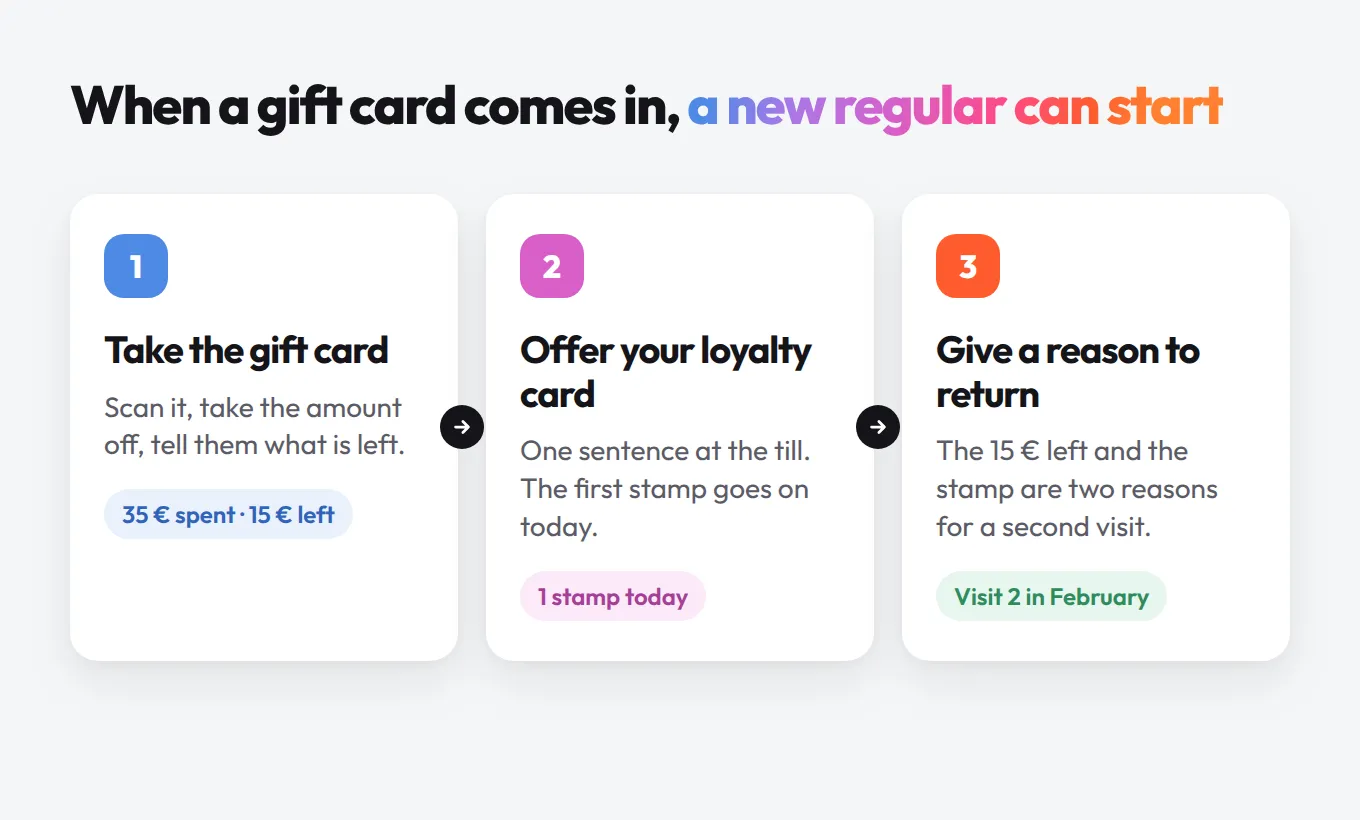
Now they leave with two reasons to come back: the balance left on the gift card, and a stamp on a card that is sitting in their phone. That is a better result than any December sale.
7. Hoping some of it never gets spent
The money from unspent gift cards is sometimes counted as a quiet bonus. I'd rather not count on it. An unspent card usually means someone found it in a drawer too late, and they now associate your shop with a wasted present. In Ireland the law also says that if more than 1 € is left after a purchase, the balance must be given back as cash, a transfer or a new voucher with the original expiry date (CCPC); other countries handle leftovers differently.
Do this instead: help people spend it. A gift card in a phone wallet is harder to forget than paper, because the balance is right there next to their boarding passes. And if the recipient joined your loyalty card on their first visit and agreed to hear from you, a short note in February, "you still have 15 € with us", is a favour, not marketing.
What it costs to do this properly
You don't need a new system to fix most of this list: a clear sign, sensible amounts, a long expiry date and a separate line in the books cost nothing. If you want gift cards and the loyalty card in the same phone wallet, gift cards are part of our Growth plan at 39 € per location a month, as of October 2026 (pricing), with a 14-day trial and no payment card needed. If you run a salon or barber shop, the barber shop stamp card setup shows how the loyalty side can look.
The introduction someone else paid for
I see a gift card less as a product and more as a recommendation with money attached. A regular liked your shop enough to send someone they love there, and paid for it. Too many shops take the money and forget the second half. The real question for this December is not how many gift cards you sell, but how many of the people who spend them you will see again by spring.
More stories
 Loyalty program for a barber shop: a stamp card built for the haircut cycle
A six-stamp card, a reward for quiet hours and one message for the customer who went quiet: a barber shop loyalty setup you can copy.
 Black Friday for small shops: a loyalty plan that rewards your regulars
Skip the blanket discount. A dated plan from today to January that rewards cardholders on Black Friday weekend, with message texts to copy.