
A competitor opened next door? Don't cut your prices yet
 Oleksii Andriiuk
Founder
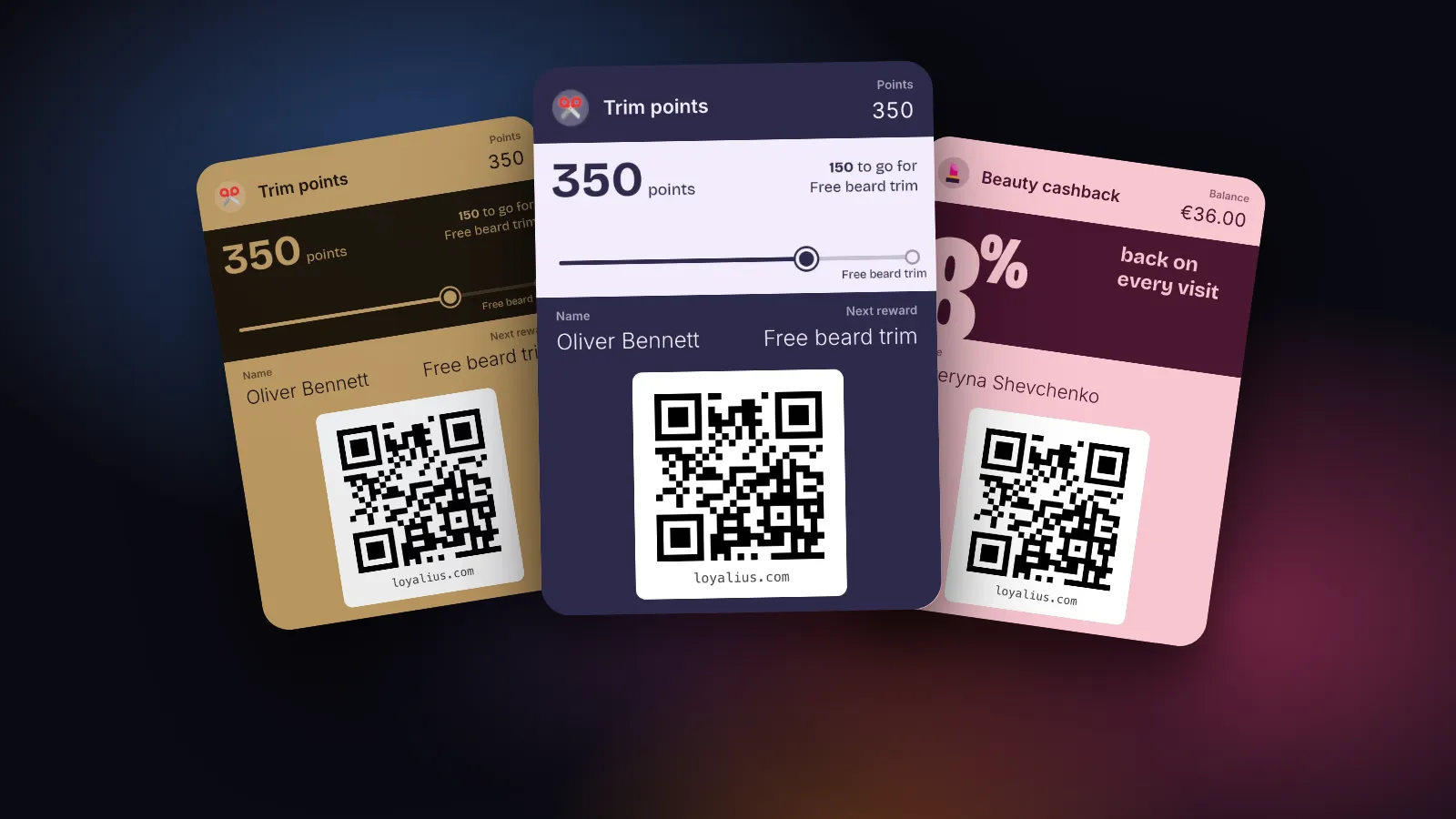
If a competitor opened next door with lower prices, do not match them in the first weeks. Most of the people who switch for a price were never your regulars, and cutting your whole price list costs more than losing them. Protect the clients who make your month instead: rebook them at the chair, reward them for coming back, fix whatever makes you hard to get into, and measure for eight weeks before you touch a single price.
The first month of a new salon looks frightening from across the street. The window is full of half-price posters, the chairs look busy, and two of your Tuesday clients mention they "had a look". It is also the month when the newcomer is spending the most money to look busy. I would rather watch that month calmly than start a price war I cannot finish.
This happens more often than it used to. Germany had 80,118 registered hair salons at the end of 2025, 245 fewer than a year earlier, and the trade association blames tougher competition for part of that (Zentralverband des Deutschen Friseurhandwerks, 29 June 2026). Roughly a fifth of German salons are now barbershops, some of them cutting hair for 10 to 12 € (Deutsche Handwerks Zeitung, 31 October 2025). At the same time your own costs keep climbing: hairdressing prices in the EU were 4.1 % higher in September 2026 than a year before (Eurostat, as of November 2026). Costs push your prices up, and a cheaper newcomer moves in. That squeeze is the real problem, and a price cut makes it worse.
Should you match a competitor's lower prices?
Almost never, and certainly not across the whole price list in the first two months. A price cut applies to every client you have, including the loyal ones who would never have left. The newcomer's offer applies only to the people who walk in. You pay for your discount on 100 % of your visits; they pay for theirs mainly on new clients, and usually only until the opening offer ends.
If you want to answer on price at all, answer narrowly: one entry service, such as a quick men's cut, or one quiet weekday. Never the whole list. And keep the price you would want in a year, because a price you cut is very hard to put back. I wrote more about that in how to raise prices without losing customers.
A worked example: Salon Mira and the new barber across the road
Take a hair salon with four chairs on a residential street in a mid-sized town; call it Salon Mira. It is open Tuesday to Saturday, does about 520 visits a month and the average bill is 42 €, which sits between the typical women's and men's prices German salons report. A barbershop opens opposite with a 20 % cheaper price list and an opening offer on top. These are example numbers; put your own in.
The owner looks at who her 520 visits really are: about 360 come from regulars on a five to eight week cycle, about 110 from occasional clients, and about 50 from people who first came for a voucher or an offer. Here are her two choices for the next month.
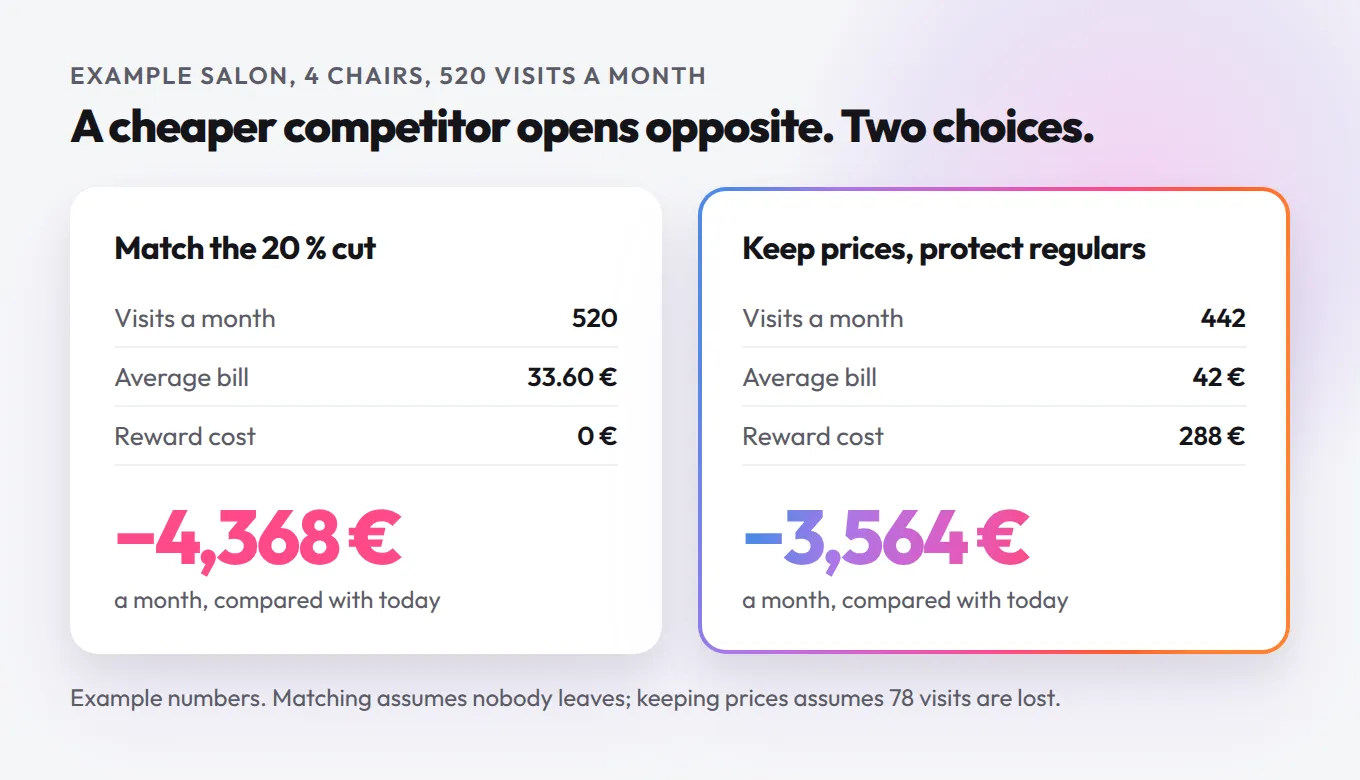
| Match the 20 % cut | Keep prices, protect regulars | |
|---|---|---|
| Visits a month | 520 (nobody leaves) | 442 (78 leave) |
| Average bill | 33.60 € | 42 € |
| Reward cost | none | 288 € |
| Monthly revenue | 17,472 € | 18,276 € |
| Change from today | −4,368 € | −3,564 € |
The second column assumes she loses every offer client and a quarter of her occasional ones, and spends 288 € on rewards for regulars (a free conditioning treatment every fifth visit, about 4 € in product). The first column is the best case for matching, because it assumes not a single client leaves. Even then, cutting prices costs 804 € a month more, and to earn the gap back at the new price she would need 130 extra visits a month, which four chairs will not find.
The real difference shows later. When the opening offer ends, some of the occasional clients drift back to the salon that never changed its price. The salon that matched is stuck with a price list it cannot easily raise again.
Who leaves first when a cheaper salon opens nearby?
The clients who leave first are the ones who chose you for a price in the first place. A voucher client, a deal-site booking, the student who comes twice a year: they will try the new place, and some will stay. That is normal, and you cannot win them back with anything but an even lower price.
Regulars leave for different reasons. They could not get an appointment on Saturday, their stylist left, they waited twenty minutes once too often, or they simply felt nobody noticed them. A new salon next door gives them an easy place to go. It is rarely the reason they wanted to go.
A competitor opened next door: your first eight weeks
- Week 1: write down your numbers. Visits per week, new clients, and how many regulars are overdue for their next appointment. You need a "before" to judge anything later.
- Week 1: rebook at the chair. End every appointment with "Same time in six weeks?" and put it in the book there and then. A regular with a booked appointment has no reason to look across the road.
- Week 2: give regulars something the newcomer cannot. A discount resets to zero for every new client. A half-full reward card is a reason to come back to you. This is where a loyalty card earns its place.
- Weeks 2-4: remove the friction. Online booking, a few late or Saturday slots, a shorter wait. I think salons lose more regulars to "no free slot" than to price.
- Weeks 4-6: contact the quiet ones. Send one short, personal message to every regular who is two weeks past their usual visit. Not an advert, just "We have not seen you in a while, your usual Thursday slot is free."
- Week 8: compare. If your regulars' visits held and only offer clients left, keep going. If regulars are slipping, ask two or three of them why. Their answer will be more useful than any price change.
How to keep regular clients when a competitor opens
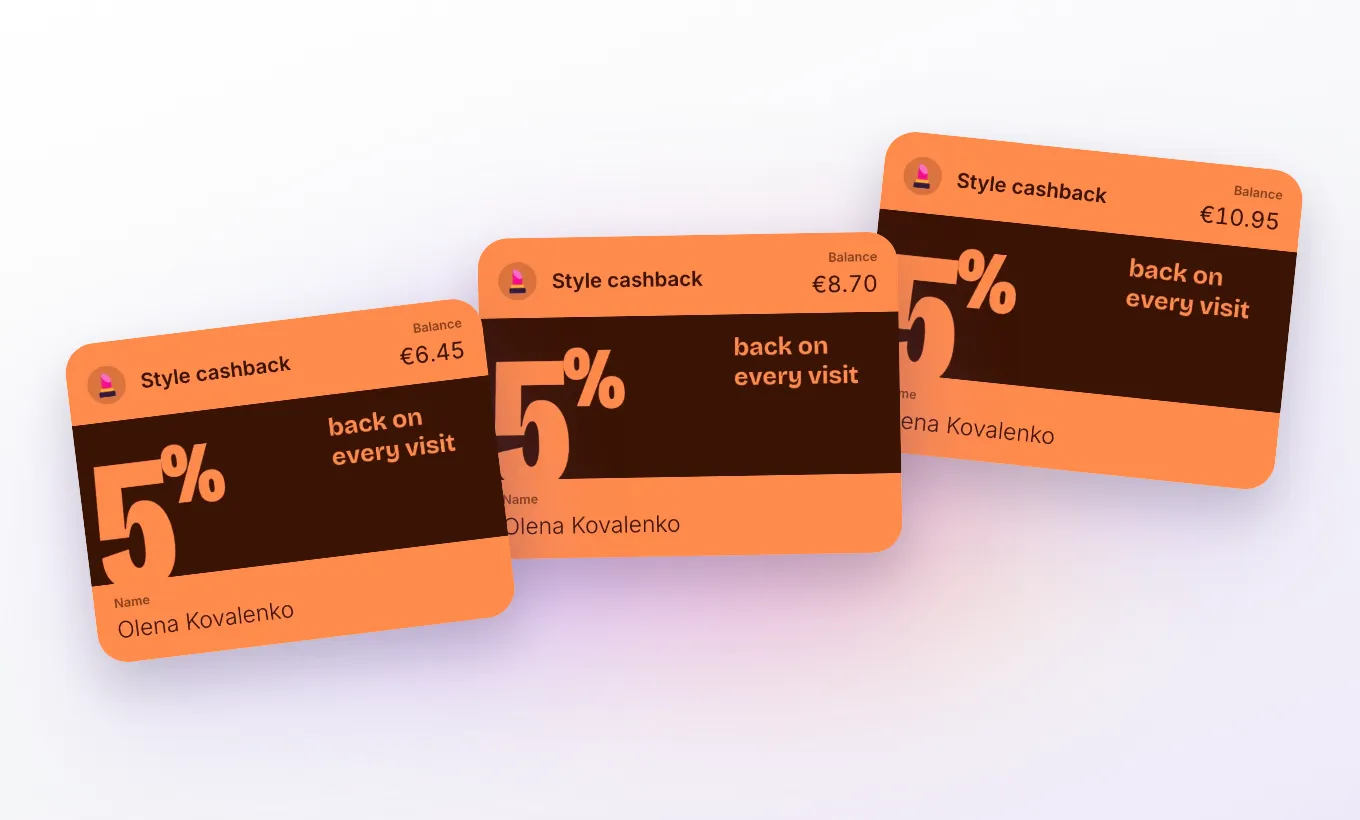
A reward that grows with every visit is the one thing a newcomer's opening offer cannot copy, because the client would have to start again at zero. It works best when it is close enough to feel real: a reward every five or six visits for a salon, not every fifteen. For a salon with a five to eight week rhythm, that is one or two rewards a year, worth far less than a permanent 20 % cut.
The other half is noticing when someone goes quiet. Loyalius, a loyalty platform that puts stamp, points and cashback cards in Apple Wallet and Google Wallet, can send an overdue client a reminder on their lock screen, so you do not have to keep a list. Our loyalty card for barbershops and hair salons shows a typical setup, and the stamp card built for the haircut cycle explains why fewer stamps work better for a monthly visit.
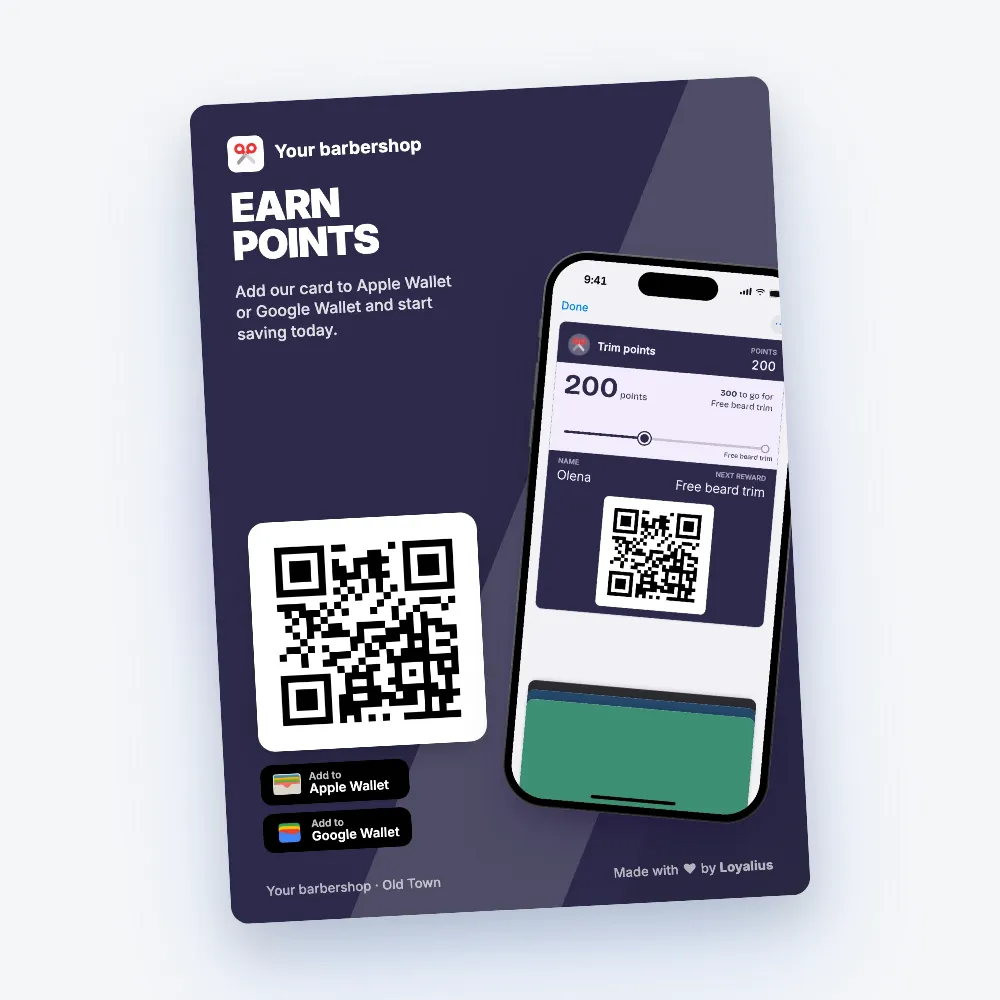
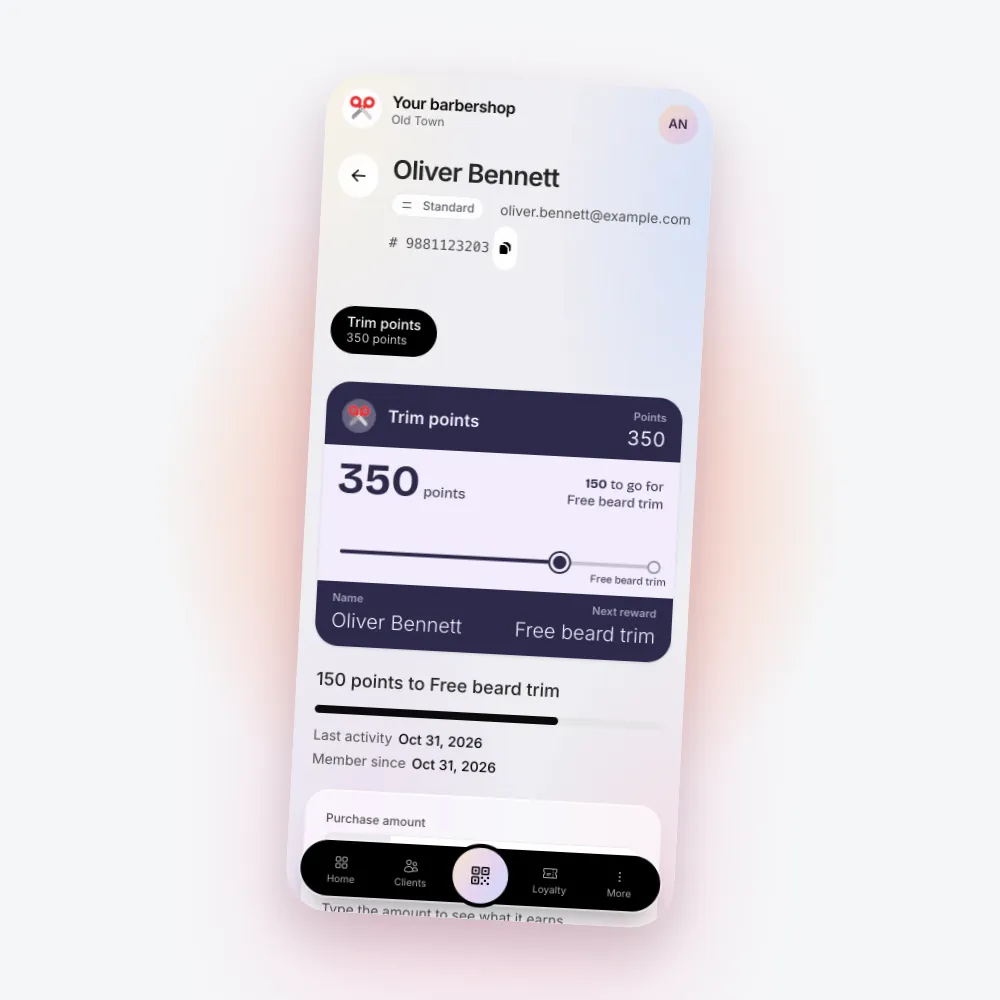
Clients join by scanning the poster at the mirror or the desk, and staff add points from a phone after the cut. Put the poster where people wait, not by the door, because the moment to ask is while they look at their new haircut.
Questions owners ask when a rival opens
Can I agree prices with the new salon next door?
No. EU competition rules name price-fixing between competitors as the clearest example of a banned agreement (European Commission). Be friendly with your neighbour, but keep prices and clients out of the conversation, and ask a lawyer if you are unsure.
Will a competitor opening nearby always hurt my business?
Not always. A street with two salons can draw more people looking for a haircut than a street with one, and a newcomer's advertising reminds the whole neighbourhood that it is time for a cut. The salons that suffer most are the ones that relied on being the only choice.
Should I offer a discount to win clients back from the competitor?
Only to clients who have already left, and only once. A personal "come back, your next treatment is 10 € off" costs you one discount per returning client. A public poster in your window costs you that discount on every regular who would have paid full price anyway.
What should I say when a client mentions the new place?
Say something kind and short, then talk about their hair. Criticising the newcomer makes you look worried, and the client will remember the worry longer than your argument.
Look again in three months
My bet is that in three months the salon across the road will have raised its prices, cut its offer or both, and the question will no longer be who is cheaper. It will be who still has their regulars. Spend the next eight weeks making sure that is you, and leave the window posters to the newcomer.
More stories
 Regular customers stopped coming? How to spot it early and win them back
Lost regulars rarely leave in anger. How to see who has gone quiet, why they drift away, and how to bring them back with one small reason and a date.
 Should you close your restaurant on slow days? Do this sum first
Quiet Mondays? Work out what the day really earns, how many guests would beat closing it, and how to fill it if it is worth keeping. A bistro example.
 How to get staff to upsell when they hate sounding pushy
Staff never recommend anything? Give them one product, one sentence and one moment at the till each week, then count. A bakery example with the sums.