
How to raise prices without losing customers (and how many you can afford to lose)
 Oleksii Andriiuk
Founder
To raise prices without losing customers, first work out how many sales you can afford to lose, because it is almost always more than you fear. Then leave the one or two prices everybody remembers alone, raise the rest once and in one go, tell your regulars before the shelf label changes, and give them something walk-in customers do not get.
Many owners wait too long. They absorb a higher energy bill, then a wage rise, then the rent, and only move when the month stops adding up. By then the rise has to be big, and big rises are the ones people notice. Your customers have already seen prices go up everywhere else: in September 2026, prices at restaurants and cafés in the EU were 3.7 % higher than a year before, and energy prices for consumers were up 17.6 % (Eurostat HICP data, as of November 2026). Nobody will be surprised that your croissant costs more. They will notice how you do it.
How many customers can you lose before a price rise costs you money?
More than most owners think. If an item costs you 0.55 € in ingredients and sells for 1.90 €, you keep 1.35 €. Raise it to 2.10 € and you keep 1.55 €, so you can sell about 13 % fewer and still earn the same as before. The sum for any item is simple:
sales you can lose = price rise ÷ (new price − cost per item)
For the croissant that is 0.20 € ÷ 1.55 € = 12.9 %. The few people who do leave are mostly the ones who were already shopping on price alone.
A worked example: one bakery, one price list
Take a neighbourhood bakery on a residential street, call it Lipa Bakery, open Monday to Saturday from 6:30 to 18:00, about 26 days a month. These are example numbers, but they are in the range a busy small bakery sees. On a normal day it sells 420 bread rolls, 70 rye loaves, 110 croissants, 120 coffees to go and 45 slices of cake, for about 1,181 €.
Over the last year its costs went up by 1,400 € a month: energy for the ovens, wages, a little on flour and rent.
Here is the new price list. The bread roll, the price every customer knows by heart, stays exactly where it was.
| Item (cost per item) | Old price | New price | Extra a month |
|---|---|---|---|
| Bread roll (0.18 €) | 0.55 € | 0.55 € | 0 € |
| Rye loaf (1.10 €) | 3.60 € | 3.70 € | 182 € |
| Croissant (0.55 €) | 1.90 € | 2.10 € | 572 € |
| Coffee to go (0.55 €) | 2.80 € | 3.10 € | 936 € |
| Slice of cake (1.00 €) | 3.40 € | 3.80 € | 468 € |
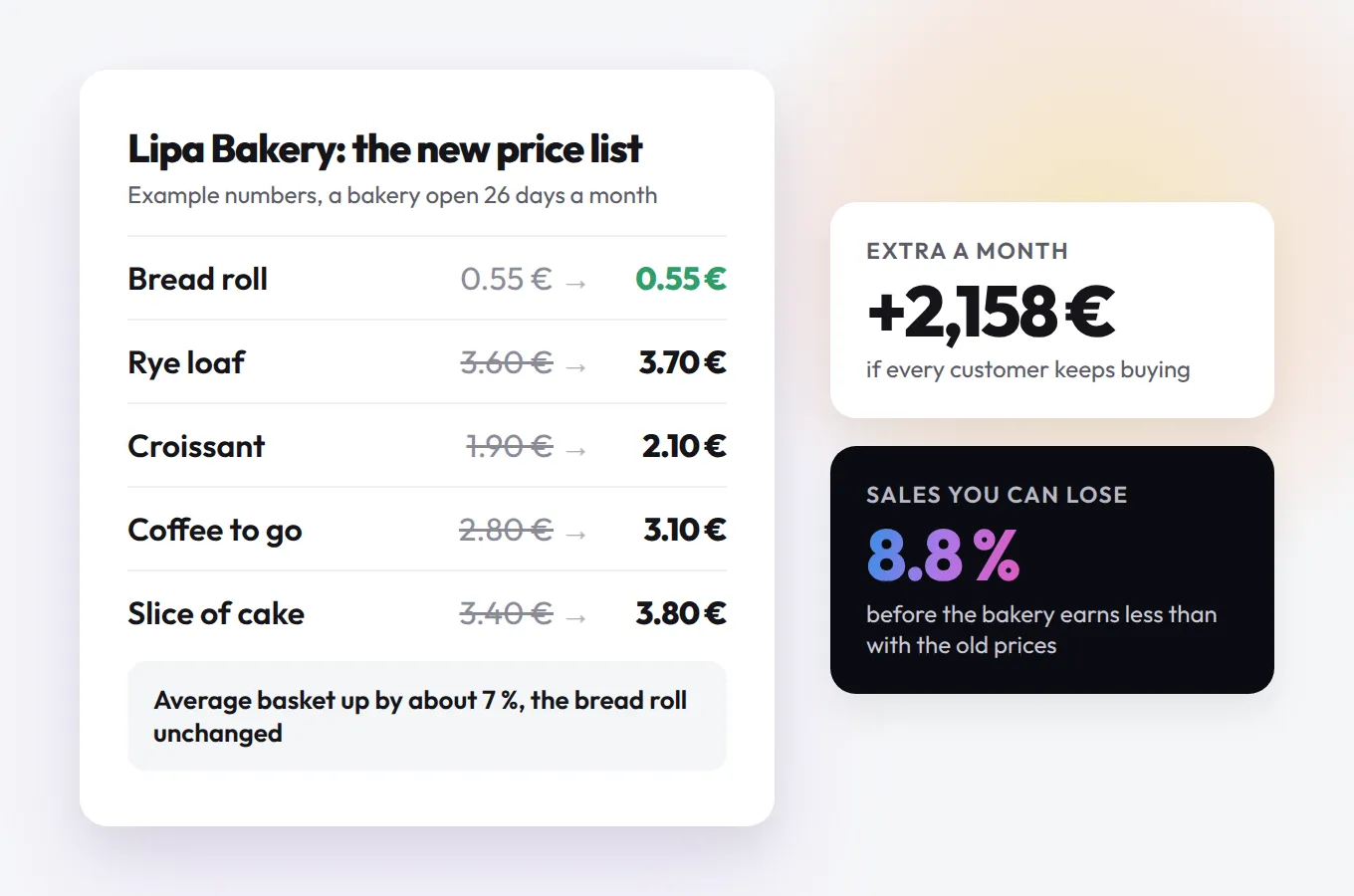
If nobody changes their habits, Lipa Bakery keeps 2,158 € more a month. The average basket goes up by about 7 %, but the roll at 0.55 € makes the shop still feel like the same shop.
Now the part owners worry about. Sales could fall by 8.8 % across the board before the bakery earns less than it did with the old prices. They would have to fall by 3.1 % before the new prices stop covering the 1,400 €. If 2 % of sales disappear, which would already be a noticeable grumble at the counter, the bakery still keeps about 1,670 € more a month.
Put your own numbers into the same table. You need four things per item: the old price, the new price, what it costs you, and how many you sell in a normal week.
Which prices to raise, and which to leave alone
Every shop has one or two prices that customers remember and compare: the bread roll, the espresso, the basic haircut, the car wash programme on the sign outside. I would leave those alone or move them last. People judge the whole shop by them, and a roll that goes from 0.55 € to 0.60 € is a conversation at the till every morning for a month, for 21 € a day.
Raise the things people buy without checking the price: the coffee they add to the bread, the cake on Saturday, the seasonal special, the extra service. A rise of 30 or 40 cents on those is noticed far less than 5 cents on the item people count.
And keep a cheap way in: a small coffee, a half loaf, a short cut. The customer who feels squeezed trades down instead of walking out.
Should I raise prices a little every few months or all at once?
Once, and on purpose. One clear rise a year is easier for customers than 10 cents every few months, which turns every visit into a small surprise.
How to tell regulars about a price increase
Tell them before the label changes, in one sentence, without a long apology. Regulars do not need the full cost breakdown. They want to know you are not hiding it.
- Two weeks before: a small sign at the till. Something like: "From 1 March some of our prices go up by 10 to 40 cents. Energy and wages went up this year, and we want to keep baking everything here every morning. The bread roll stays at 0.55 €."
- At the counter: staff say the same thing in their own words when someone asks. Write it down for them so every shift says the same.
- On the day: new labels everywhere at once, nothing crossed out by hand.
The line about the roll does more work than the reason: it tells regulars you thought about them.
Give regulars something walk-ins do not get
A price rise feels fairer when your best customers are treated better than strangers. A discount for everyone undoes the rise. A reward that only regulars collect does not.
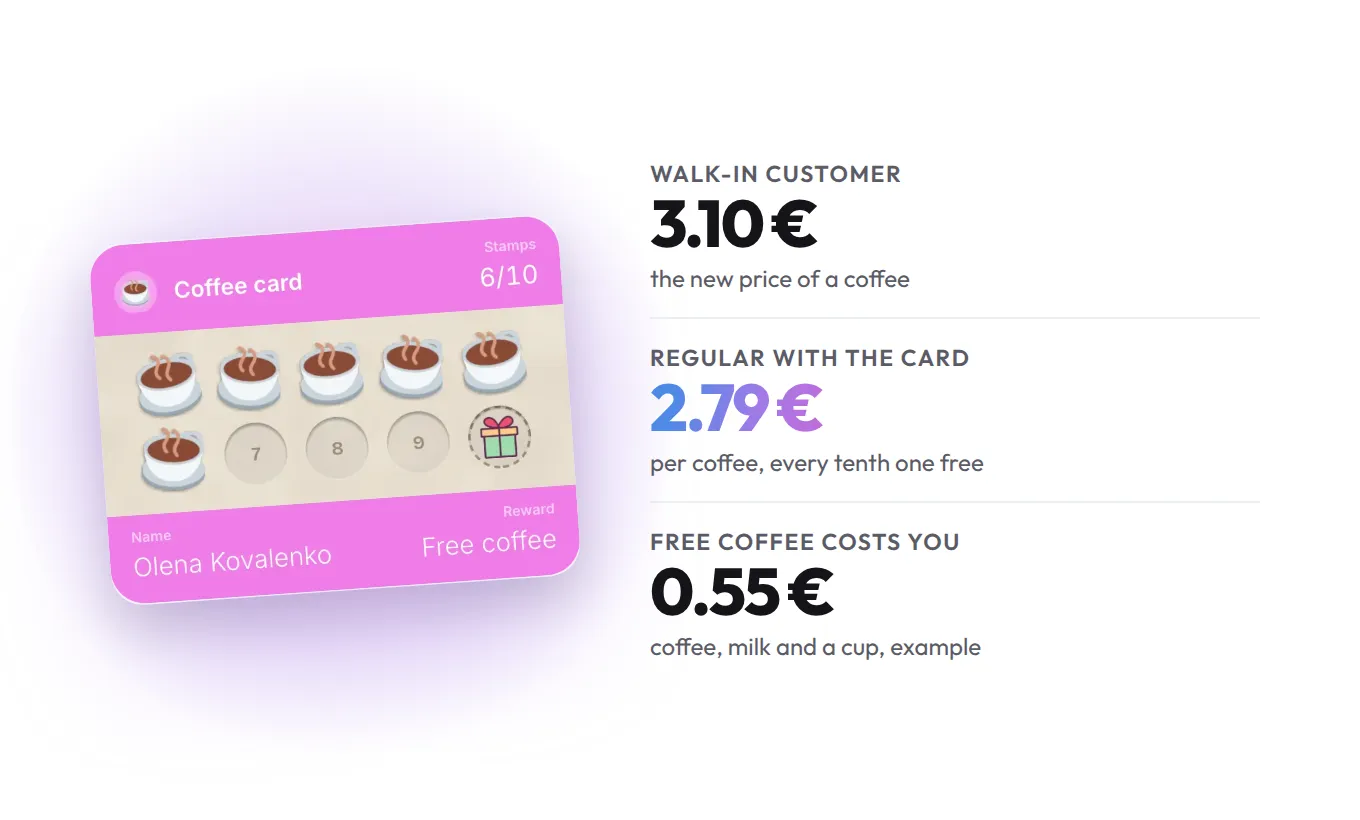
Look at the coffee in the example. A walk-in pays 3.10 €. A regular with a stamp card where every tenth coffee is free pays 27.90 € for ten, which is 2.79 € a coffee, a cent less than the old price. The free coffee costs the bakery 0.55 € in coffee, milk and a cup. Walk-ins pay the new price, and the people who come every morning hardly feel it. If you want the full sums for a reward like that, I worked through them in what a stamp card reward really costs.
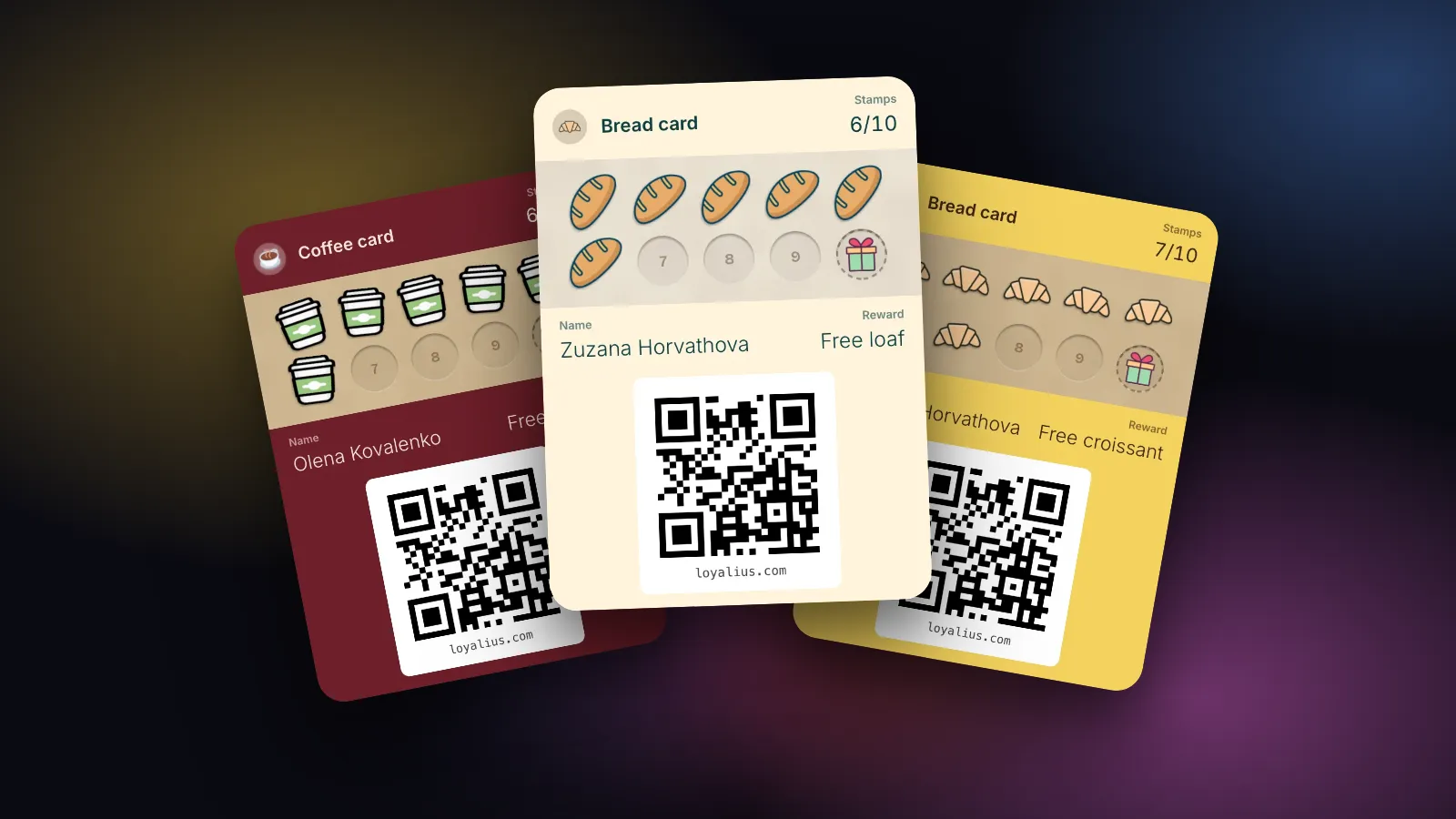
This is where a loyalty card earns its place. Loyalius is a loyalty platform that puts stamp, points and cashback cards in Apple Wallet and Google Wallet, so a regular joins by scanning a QR poster at the counter and the card stays in their phone. The setup for bakeries uses a stamp card per loaf or croissant, and you can run a second one for coffee.
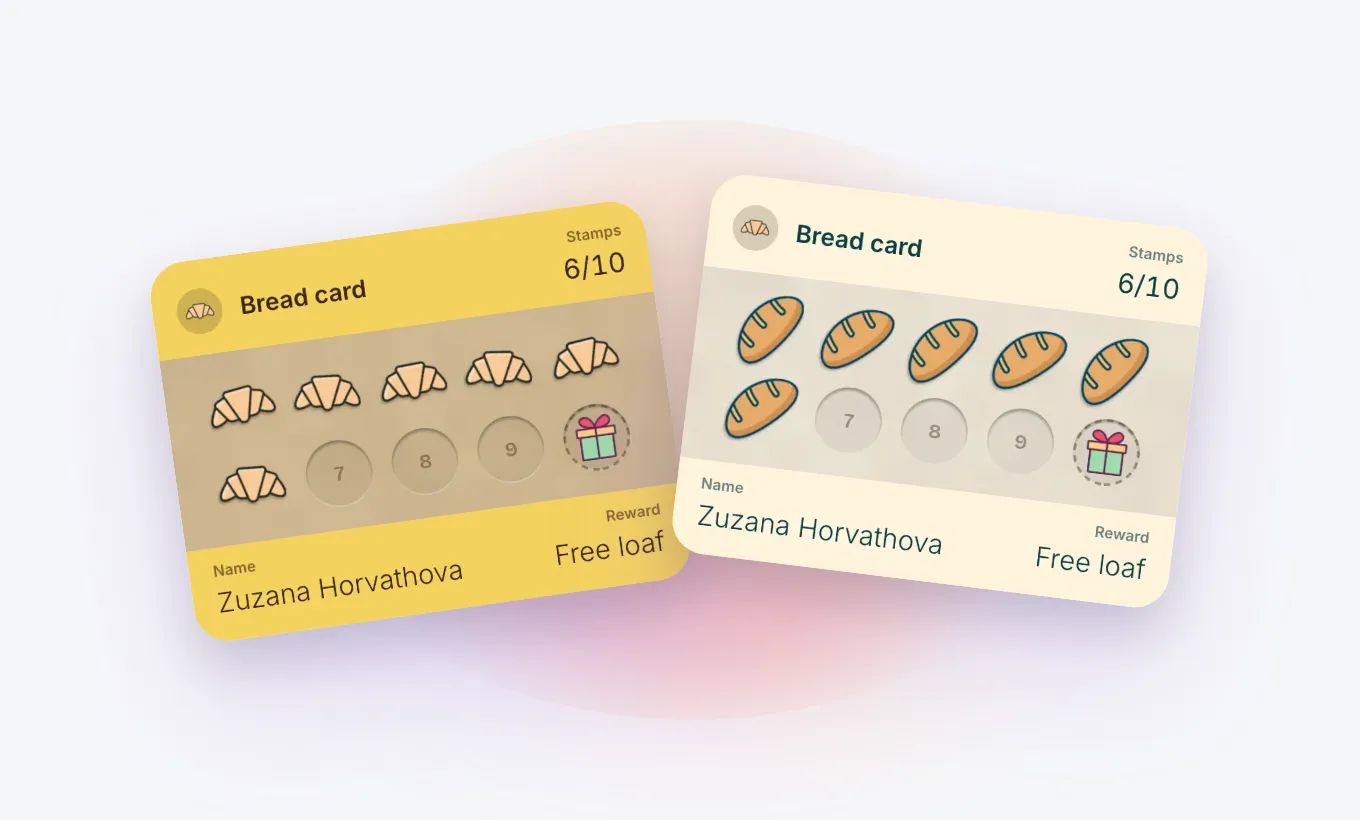
Launch the card the same week as the new prices and the sign at the till can carry both messages: prices go up a little, regulars get every tenth one free.
Watch four weeks, then decide
Do not judge the rise on the first Monday. Compare the number of receipts on each weekday with the same weeks before the change, and look at how often your cardholders come back. If you want a simple way to read those numbers, the four numbers to check each month work for this too.
If receipts are down by less than the share you can afford to lose from your table, the rise worked. If one item stopped selling, move that one price back and leave the rest.
Before you change the price list
How much can a small business raise prices at once?
There is no fixed limit, but rises of 5 to 10 % on items people do not compare are usually accepted without much fuss. The safer test is your own table: if the rise covers your costs even with 3 % fewer sales, it is not too big.
Should I tell customers why prices went up?
Yes, in one short sentence on a sign and at the counter. Customers accept a reason they already know is true, like energy or wages, and a business that says nothing looks as if it hopes nobody will notice.
Is it better to make portions smaller instead of raising prices?
Usually not. Customers notice a smaller croissant or a thinner slice on their own, and finding out feels worse than reading a sign. If you do change a size, say so and change the name or the label too.
When is the best time to raise prices in a shop?
A normal, steady week, announced two weeks ahead. Avoid the first days after a holiday, when budgets are tight, and avoid stacking a price rise on top of a change customers already dislike, like shorter opening hours.
The price you are most afraid to touch
Every owner has one price they are scared to move. Write down how many of that item you would have to stop selling before a rise costs you money, then ask yourself honestly how many of your regulars would really walk out over 20 cents. My guess is that the number in your head and the number in your table are a long way apart.
More stories
 Regular customers stopped coming? How to spot it early and win them back
Lost regulars rarely leave in anger. How to see who has gone quiet, why they drift away, and how to bring them back with one small reason and a date.
 Should you close your restaurant on slow days? Do this sum first
Quiet Mondays? Work out what the day really earns, how many guests would beat closing it, and how to fill it if it is worth keeping. A bistro example.
 How to get staff to upsell when they hate sounding pushy
Staff never recommend anything? Give them one product, one sentence and one moment at the till each week, then count. A bakery example with the sums.