
How to get staff to upsell when they hate sounding pushy
 Oleksii Andriiuk
Founder
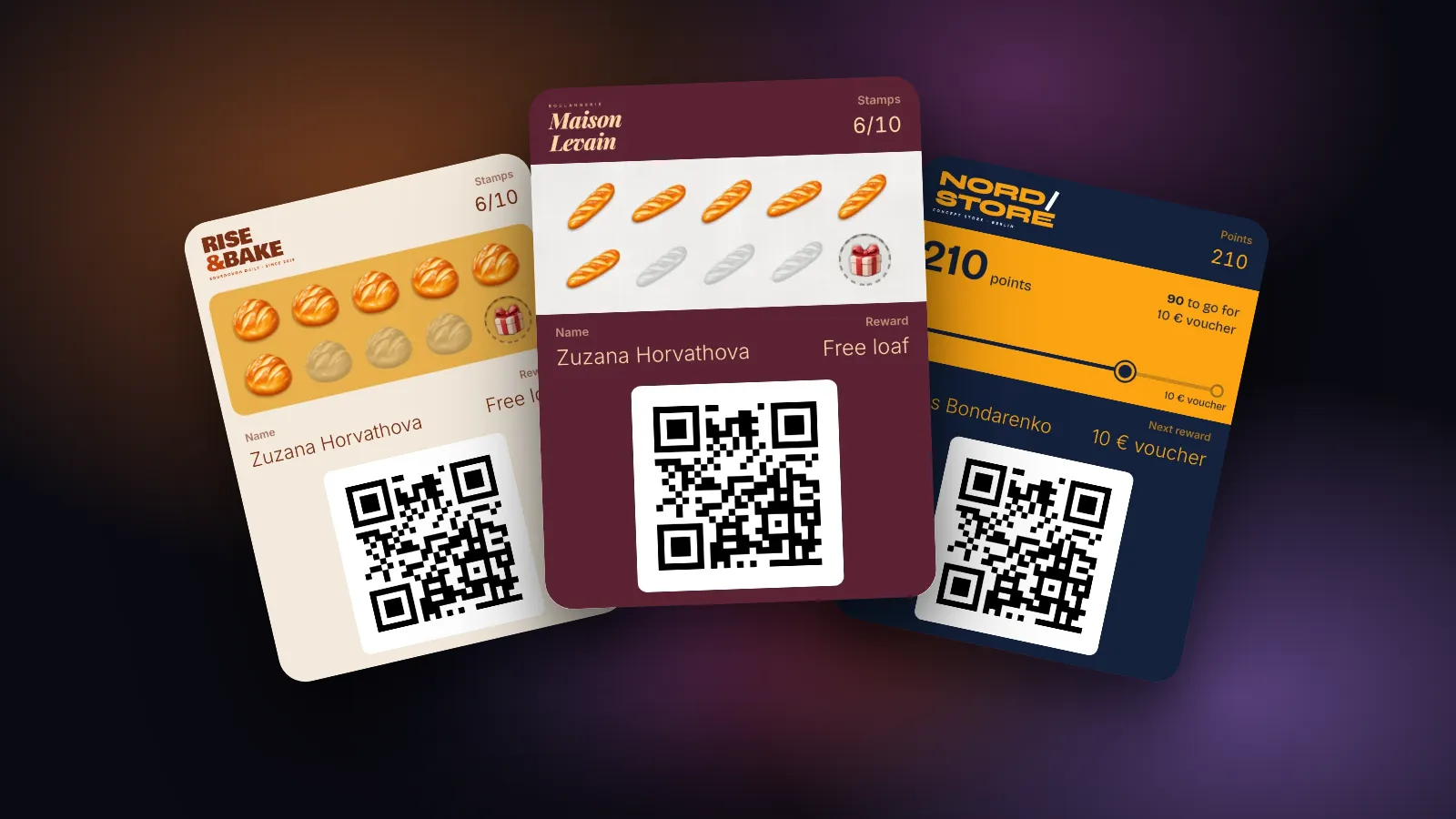
To get staff to upsell, stop asking them to "sell more" and give them one product, one sentence and one moment at the till each week. Most counter staff do not recommend anything because a vague target feels pushy, nobody told them what to offer, and nobody notices when they do. A specific suggestion to the right customer does not feel like selling to either side: it feels like a tip.
I think "Anything else?" is the most expensive question in a small shop. It is asked thousands of times a week, it is almost always answered with "no", and it trains everyone behind the counter to believe that customers do not want suggestions. They do, when the suggestion is good. The tips below are written for a bakery, because the counter there moves fast and the add-on is obvious, but they work the same way in a café, a deli or a shop selling anything from flowers to dog food. If you do run a bakery, we have a page on loyalty cards for bakeries too.
How to get staff to upsell: fix the five reasons they don't
When staff never recommend anything, the cause is almost never laziness. It is usually one of these five, each with a fix you can start on Monday.
1. "Sell more" is not an instruction
"Push the pastries" leaves staff to choose what, to whom and how. Most solve that by doing nothing, which never feels awkward.
Do this instead: pick one product of the week. One, not five. Choose something with a good margin that goes with what most people already buy: a cinnamon bun with the morning bread, a soup with the lunch sandwich, a small bunch of tulips with the card. Write it on the board behind the till so the whole team sees the same thing.
2. "Anything else?" invites a no
A closed, general question is easy to refuse and gives the customer nothing to picture. The specific version names the product and gives one reason.
Do this instead: agree on one sentence per product of the week, and let each person say it in their own words.
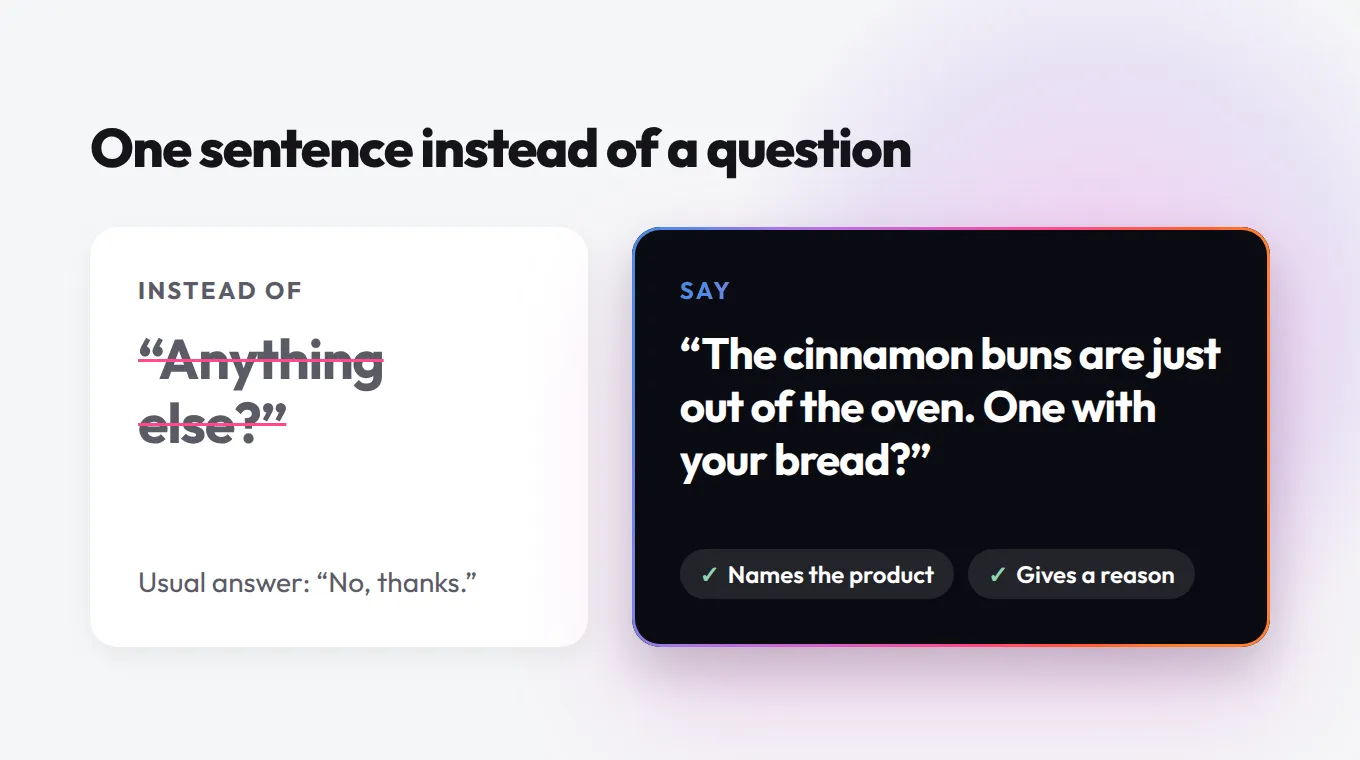
Good sentences have a fact in them: "just out of the oven", "the last tray today", "goes well with the rye you've got". A fact makes a recommendation sound like information rather than pressure.
3. Offering it to everyone, even in the rush
Offering the bun to every customer at 7:40, with eight people in the queue, slows the line and annoys the people who came for a quick loaf. Staff feel that, and they stop offering altogether.
Do this instead: decide who gets the sentence. In a bakery, that might be customers buying bread only, anyone after the morning rush, and regulars who have not tried the product yet. A narrower rule that staff actually follow beats a wide rule they quietly drop by Wednesday.
4. They have never tasted it
Nobody recommends something they cannot describe, and a seller in their third week may not know what is in the seeded loaf.
Do this instead: on Monday morning, cut the product of the week into pieces and let everyone on the shift taste it. People who have eaten it describe it without trying.
5. Nobody counts
If no one notices whether the sentence was said, it stops being said. That is how every habit at work dies.
Do this instead: count the product of the week sold, every day, and say the number to the team on Saturday. If your till can show sales per item, use that; if not, a tally sheet next to it works. Compare with the week before you started.
What one suggestion a day is worth
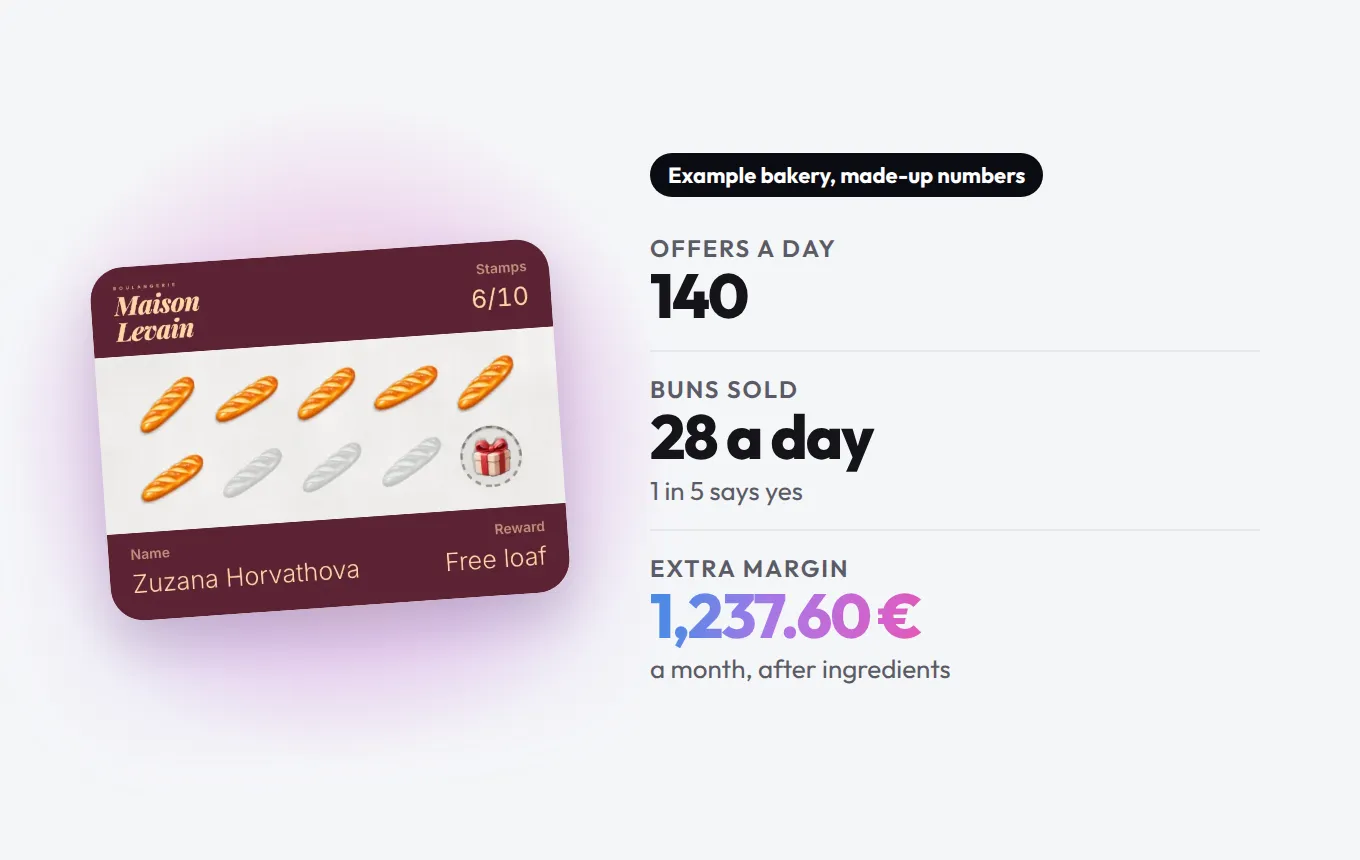
Here is an example with made-up but realistic numbers, so you can put in your own. Take a bakery on a residential street, call it Bakery Lipa, open 6:30 to 18:00, Monday to Saturday (26 days a month). It serves 350 customers a day with an average receipt of 5.80 €. The product of the week is a cinnamon bun at 2.40 €, which costs about 0.70 € to make.
Staff offer the bun only to customers buying bread alone, about 40 % of the day, so 140 offers. Say one in five says yes.
| Example: Bakery Lipa | Per day | Per month |
|---|---|---|
| Offers made | 140 | 3,640 |
| Buns sold (1 in 5) | 28 | 728 |
| Extra sales | 67.20 € | 1,747.20 € |
| Extra margin after ingredients | 47.60 € | 1,237.60 € |
The average receipt moves from 5.80 € to about 5.99 €. Nobody in the queue will notice 19 cents, and your accountant will notice 1,237.60 € a month. Even if only one customer in ten says yes, that is still about 619 € a month in margin, for a sentence.
Why bother now? Because the counter is where costs are hardest to pass on. In the EU, cereal products such as bread and pastries cost about 34 % more in September 2026 than five years earlier, according to Eurostat consumer price data (as of November 2026), so many customers already count every euro of the loaf. Meanwhile, hourly labour costs in the EU were 3.2 % higher in the second quarter of 2026 than a year before, according to Eurostat's labour cost index (as of November 2026). For a bakery with counter staff costing 8,400 € a month, that rise is about 270 € a month. In the example, one good sentence covers it more than four times over, without touching the price of the bread. If you also need to raise prices, here is how many customers you can afford to lose when you do.
Can upselling hurt repeat customers?
Yes, if your regulars hear the same pitch every morning. The person who buys a rye loaf at 7:15 every day will stop enjoying your shop if they say "no, thanks" to the bun five times a week.
The rule I would give staff: offer each regular the product of the week once, and if they say no, leave it until next week's product. When a regular says yes and likes it, you have given them a new reason to come back, which is worth far more than one bun.
A loyalty card can help here, if the card counts the right thing. A stamp per visit rewards coming back but ignores the basket. A points card with one point per euro rewards both: the customer who adds a bun gets closer to their reward, and staff can say so ("that's 2 more points towards your free loaf"). Loyalius, a loyalty platform that puts stamp, points and cashback cards in Apple Wallet and Google Wallet, lets staff add points with one tap on a phone or straight from a connected till, so the suggestion and the card fit into the same few seconds.
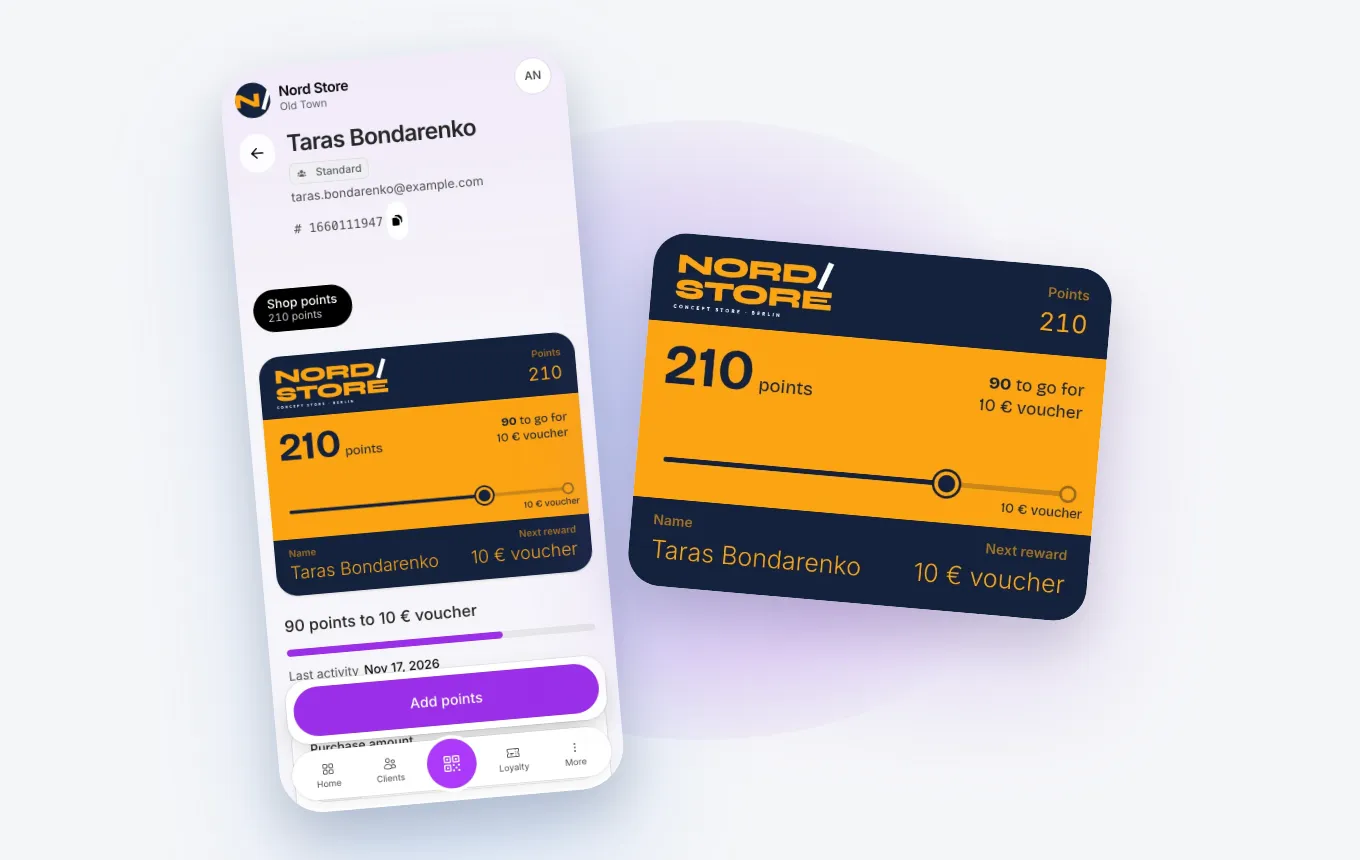
The card does not replace the sentence, though. If staff are not offering anything, no points scheme will fix it. Start with the product and the sentence; add the card when people are already saying yes.
Upselling in a chain with several branches
With several shops, give every branch the same product of the week and the same counting method, and compare the numbers on Monday. The useful question is not "why is branch three bad?" but "what does branch one say?". Ask the best seller to explain their sentence to the others in a two-minute call. If one branch's average receipt is low for months, check whether the basket is really the problem before you train anyone: split that store's sales into three numbers first.
Questions from the counter
What is the difference between upselling and cross-selling?
Upselling means offering a bigger or better version of what the customer is already buying, like a large coffee instead of a regular. Cross-selling means suggesting something that goes with it, like a bun with the bread. At a shop counter, cross-selling usually works better, because it adds to the order instead of questioning the choice.
How many customers should say yes to a suggestion?
There is no fixed number, and it depends on the product, the price and the time of day. Measure your own starting point for two weeks, then aim to improve on it. In the example above, a yes from one customer in five is generous; one in ten still pays well.
Does upselling work when customers are watching their money?
It works better with a small, specific add-on than with a more expensive version of the main item. A 2.40 € bun next to a loaf feels like a treat, while "the larger cake for 6 € more" feels like a cost. Keep suggestions cheap compared with the basket.
Why I would not pay commission per item
Many owners reach for a bonus per item sold. I would not, at least not at the start. Commission per bun teaches staff to offer it to everyone, including the regular who said no yesterday, and that is the pushy selling you were trying to avoid. A shared weekly number, said out loud, plus a cake for the team when it beats last week's, keeps the focus on the customer. If you want your team to offer the loyalty card the same calm way, the ask at the till works on exactly the same principle. Pick next week's product tonight and write it on the board before you open.
More stories
 Regular customers stopped coming? How to spot it early and win them back
Lost regulars rarely leave in anger. How to see who has gone quiet, why they drift away, and how to bring them back with one small reason and a date.
 Should you close your restaurant on slow days? Do this sum first
Quiet Mondays? Work out what the day really earns, how many guests would beat closing it, and how to fill it if it is worth keeping. A bistro example.
 How to get more clients as a nail tech when your book still has gaps
One nail tech's week is filled by about 60 regulars, not thousands of followers. Here is the sum, and five steps to find and keep them.