
Customers won't join your loyalty program? Fix the ask at the till
 Oleksii Andriiuk
Founder
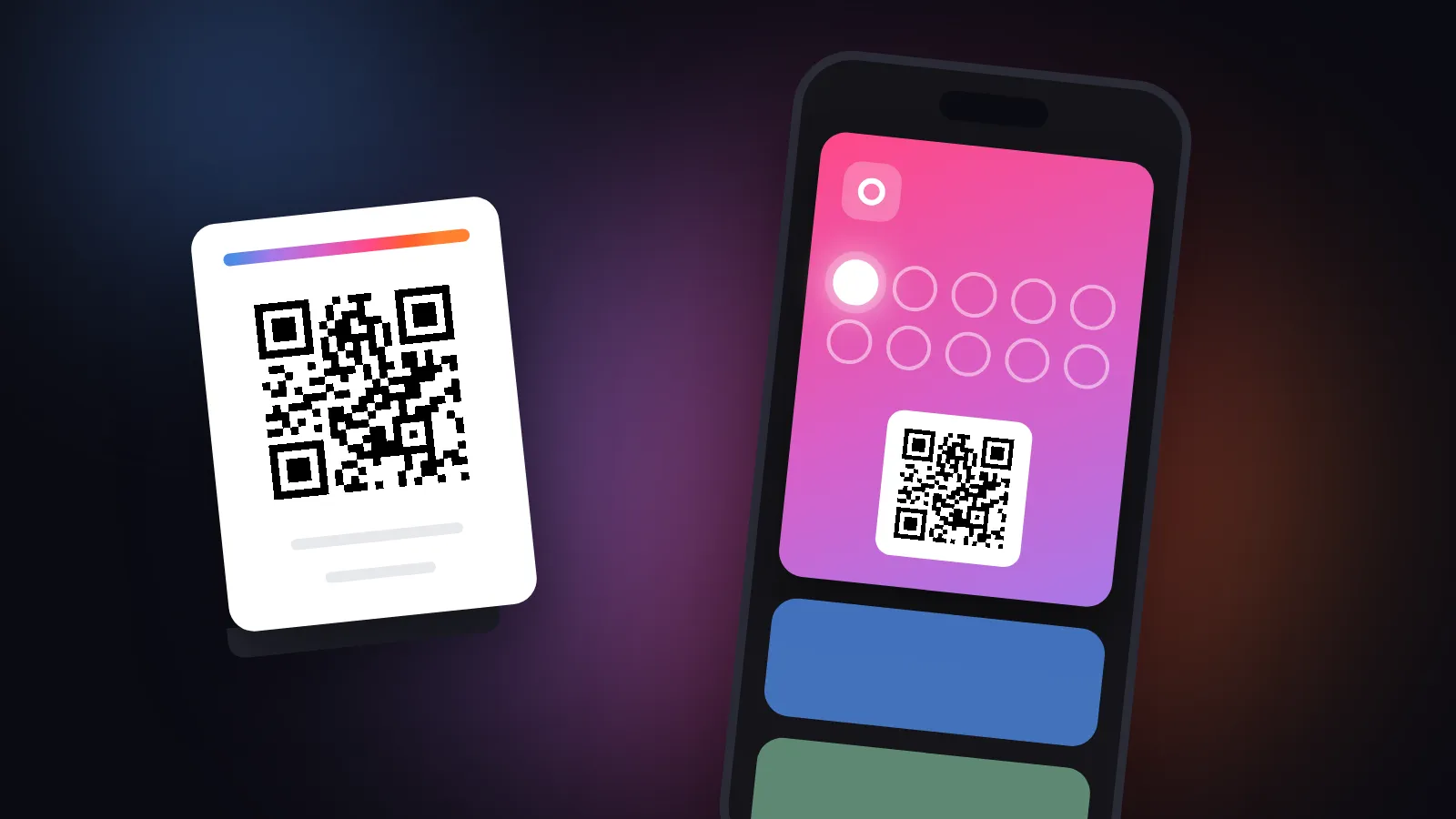
When customers don't join your loyalty program, the card itself is rarely the problem. The usual cause is the ask: nobody mentions the card, or it comes as a yes-or-no question that invites a polite no, or joining sounds like an app and a form. The fix is one sentence that everyone at the till says after payment, a first stamp given on the spot, and the QR code where people stand and wait. Then count new cards per 100 sales for two weeks before you touch the reward.
While researching this today I read the pages that come up first when you search for how to get customers to join a loyalty program. Most list ten or fifteen channels, from social media to email signatures. For a shop with a counter, I think almost all of that is noise. The person in front of you, phone already in hand from paying, is the only channel that matters this month.
Why the card stays empty
Usually three things, all at once.
Nobody asks. On a quiet Tuesday the card gets mentioned. On a Saturday with a queue to the door it doesn't, and Saturdays bring the most new faces. A poster on the wall doesn't ask anyone anything.
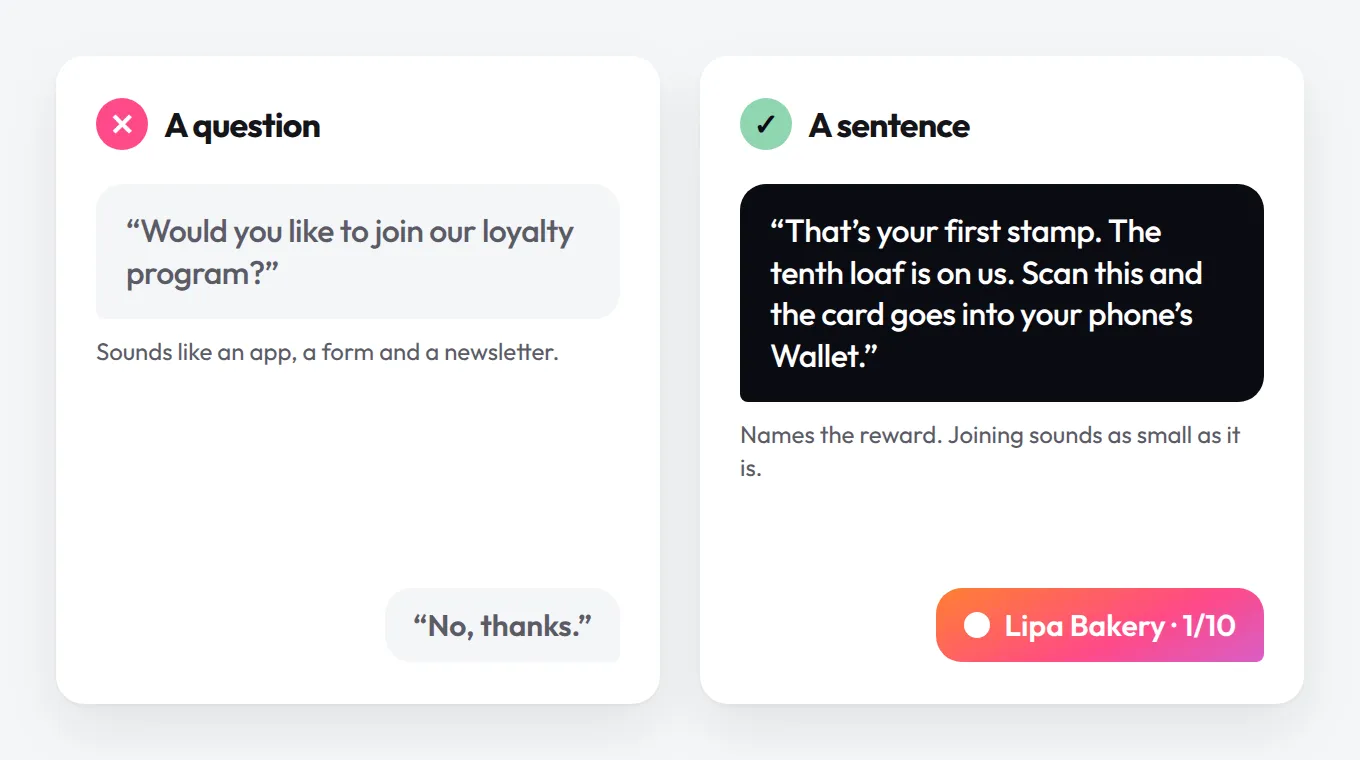
The question invites a no. "Would you like to join our loyalty program?" sounds like a form, a password and a newsletter. Most people say "no, thanks" before you reach the end of the sentence, and they're not wrong to: you've asked them about effort, not about bread.
Joining sounds like work. If customers hear "app", "register" or "account", they picture ten minutes standing on the pavement. Many already carry a stack of cards they never use.
The fix
Say one sentence, after they pay
Not a question. A statement that names the reward and makes joining sound as small as it is. Write it on a note by the till and keep it there until nobody needs it.
A few to adapt:
- Bakery: "That's your first stamp. The tenth loaf is on us. Scan this and the card goes into your phone's Wallet."
- Pet shop: "That's 24 points on today's bag. Scan this and they go on a card in your phone, no app."
- Shoe store: "You get 5% back on these for next time. Scan this, it's a card in your phone's Wallet."
- Beauty salon: say it while you book the next visit, not at the card terminal. "Today is your first stamp, and the sixth treatment is free. Scan this and the card is in your Wallet."
I'd say it after payment, not before. Before paying, people are thinking about the price and the terminal. Once the receipt is out there's a natural pause while they put their card away, and the phone is often still in their hand.
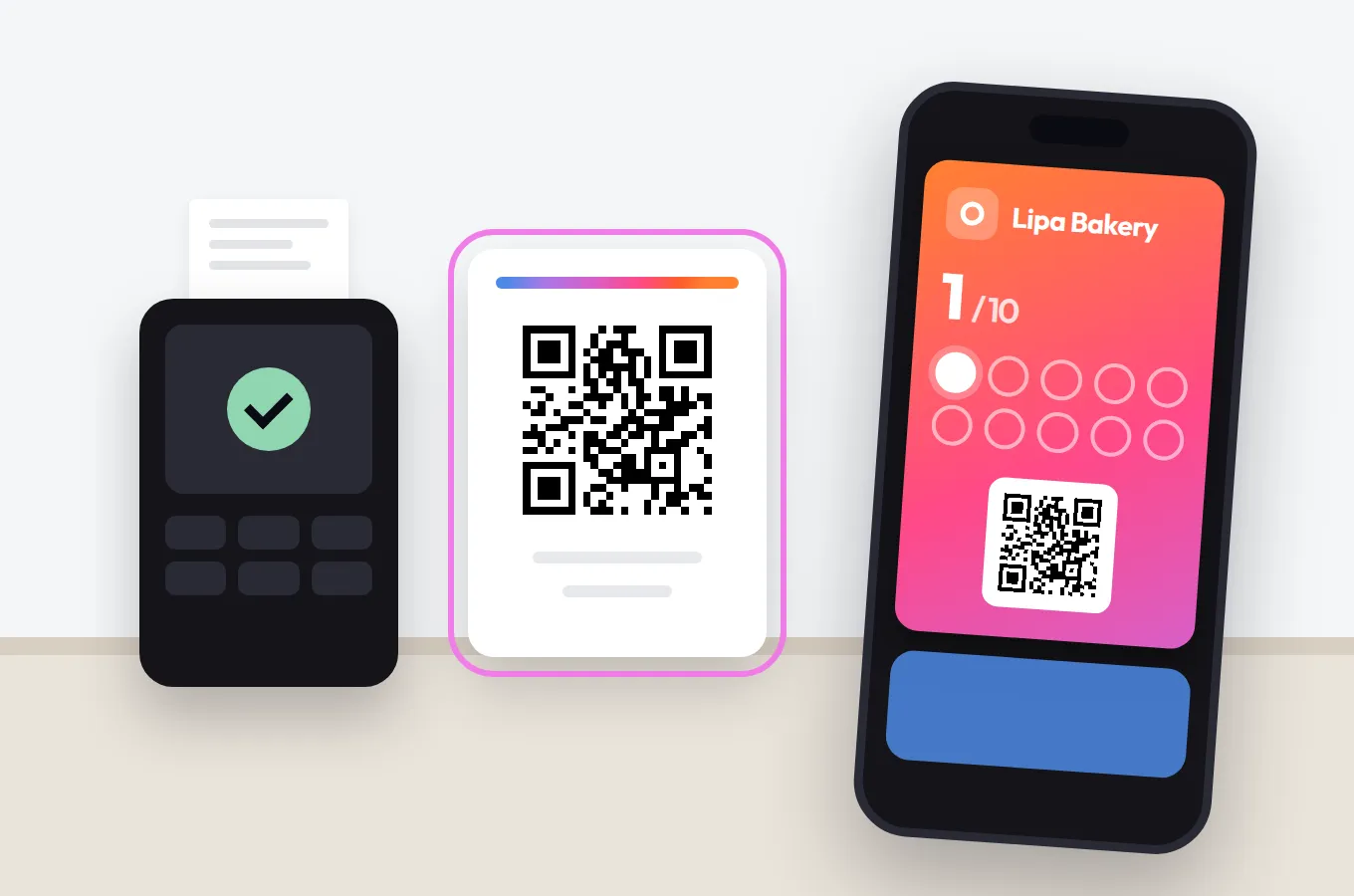
With Loyalius, the customer scans the QR code, enters an email, confirms a code, and the card lands in Apple Wallet or Google Wallet (how joining works). So "no app" is true, and staff can say it with a straight face. Then they scan the new card with any phone to add today's stamp, or a connected till adds it from the receipt.
Give the first stamp on the spot
A card at zero is a promise. A card at one of ten has already started, and people like finishing what they've started. The numbers behind this are in the stamp card maths post: a bonus stamp at sign-up costs you a fraction of one reward, and only for the people who come back. Say it out loud as well: "you're already on one."
Put the QR code where people wait
A door sticker is for people walking past. For joining, you want the code where hands are free and eyes have nothing to do: a counter stand next to the card terminal, a poster at eye level beside the queue, a small stand by the salon mirror. Loyalius gives you the QR as an A5 poster, a counter stand or a door sticker. If you only use one, use the counter stand.
When they say no
"No problem, the code's right here if you change your mind." Then drop it. Ask again on a later visit, once, and after that stop asking that person. A regular who has said no twice knows the card exists. If someone wants to know how the card works first, this explainer is the long answer.
Count before you change anything
The usual reaction to an empty card list is a bigger reward. Before you do that, measure the ask. For two weeks, write down sales and new cards per shift, and work out new cards per 100 sales.
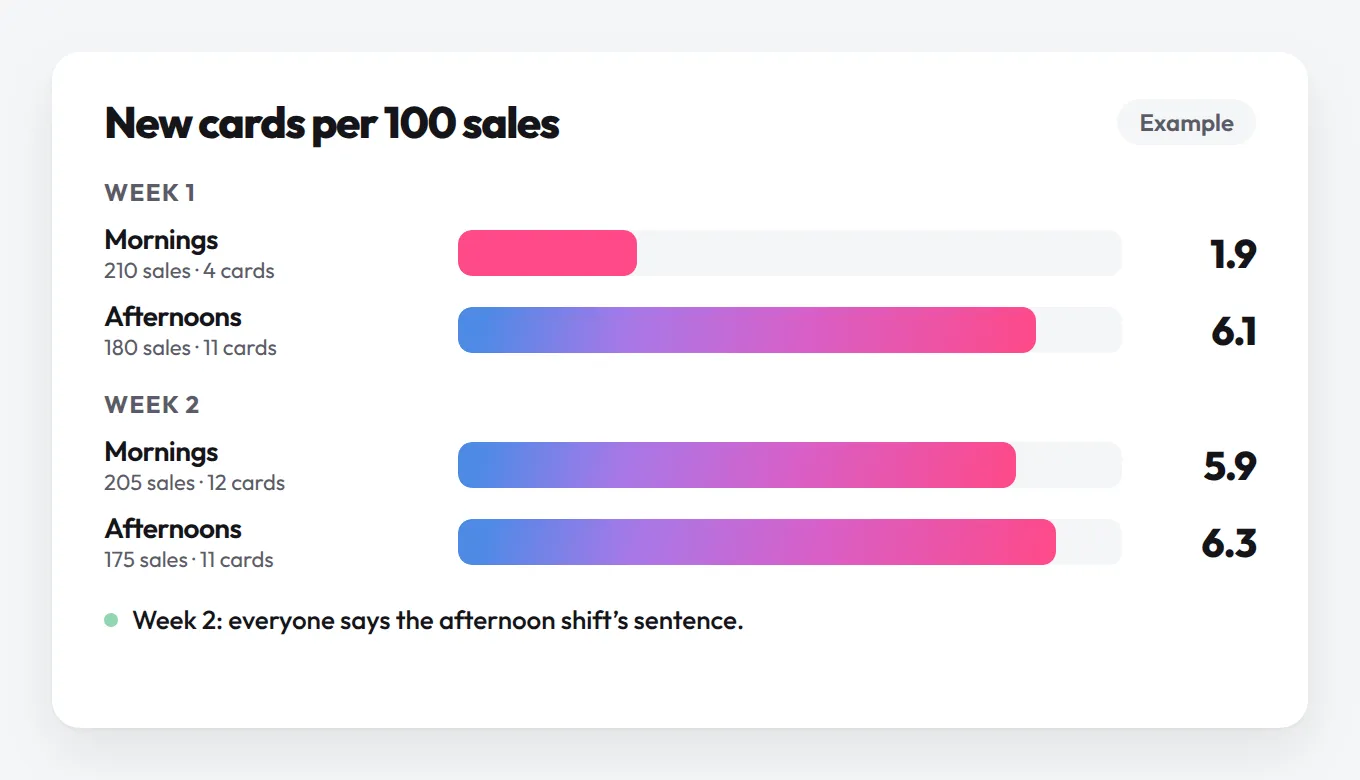
I won't give you a benchmark: I haven't found an honest one for small shops, and it depends on how many of your customers are new. Compare yourself with yourself: this week against last, the morning shift against the afternoon. If one person signs up three times as many customers as everyone else, don't scold anyone. Ask that person what they say, and give the sentence to the whole team. If you run several shops, the same idea at chain scale is part of our rollout plan for multiple locations.
Only when everyone is asking and the number is still low is it time to look at the reward.
Before the December rush
For a lot of shops, the next seven weeks bring more new faces than the rest of the year: people buying presents, people visiting family, people who would never normally pass your door. Many of them you won't see again until next December, unless they leave with your card in their phone. That makes this the week to fix the sentence, not January.
So pick your sentence today, try it on tomorrow's first ten customers, and start the tally on Monday. If your card isn't live yet, creating one takes a few minutes on the 30-day free trial, and you don't need a payment card to start.
More stories
 Loyalty program for a flower shop: a winter plan from Advent to Valentine's Day
Turn December's wreath buyers into Valentine's regulars: a dated plan with 5% cashback, three messages to copy and the number to check in March.
 Points vs stamps: which loyalty program fits your shop?
Two questions decide between a stamp card and points: does the bill change much, and how often do customers come? Examples, numbers and my default.
 Loyalty program for a gym or fitness studio: get January's new members to February
Most January joiners decide by February whether they stay. A visit-based stamp card and one comeback message help them keep going. Here is the setup.