
Points vs stamps: which loyalty program fits your shop?
 Oleksii Andriiuk
Founder
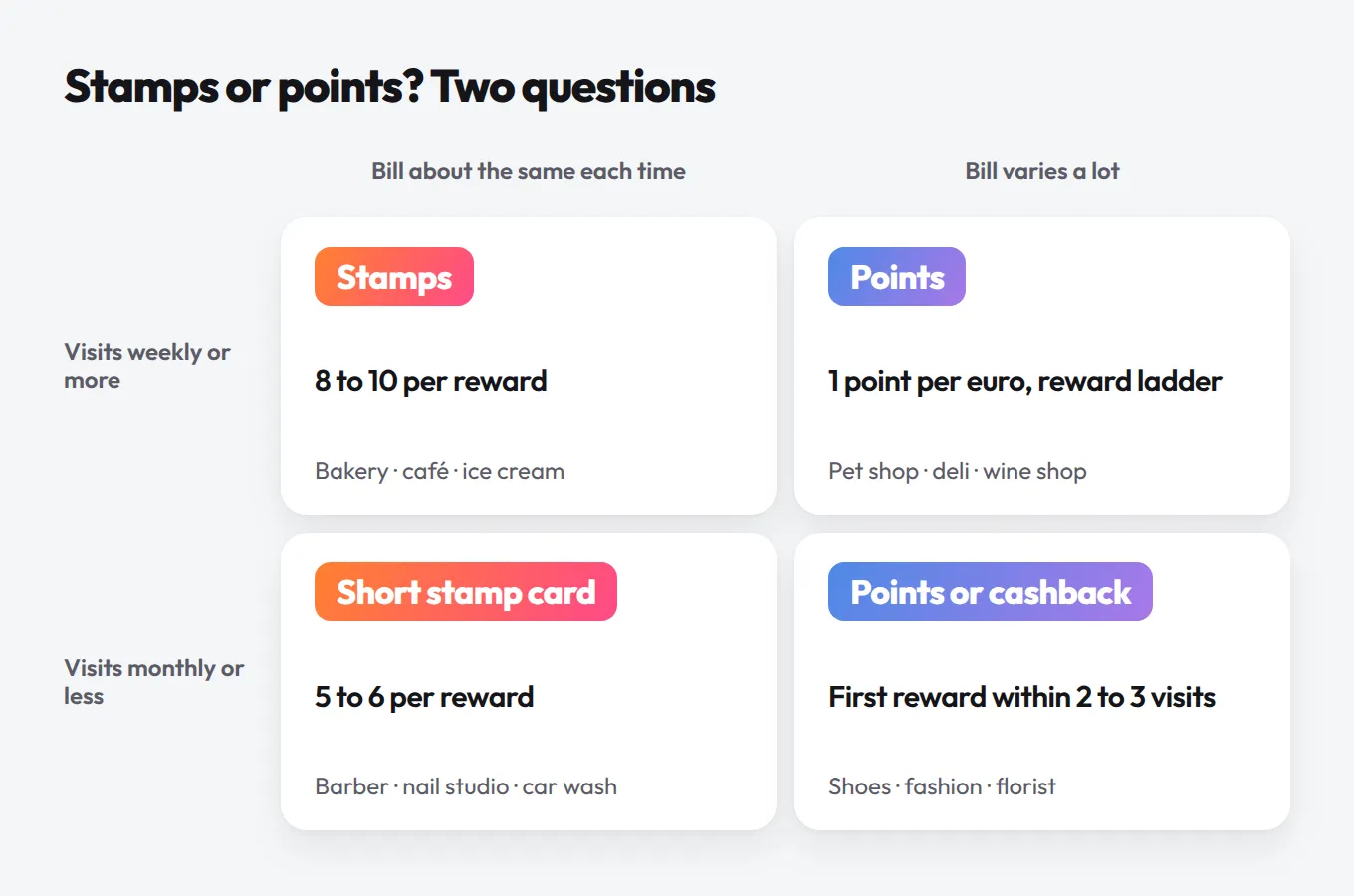
Choosing between points and stamps comes down to one question: does the bill change much from one visit to the next? If customers buy roughly the same thing every time (a loaf, a haircut, a car wash), use stamps: one per visit, a reward after 6 to 10. If the bill swings from 4 € to 60 € (a pet shop, a shoe store, a florist), use points, so people earn in proportion to what they spend. How often they come then decides how long the card should be.
Before writing this I read the pages that come up first when you search "points vs stamps". Almost all of them list pros and cons for each and finish with some version of "it depends on your business". It does, but on two things you already know about your shop. Here they are, with the reason behind each, and which one I'd pick if you're still unsure at the end.
Stamps and points at a glance
| Stamp card | Points card | |
|---|---|---|
| What it counts | Visits or items | Euros spent |
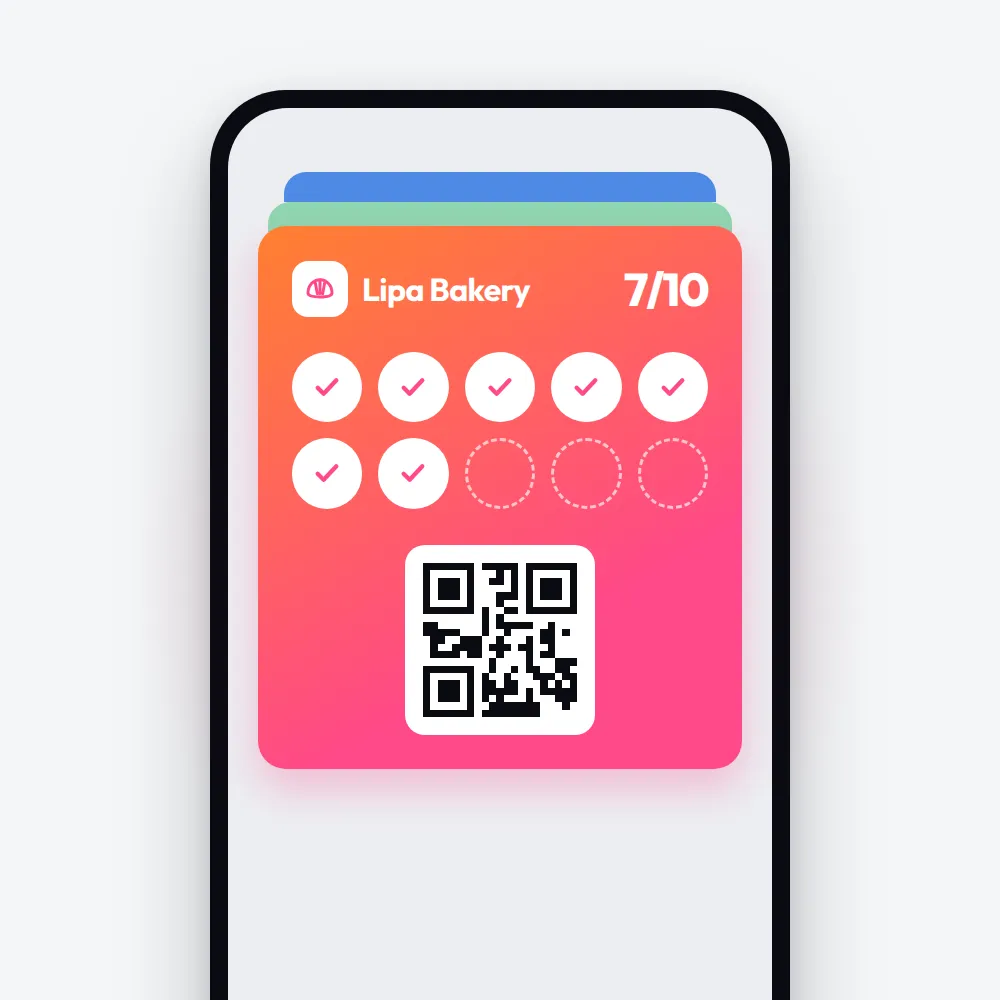
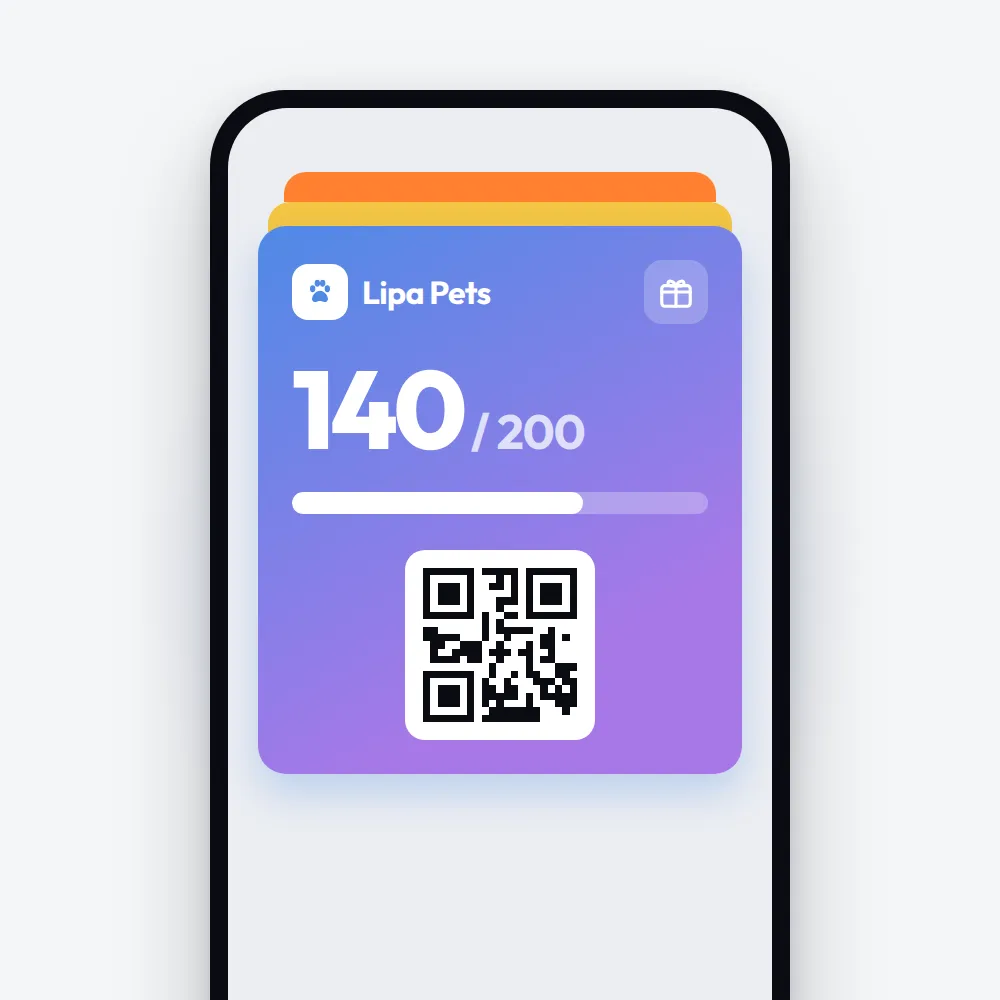
| What the customer sees | 6 of 10 stamps | 140 of 200 points |
| Works best when | The bill is about the same every time | The bill varies a lot |
| At the till | One scan or tap | The amount, sent by the till or typed in |
| Typical reward | One product free | Money off, or a choice of rewards |
| Weak spot | Treats a 4 € visit like a 60 € one | Feels slow when baskets are small |
On the phone, the two look and behave the same way: a pass in Apple Wallet or Google Wallet that updates after every purchase. A digital stamp card and a points card differ only in what they count and how the progress is drawn.
Question 1: does the bill change much?
Take last week's receipts. If most of them sit within a couple of euros of each other, a stamp says something true: one visit, one stamp, and every stamp is worth about the same to you.
If they range from a 4 € bag of dog treats to a 55 € sack of dog food, a stamp starts to mislead. Here is a pet shop example, with the same 10 € reward on both cards:
| Example | Treats buyer | Food buyer |
|---|---|---|
| Typical month | 4 visits × 4 € = 16 € | 1 visit × 55 € = 55 € |
| Stamp card: 10 € off after 10 visits | Reward every 2.5 months, on 40 € spent (25%) | Reward every 10 months, on 550 € spent (1.8%) |
| Points card: 1 point per euro, 10 € off at 200 points | Reward every 12.5 months (5%) | Reward every 3.6 months (5%) |
Same shop, same reward, and the stamp card gives your smallest spender a 25% return while your best customer gets under 2%, and waits ten months for it. Points pay everyone the same rate, 5% in this example. That is the whole case for points, and it is a strong one wherever baskets vary.
Question 2: how often do they come?
The second question sets the length of the card, and it matters for both types. A loyalty card works because the reward feels close. A study of a real café reward programme found that members bought coffee more often the closer they got to the free one (Kivetz, Urminsky and Zheng, Journal of Marketing Research, 2006). That pull only works when the end is in sight.
A bakery customer who comes twice a week fills a 10-stamp card in about five weeks. A barber's client who comes every four to five weeks would need most of a year for the same card, and nobody chases a reward that far away. For them, six stamps is plenty, which is the length we suggested in the barber shop stamp card setup.
Points have the same problem in a different form. If a shoe store customer spends about 80 € three times a year, a first reward at 500 points is a reward for 2028. Put the first one low enough to reach in two or three visits, and the bigger ones further up.
When I'd choose stamps
- Bakery, café, ice cream, bubble tea: same bill, frequent visits. Eight to ten stamps.
- Barber, nail studio, car wash: same bill, monthly visits. Five or six stamps.
- Anywhere the queue is long: a stamp is one scan. With Loyalius a staff phone scans the card, or a connected till adds the stamp from the receipt, and nobody types anything.
There is a money reason too. A stamp card usually ends in a free product, and a free product costs you its cost price, not its shelf price. The stamp card maths shows why that is often only 2% to 4% of what the customer spent to earn it.
When I'd choose points
- Pet shop, deli, wine shop, health food store: frequent visits, mixed baskets.
- Shoe store, fashion, bookshop, gift shop, florist: rarer visits, bills that vary a lot.
- Shops that want to steer what people buy: points let you double them in a quiet hour or give extra on one category, which a stamp can't do as neatly.
Our points card starts at one point per euro and lets you set up to ten rewards, so you can build a short ladder: something small that a new customer reaches on the second visit, something worth saving for after that.
The honest cost of points is that they need the amount. If your till is connected, it sends it. If not, staff scan the card and type the bill. That is fine at a shoe store on a Tuesday afternoon and a nuisance at a bakery at 8 in the morning.
The awkward middle
Some shops sit in between: a florist selling 3 € single stems and 70 € bouquets, a bakery that also sells 35 € birthday cakes. Two ways to handle it:
- Stamps with a floor. One stamp for every purchase over a set amount, say 10 €. Write it on the card ("one stamp per purchase from 10 €") so nobody has to argue at the till.
- Cashback. It is points with the maths done for the customer: 5% back shows as euros on the card, and people understand euros without a conversion table. Our cashback card works this way.
I'd try the floor first. It keeps the card simple, and simple is what gets explained at the counter.
Changing your mind later
Picking the wrong type is fixable, but don't fix it by wiping cards. Someone at 8 of 10 stamps who wakes up to 0 of 200 points will tell you how they feel about it. Let open cards finish, then move new customers to the new card. If you are coming from paper, customers can bring their paper stamps over when they join, so the switch costs them nothing.
If you're still torn, start with stamps
My default is stamps. A stamp card explains itself in one sentence at the till, a customer understands "7 of 10" in a second, and a new member of staff can run it on day one. I'd only move to points when the bills really do vary.
Here is a test for this week: take twenty receipts and note the smallest and the biggest. If the biggest is more than about three times the smallest, go with points. If not, stamps. Then set it up and watch which customers reach a reward in the first month; a 30-day free trial is long enough to find out whether you guessed right.
More stories
 Loyalty program for a gym or fitness studio: get January's new members to February
Most January joiners decide by February whether they stay. A visit-based stamp card and one comeback message help them keep going. Here is the setup.
 Loyalty program for multiple locations: a rollout plan from pilot to every branch
One set of rules, a four-week pilot in two branches, no changes in December, then weekly waves: a dated rollout plan for chains of 5 to 100 shops.
 How much does a loyalty reward really cost? The stamp card maths
A free 10th coffee is not a 10% discount. Here is how to work out what a stamp card reward really costs you, and how to pick one that feels big.