
Delivery app commissions too high? Move your regulars, keep the app for strangers
 Oleksii Andriiuk
Founder
If the delivery app commission takes close to a third of every order, leaving the platforms is rarely the answer, because they still bring you people who have never heard of you. The fix is narrower: find the regulars who order from you through the app every week and give them a reason to order directly and pick up. Moving even a hundred orders a month from the app to your counter is worth several thousand euros a year, and the strangers can keep using the app.
I think of the apps as a very good shop window and a very expensive till. A shop window is worth paying for when it brings in someone new. Paying 7 € for the same family's Friday pizza every single week is something else: that is rent on a customer who already loves you.
How much of your revenue goes through delivery apps?
For many restaurants it is a quarter or more. When Austria's competition authority surveyed restaurants in Vienna, they earned on average 25 to 30 % of their total revenue from online platform orders in 2023, according to the Bundeswettbewerbsbehörde's sector inquiry into food delivery platforms (published 31 August 2026). The same inquiry found that 89 % of the restaurants also offer takeaway, so most already have the counter they need for pickup.
The demand is not going away either. In 2024, 19.8 % of all people in the EU had ordered a delivery from a restaurant, fast-food chain or caterer online in the previous three months, up from 14.9 % in 2020, according to Eurostat's internet purchases data (as of November 2026). Switching the apps off means disappearing for those people.
Delivery app commission: leave the apps or move your regulars?
There are two ways out of high delivery app fees, and they are not equally risky.
| Leave the apps | Keep apps, move regulars | |
|---|---|---|
| New customers | You lose the shop window | Still find you |
| Commission | Gone, with the orders | Falls on every moved order |
| Work | Own riders, own website | A note, a card, a phone line |
| Risk | High | Low |
I'd move the regulars. Leaving the apps only makes sense if you are already so busy that the app orders get in the way of your own guests. For everyone else, the cheaper plan is to stop paying commission twice for the same people. If you run a full restaurant rather than a takeaway, our page on loyalty for restaurants shows how the points and pickup side of this works in a dining room.
A worked example: one pizzeria, 1,000 app orders a month
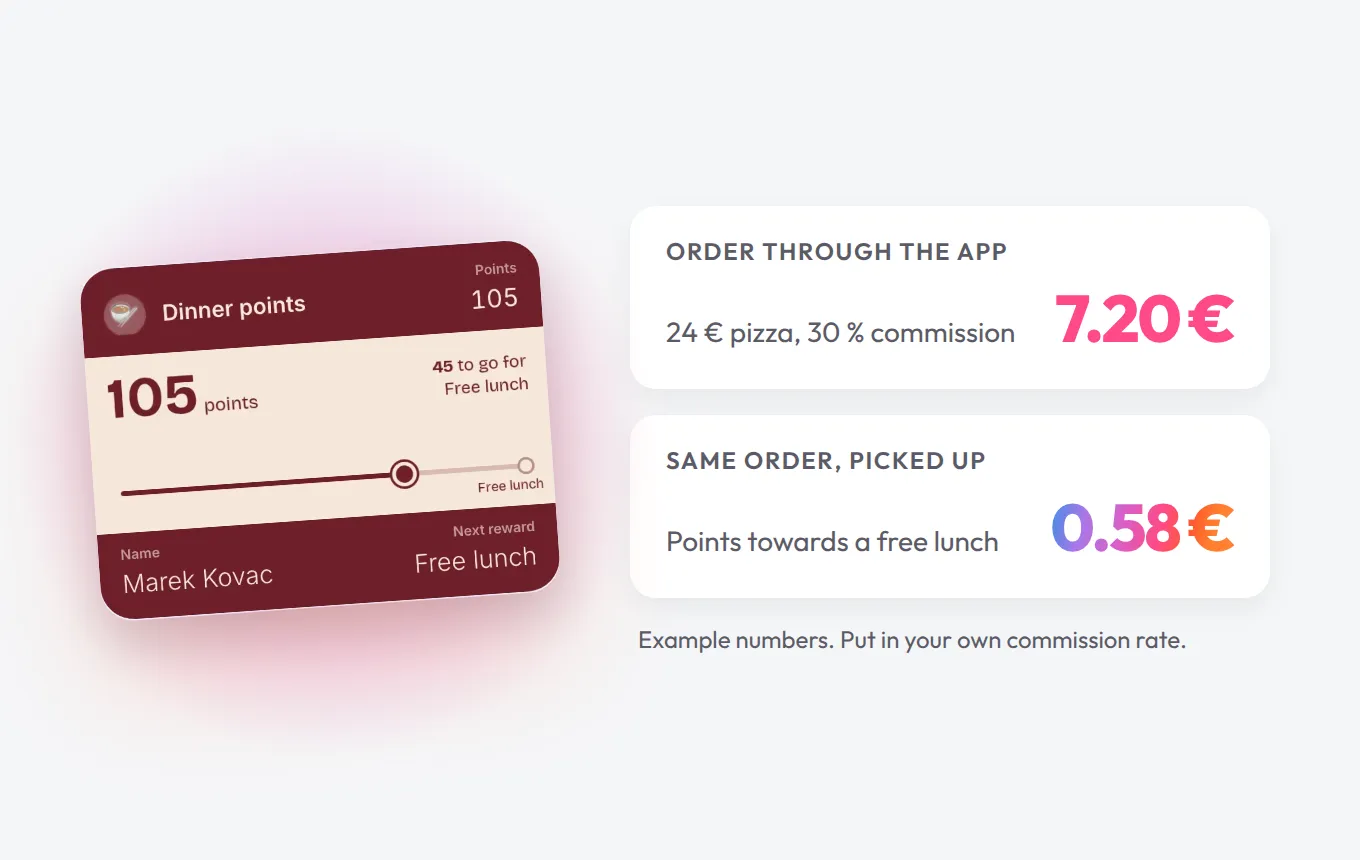
Take a pizzeria on a residential street, call it Pizzeria Nonna, open from 11:30 to 22:00. These are example numbers, chosen so the share of app orders matches what the Vienna inquiry found. It gets 1,000 app orders a month at an average of 24 €, so 24,000 € goes through the platforms, roughly 28 % of its monthly revenue. Its contract takes 30 % on orders delivered by the platform's riders. Put your own rate in here: it is on every payout statement.
Somebody at Nonna goes through a month of order tickets and finds about 120 people who order at least twice a month and live within ten minutes. Together they place 300 of the 1,000 orders. The goal is modest: move one in three of those orders to phone-and-pickup within three months.
| Per month, example | Before | After |
|---|---|---|
| App orders | 1,000 | 900 |
| Pickup orders from regulars | 0 | 100 |
| Commission paid | 7,200 € | 6,480 € |
| Reward cost on pickups | 0 € | 58 € |
Every moved order saves 7.20 € of commission. The reward costs about 0.58 € of it: one point per euro, a free lunch menu (a pizza and a drink, 12 € on the menu, about 3.60 € in ingredients) at 150 points, so 2.4 % of what a regular spends comes back to them. Add a free drink on each regular's first pickup, about 0.60 € each, roughly 36 € once.
So 100 moved orders bring 720 € a month back, minus 58 € in rewards, minus a loyalty card at 19 € a month on our Starter plan. That leaves about 640 € a month, or more than 7,500 € a year, from a third of the regulars' orders. Three moved orders a month cover the card.
How to get customers to order direct
Do these in order. The first two take an evening, the rest run on their own.
- Find the regulars. Your staff already know them: the same names and streets come up on the tickets every week. Write down the 20 to 30 you see most. They are the whole plan.
- Read your contract first. Look for anything it says about prices on your own channels and about what you may put in the bag. The Austrian inquiry found best-price clauses in one platform's terms. This is not legal advice: if a clause is unclear, ask the platform in writing.
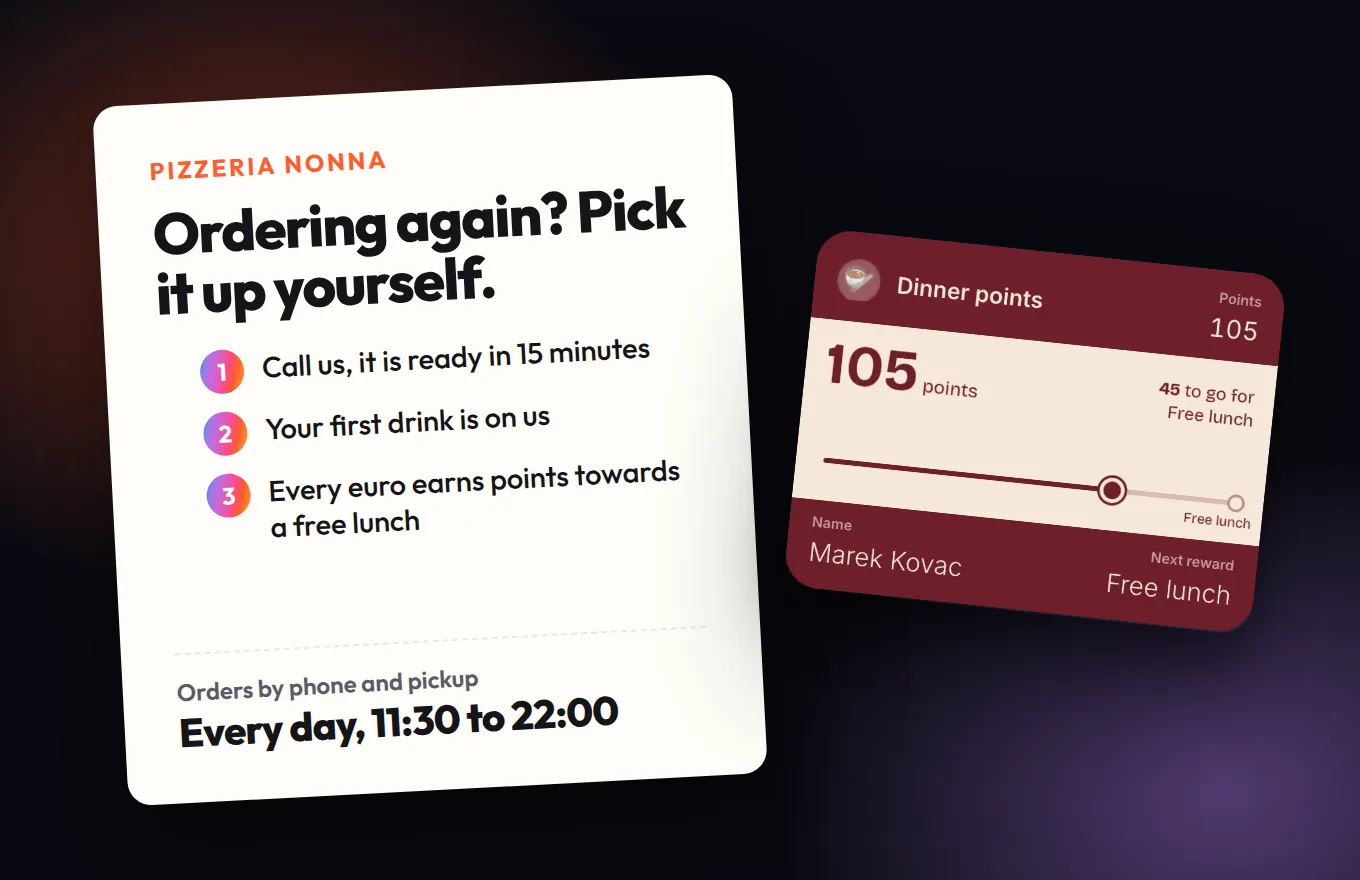
- Put a note in every bag. Not a discount voucher, just an invitation: your phone number, your pickup hours, "ready in 15 minutes" and a free drink on the first pickup. Everyone gets it, but it only works on the people who live close and order often, which is exactly who you want.
- Make ordering direct as easy as the app. Your phone number and pickup hours on your Google Maps listing, in the window and on the pizza box. Answer the phone at 19:00 on a Friday, or the plan dies on the first evening.
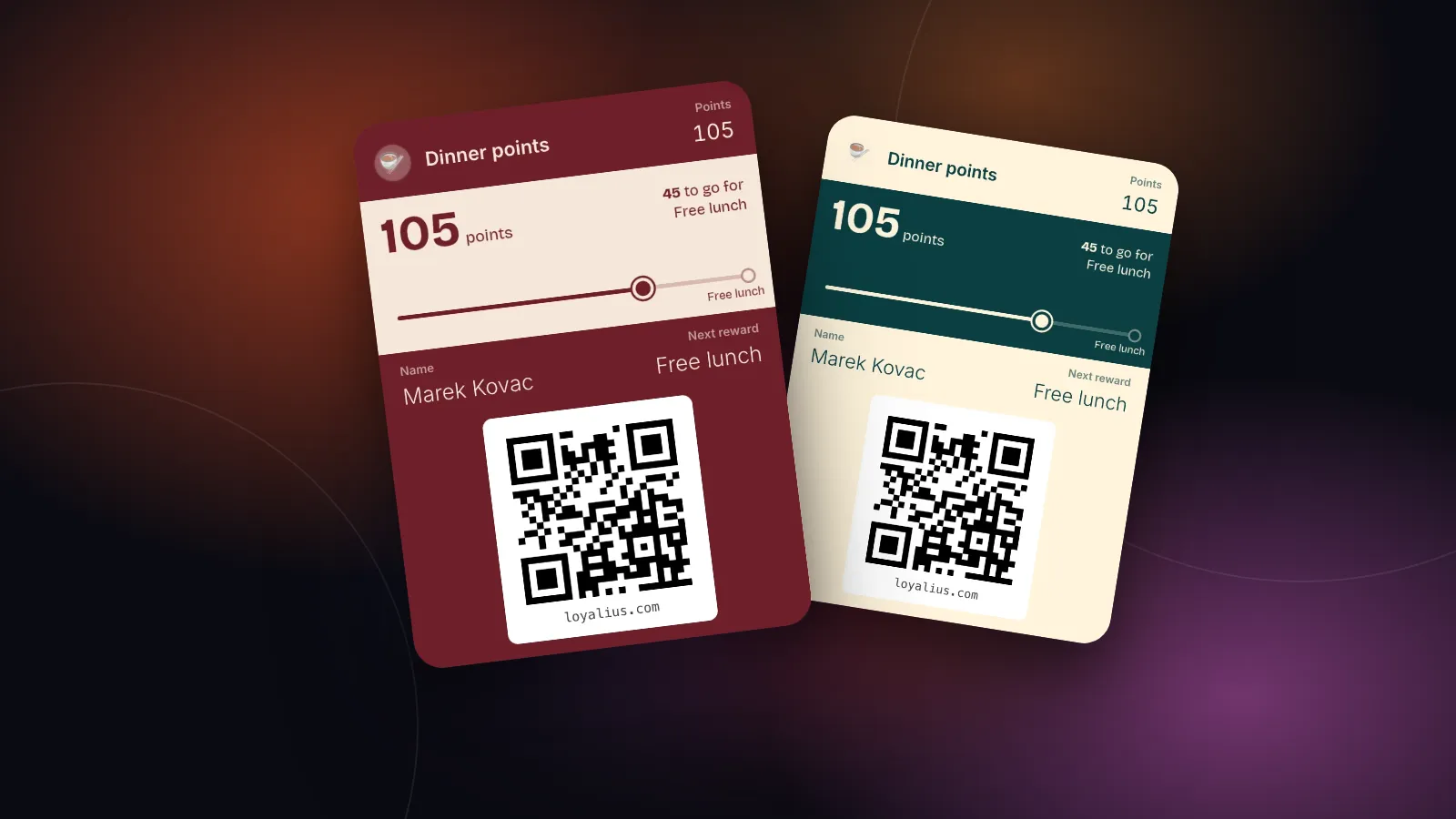
- Reward the visit, not a lower price. A points card at the counter gives regulars something the app cannot: points towards a free lunch every time they walk in. Loyalius, a loyalty platform that puts stamp, points and cashback cards in Apple Wallet and Google Wallet, is one way to do it: they scan the QR poster on your counter, and a points card lands in their phone with no app to install. Getting staff to offer the card at the till matters more than the design.
- Count after eight weeks. Pickup orders from regulars, and app orders from the same names. If pickups are flat, the note or the phone is the problem, not the idea.
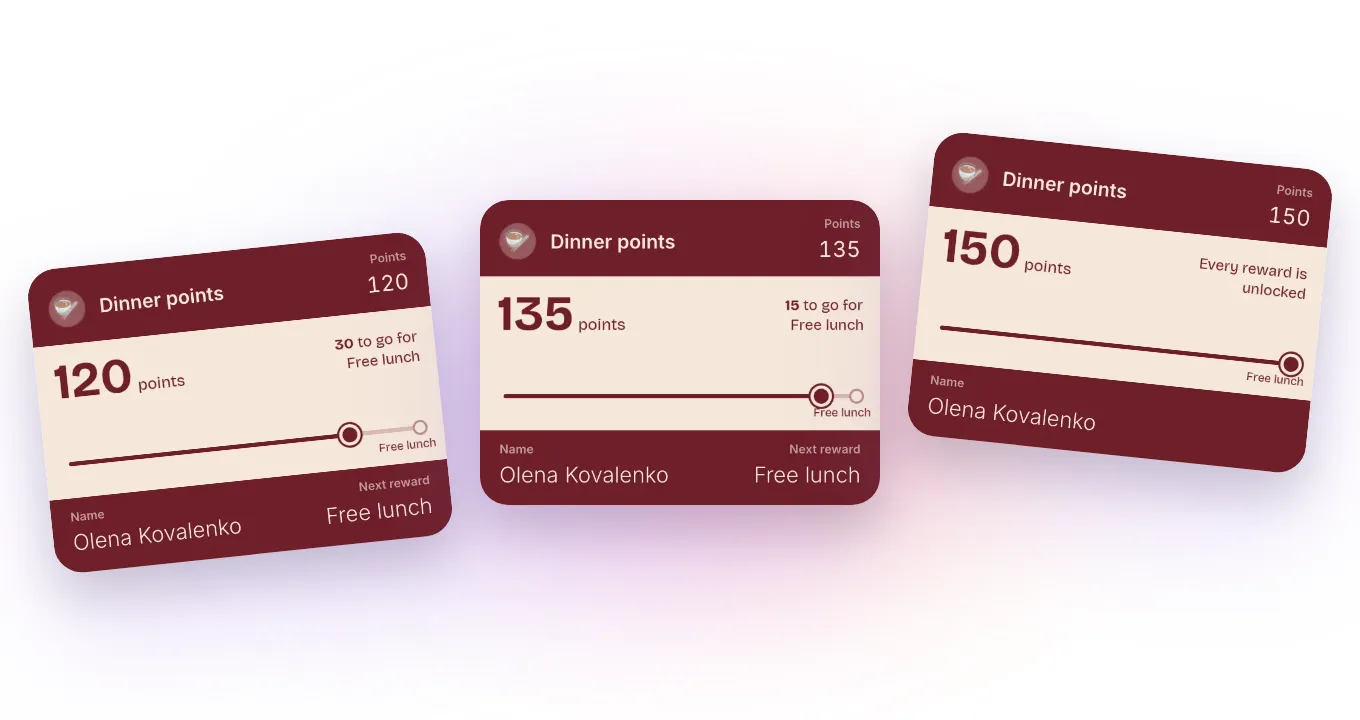
The reminder does part of the work for you. When a regular is 15 points from the free lunch, a short Wallet message on a Thursday afternoon tends to turn into a Friday pickup. Messages like that need the customer's consent; I wrote about which loyalty messages need consent separately.
Should I charge more on the apps than in the restaurant?
Many restaurants do, and it is the quickest way to stop losing money on every app order. Whether you may depends on your contract, so read its pricing clause before you change the app menu. A small, honest difference is easy to explain: the app costs you more, so the pizza costs a bit more there.
What owners ask about delivery platforms
How much commission do delivery apps take from restaurants?
It depends on the contract and on who delivers. Commission is usually highest when the platform's riders deliver, and lower when you deliver yourself or the guest picks up. Your exact rates are in the contract and on each payout statement, and those are the numbers to put into the example above.
Should I start my own delivery service instead?
Only if you have the orders to keep a rider busy all evening. A rider is paid for every hour, not every order, and a quiet Tuesday makes that expensive. Most small restaurants get further by moving regulars to pickup first and thinking about their own delivery later.
Will regulars really walk in to pick up their food?
Some will and many will not, which is why the example only moves one order in three. The people who live five to ten minutes away and order on a fixed evening switch most easily. The ones who order because it is raining and they are on the sofa will stay on the app, and that is fine.
Twenty names on the tickets
You do not need a new website or a fight with the platform to pay less commission. You need twenty names, a note in the bag, a phone someone answers and a reason to walk in. If you want a fuller setup for the dining room as well, I wrote down one points setup and a weekly routine for restaurants. My guess is that when you write those twenty names down tonight, you will be surprised how many of them live around the corner.
More stories
 Regular customers stopped coming? How to spot it early and win them back
Lost regulars rarely leave in anger. How to see who has gone quiet, why they drift away, and how to bring them back with one small reason and a date.
 Should you close your restaurant on slow days? Do this sum first
Quiet Mondays? Work out what the day really earns, how many guests would beat closing it, and how to fill it if it is worth keeping. A bistro example.
 How to get staff to upsell when they hate sounding pushy
Staff never recommend anything? Give them one product, one sentence and one moment at the till each week, then count. A bakery example with the sums.