
How to get repeat customers when first-time visitors never come back
 Oleksii Andriiuk
Founder
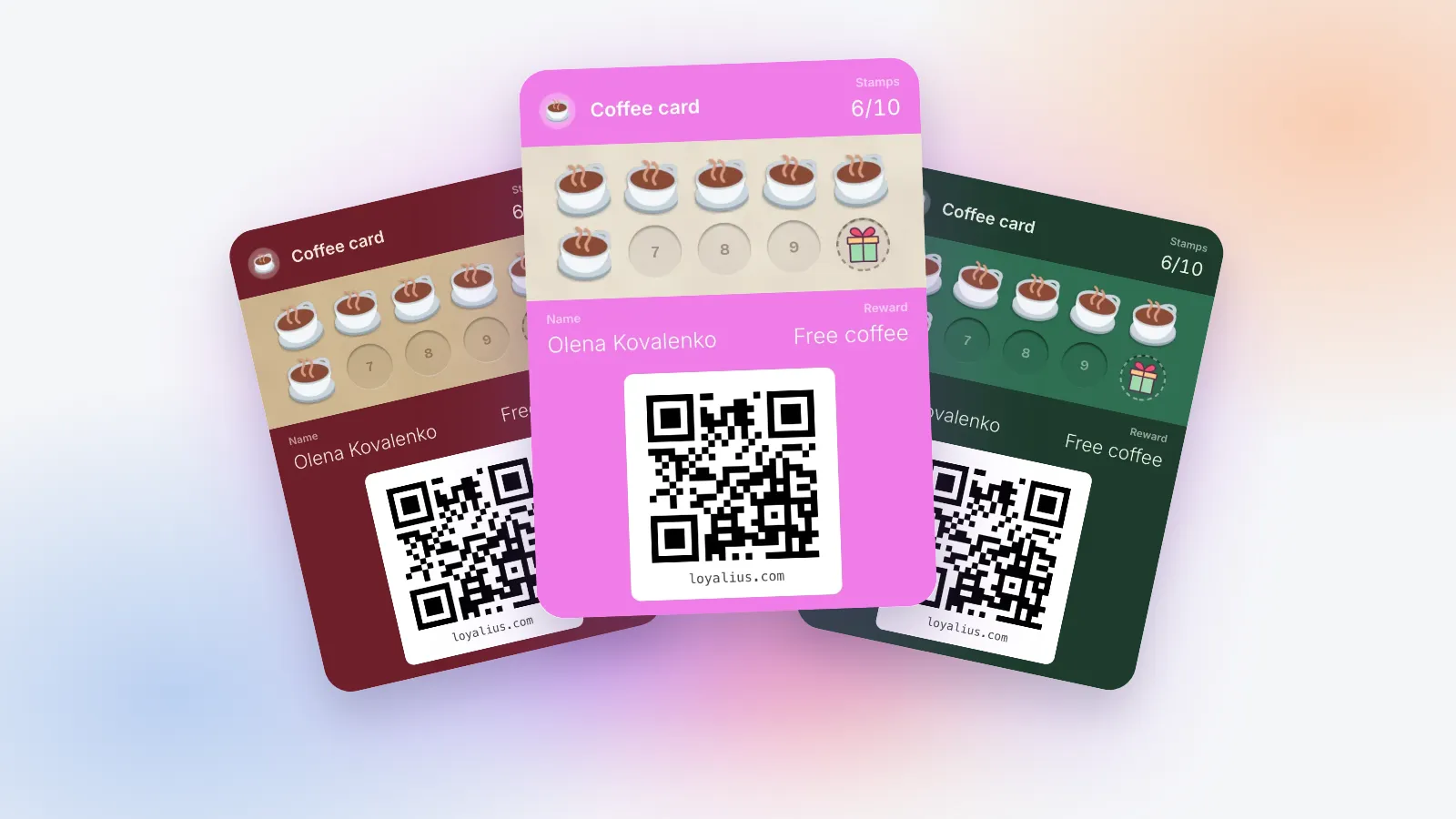
The fastest way to get repeat customers is to stop chasing the first visit and win the second one, within about two weeks. Most first-time customers who never come back were not unhappy: they simply left without a reason to return, and a month later they have forgotten your name. Notice who is new, give them one specific reason to come back soon, remind them once, and recognise them when they walk in again.
I like this problem because it is cheaper to fix than almost any other. You have already paid for that first visit with your rent, your sign and your window. Letting the person walk out and disappear is like baking a tray of buns and leaving half of them in the oven.
Why don't first-time customers come back?
Usually nothing went wrong. The coffee was fine, the service was fine, and "fine" is exactly the problem, because there is always another fine place on the way. In 2023 the EU had 1,568,284 businesses serving food and drinks, about one for every 290 people (Eurostat structural business statistics, as of November 2026). Your new customer passes several of them on the way to you.
Each visit also costs them more than it used to. In September 2026, prices in EU restaurants and cafés were 3.7 % higher than a year earlier (Eurostat consumer price data, as of November 2026). People who count every coffee choose a place on purpose, and a place they cannot quite remember does not get chosen.
The common reasons a first visit stays a single visit:
- They do not remember you. No name stuck, nothing to tell a friend about.
- There was no next step. Nobody suggested anything to try next time.
- It was not on their route. One visit on a detour, then back to the old habit.
- The first visit was average. A wait, a lukewarm cup, a tired greeting.
Only the fourth is about quality. The other three are about the minutes after the till, and those are the minutes most shops leave empty.
The second visit is where regulars are made
A first visit is curiosity. A second visit is a choice. Once someone has come back by themselves, a third and fourth visit are far easier, because the habit has started and you are now "my café" instead of "that place near the tram stop".
That is why I would put my effort into first-timers before I spent a single euro on adverts. Advertising buys more first visits. If three out of four of those people never return, you are filling a bucket with a hole in it, and paying for the water.
How to get repeat customers in 14 days
Two weeks is a good window: short enough that they still remember you, long enough for a normal routine to bring them past again. Here is the routine I would run, in order.
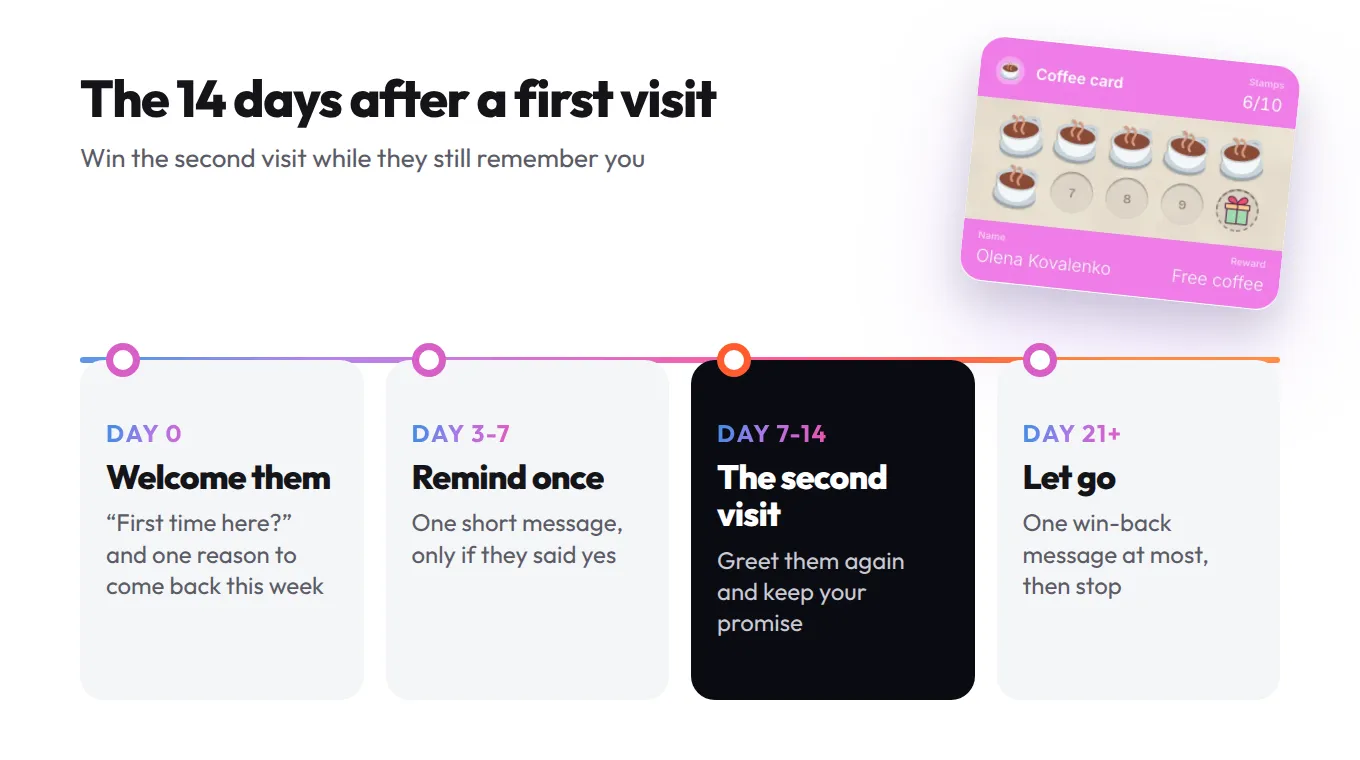
- Day 0, at the till: notice they are new. One question from whoever serves: "First time here?" It costs nothing and changes how the next minute goes. A regular gets "the usual?"; a new face gets a welcome.
- Day 0: give one reason to come back, with a date on it. Not a discount on the visit they are already paying for. Something for the next one: "Come back this week and the cardamom bun is on us with your coffee." Specific beats generous. A date beats "sometime".
- Day 0: leave them with your name. A stamp card with the first stamp already on it does this well, because they see it every time they open their wallet. A paper card works too, if they keep it.
- Day 3 to 7: remind them once. If they have agreed to hear from you, one short message is enough. If not, the card in their wallet does the reminding. Do not chase people who have not said yes; I explain where the line is in which loyalty messages need consent.
- Day 7 to 14: recognise the second visit. "Good to see you again" is worth more than the free bun. Add the second stamp, give the reward you promised, and learn their name if they offer it.
- After day 21: let go politely. One win-back message at most, then stop. Someone who did not return after a reminder and three weeks was a passer-by, and that is fine.
The till moment matters most, and it is the one that slips when the queue is long. If your staff find the ask awkward, the one-sentence script in getting customers to join at the till works for this too.
A worked example: one café, 240 new faces a month
Take a café on a side street near a tram stop, call it Café Lipa. It opens 7:30 to 18:00, Monday to Saturday, and the average customer spends 4.80 € a visit. About ten people a day are there for the first time: 240 new faces a month. These are example numbers for a small city café; put your own in their place.
Today a quarter of the new faces come back within three weeks, and about half of those become regulars who visit twice a week. Café Lipa starts the 14-day routine and lifts the second visit from 25 % to 30 %.
| Today | With the routine | |
|---|---|---|
| New faces a month | 240 | 240 |
| Back within 3 weeks | 60 (25 %) | 72 (30 %) |
| New regulars a month | 30 | 36 |
| Extra regulars a month | +6 |
Six extra regulars a month does not sound like much. But regulars stay. If they stay about six months on average (again an example), after half a year Café Lipa has 36 more regulars than before. At 8 visits a month and 4.80 € each, that is 38.40 € per regular, or 1,382 € more sales every month.
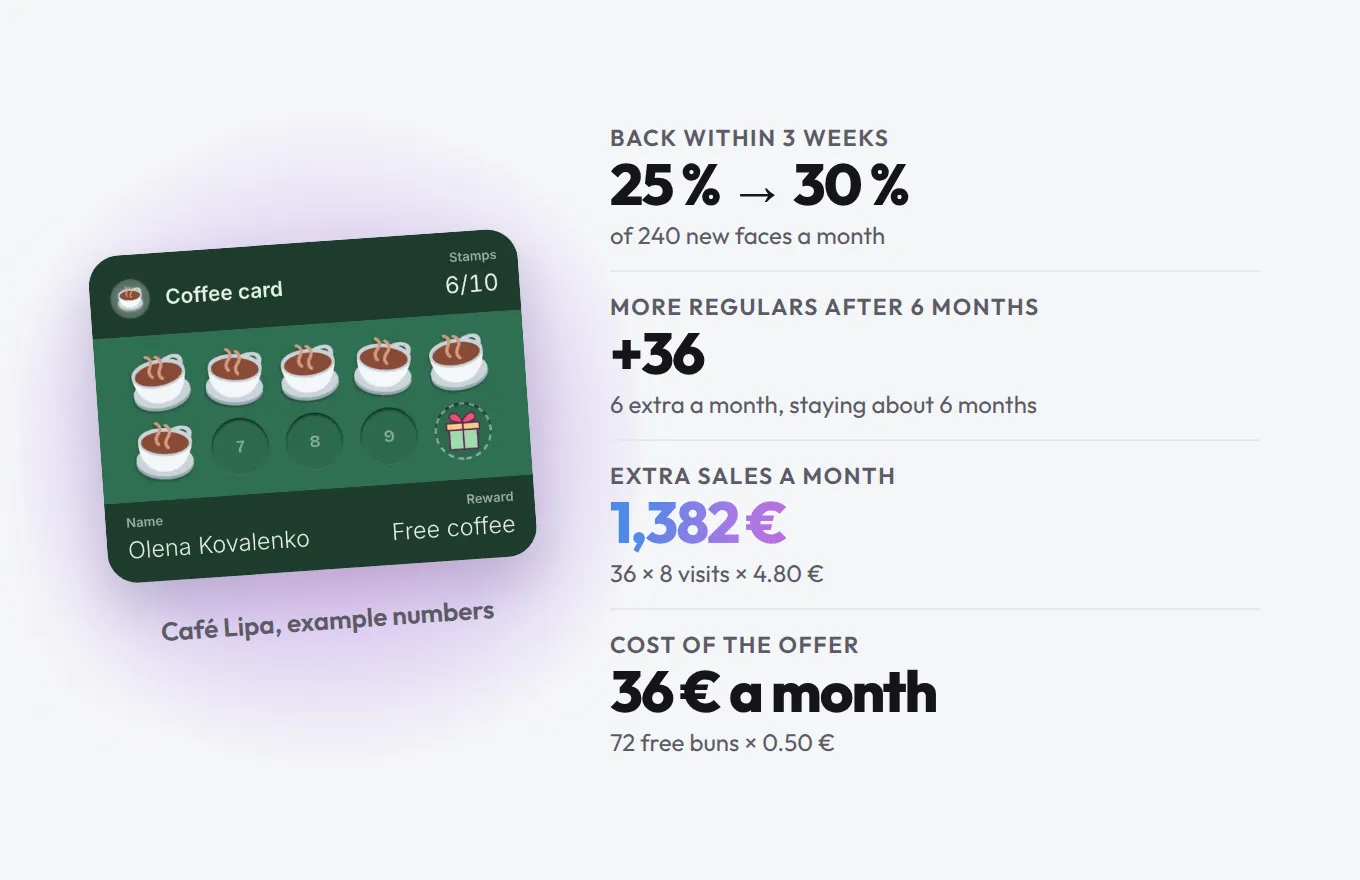
And the cost? The free bun with the second coffee is about 0.50 € in ingredients, given 72 times a month: 36 €. The question at the till is free. That is the whole budget. (For a fuller look at what rewards really cost, see the stamp card maths.)
To run the numbers for your own shop, you need only two counts: how many new faces you get, and how many of them come back within three weeks. Ask your staff to keep a tally of "first time here?" answers for one week. If you use a digital card, new cards and returning visits are counted for you.
Where a loyalty card fits
A loyalty card will not bring a stranger through the door. What it does well is the part after the first visit: it carries your name home, it shows the next reward, and it gives you a way to say "come back" without a leaflet.
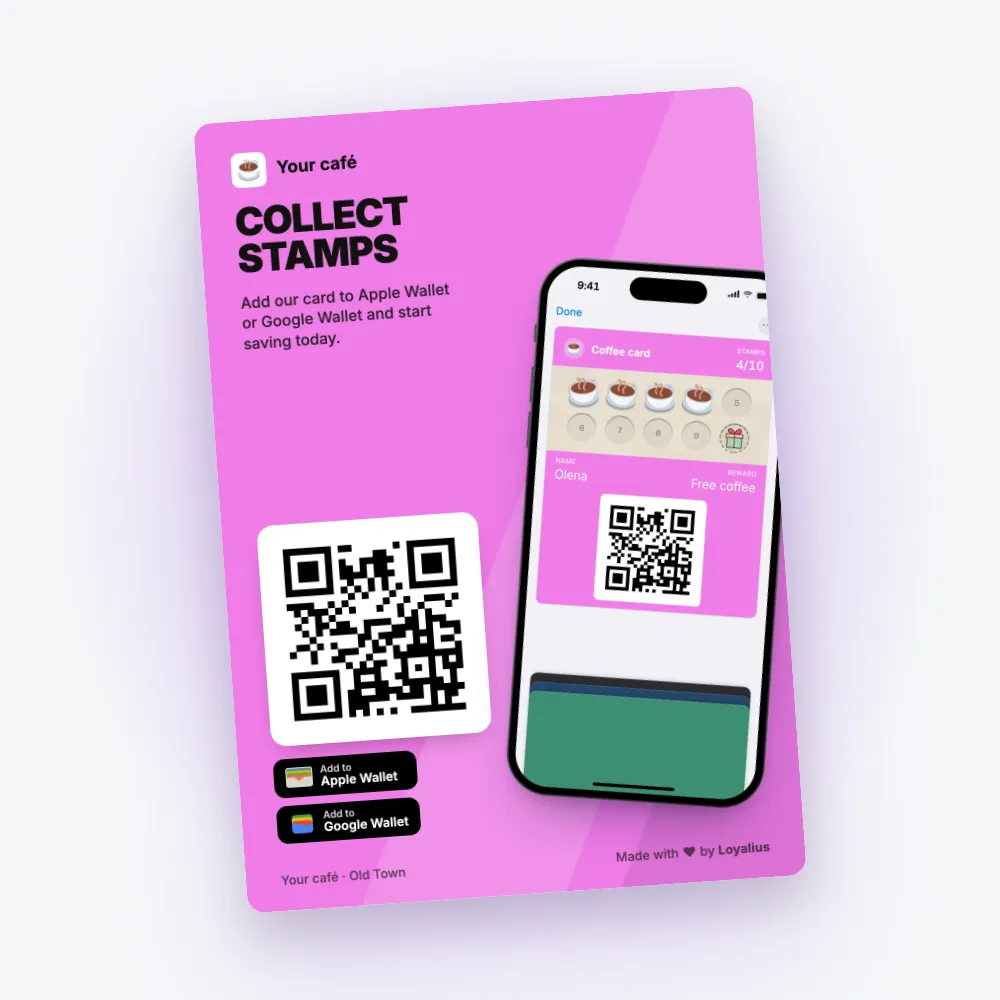
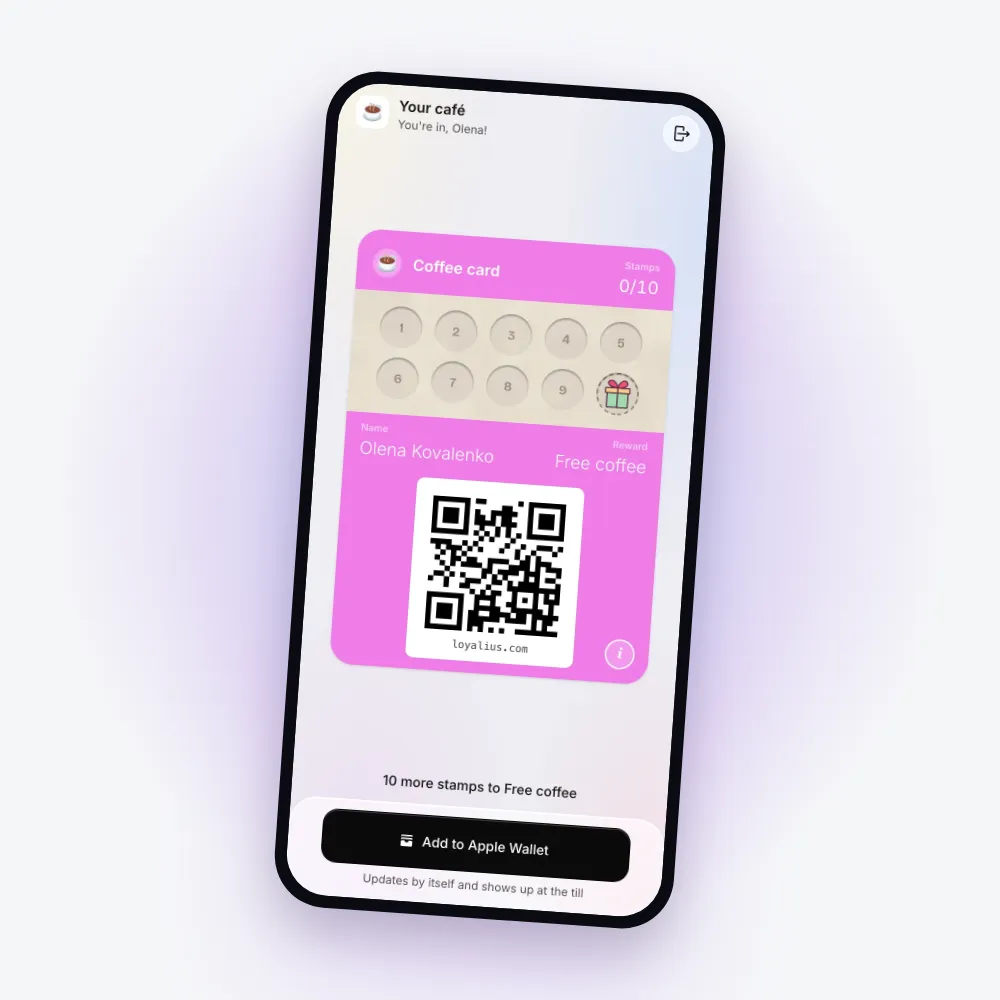
This is the job Loyalius was built for: a loyalty platform that puts stamp, points and cashback cards in Apple Wallet and Google Wallet. A new customer scans the QR poster at the counter and a minute later the card is on their phone, with no app to install. The dashboard shows who came back within 14 days and who is slipping away. If you run a café, here is how a coffee shop loyalty card works.
Questions owners ask about regulars
How long does it take to turn a customer into a regular?
There is no fixed number. I would call someone a regular once they have come three or four times within a month or so, because by then the visit has a place in their week. That is why the gap between the first and second visit matters so much: if it stretches past a month, you are starting again from zero.
What percentage of customers should come back?
There is no reliable public benchmark for small shops, and any figure you read online comes from very different businesses. Measure your own share of new faces who return within three weeks, then compare it month by month. The trend tells you more than any average.
Should I give new customers a discount on their first visit?
I would not. A first-visit discount rewards people who were already standing at your till, and it attracts bargain hunters who move on to the next offer. Put the same money into a reason for the second visit instead.
Does this work for shops that are not cafés?
Yes, with a longer window. A hair salon thinks in weeks between cuts, a pet shop in bags of food, a flower shop in occasions. The steps stay the same: notice who is new, give a dated reason to return, remind once, recognise the return.
One question at the till
Tomorrow morning, before the first customer, agree with whoever works the counter on one sentence for new faces and one reason for them to come back this week. Then count. How many of tomorrow's new faces will you see again before the month is out?
More stories
 Regular customers stopped coming? How to spot it early and win them back
Lost regulars rarely leave in anger. How to see who has gone quiet, why they drift away, and how to bring them back with one small reason and a date.
 Should you close your restaurant on slow days? Do this sum first
Quiet Mondays? Work out what the day really earns, how many guests would beat closing it, and how to fill it if it is worth keeping. A bistro example.
 How to get staff to upsell when they hate sounding pushy
Staff never recommend anything? Give them one product, one sentence and one moment at the till each week, then count. A bakery example with the sums.