
Should loyalty points expire? Why I'd keep stamps and points open
 Oleksii Andriiuk
Founder
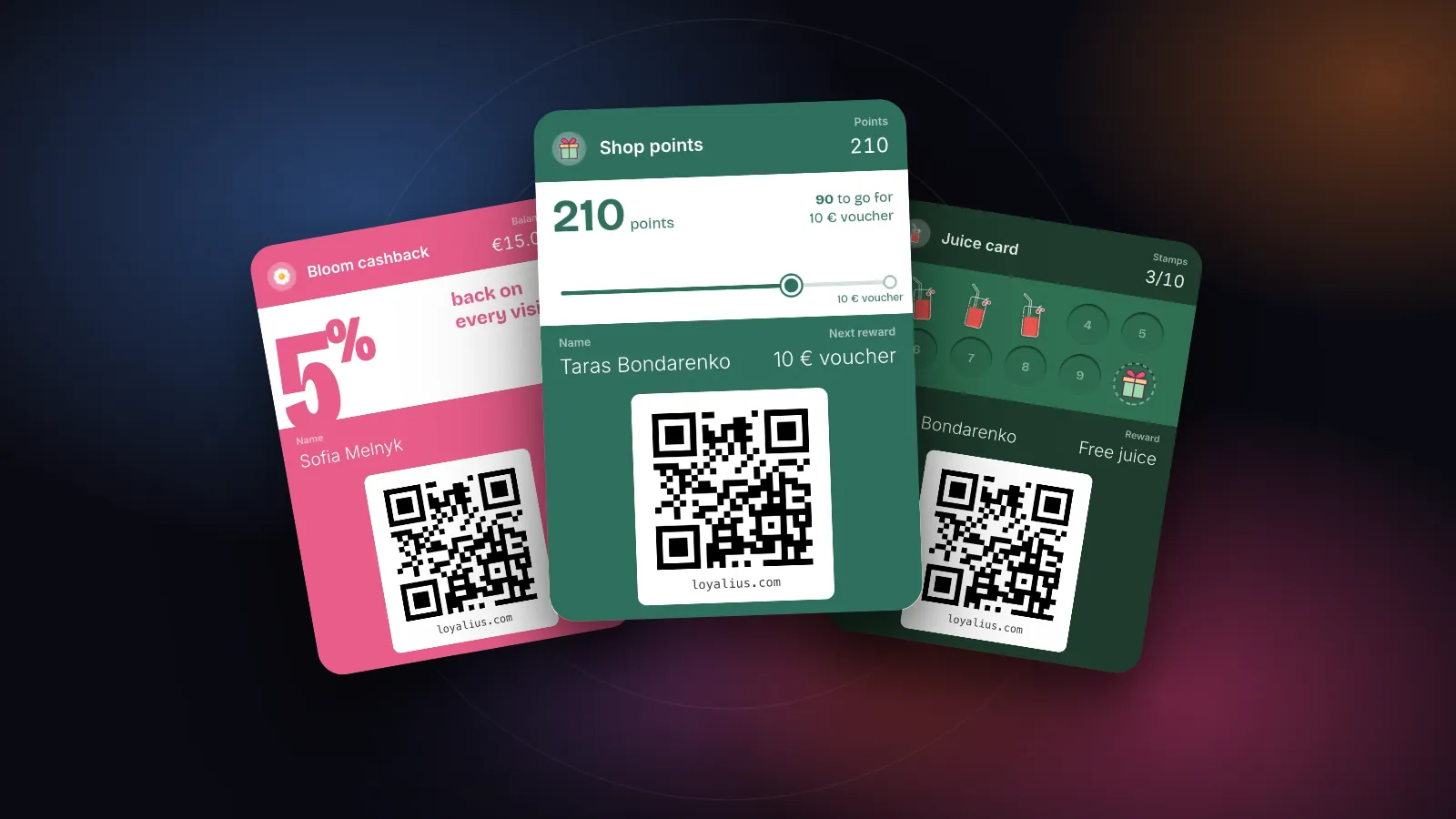
Should loyalty points expire? For most shops and service businesses, no: stamps, points and cashback earned through visits should stay on the card for as long as the customer keeps coming back. If you need a rule, make it 12 months without a visit, warn the customer a month before, and keep fixed expiry dates for prepaid bundles and short campaigns only.
That is my view, and I'll argue it below. I spent part of today reading the top results for this question, and nearly all of them are written for online stores with points balances in a customer account. Not one mentions the regular who visits a flower shop twice a year, or the stamp card that sits in a coat pocket from March to November. Those are the people an expiry rule actually hits.
Should loyalty points expire to save money?
Rarely, because expiry only saves money on customers who have already left. The usual case for expiry is money: unredeemed points on a loyalty card are a promise you have to keep, and expiry clears them off the books. That sounds sensible until you ask who those points belong to.
A stamp or point only costs you anything when it is redeemed, and it can only be redeemed by someone who walks back in. So expiry saves you money in exactly one situation: a customer who already stopped coming, comes back, and finds their reward gone. You have saved the price of a coffee or a 10 € voucher from the one person you most wanted to see again, at the exact moment they returned.
The reward itself is cheap. As the stamp card maths shows, a free product typically costs a shop 2% to 4% of what the customer spent to earn it. Compare that with what a returning regular spends over the next year, and the trade is not close.
Who an expiry rule punishes
Expiry hurts three kinds of customers, and none of them are the ones you meant to target.
- Seasonal regulars. A florist's best customers might come for Valentine's Day, Mother's Day and Christmas. A flower shop cashback card with a six-month expiry wipes their balance between every visit, so the card never pays out for the people who buy the biggest bouquets.
- Slow collectors. A bookshop customer who buys a book every two months needs well over a year to fill a ten-stamp card. Expiry tells them the card was never meant for them.
- People who had a life. A long illness, a baby, a winter abroad. They come back, they are glad to see you, and the card says zero.
The complaint does not reach head office. It reaches whoever is at the till, usually on a busy Saturday, and that person has to choose between breaking the rule and losing the customer.
Why a 31 December reset is the worst version
Some programmes reset everything on one date, often 31 December. It is easy to run, and it is the least fair rule there is.
Take two customers of the same shoe store, as an example. One earned 200 points in February; the other earned 200 points on 20 December. On 1 January both have zero. The first had ten months to use them, the second had eleven days. The January queue of "where did my points go?" is the rule working as designed.
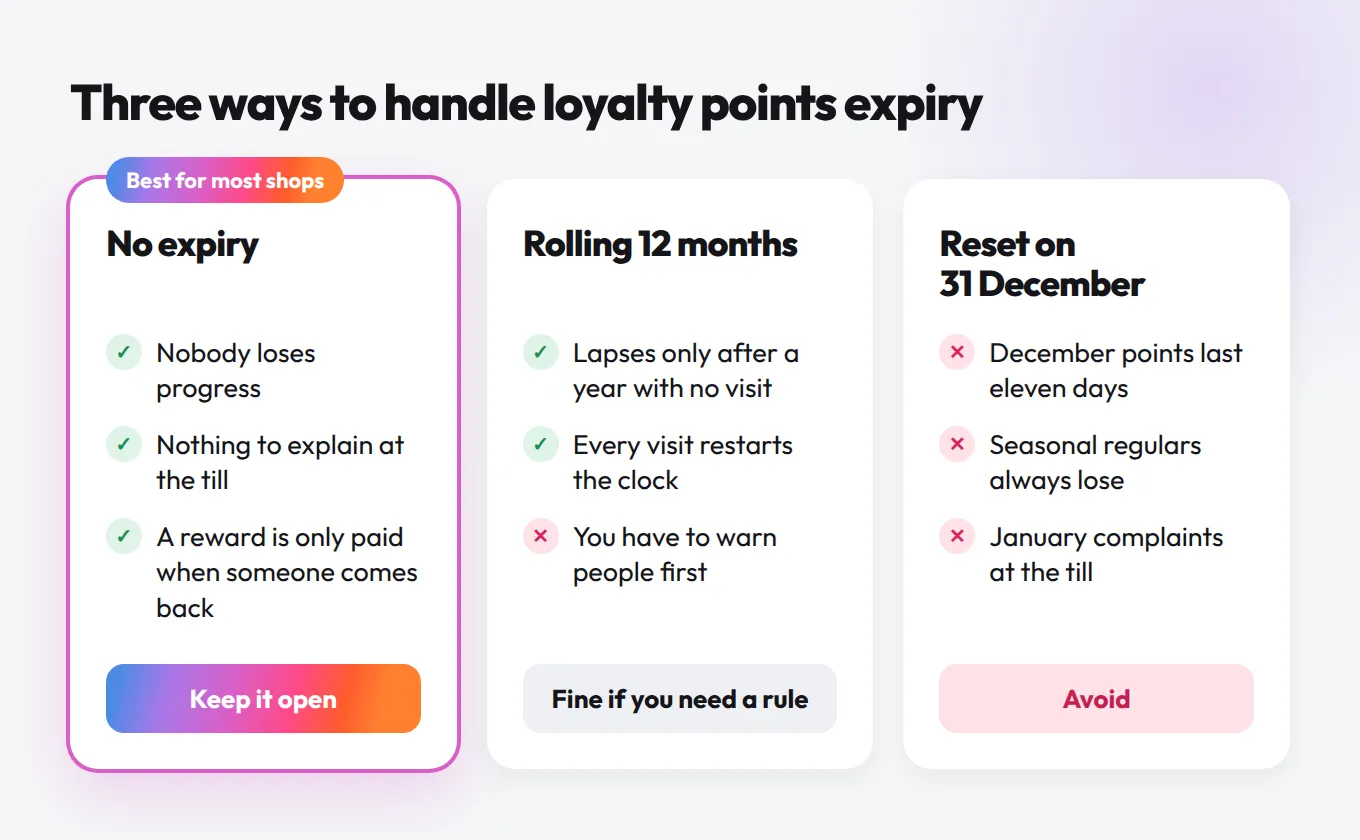
If a rule is needed at all, a rolling one is fairer: points lapse only after 12 months with no visit, and every visit restarts the clock. Anyone who is still a customer never loses a thing.
What creates urgency instead
The honest reason owners like expiry is urgency: "use it or lose it" brings people in. It does, once, and it leaves a bad taste. A reminder brings people in without the threat.
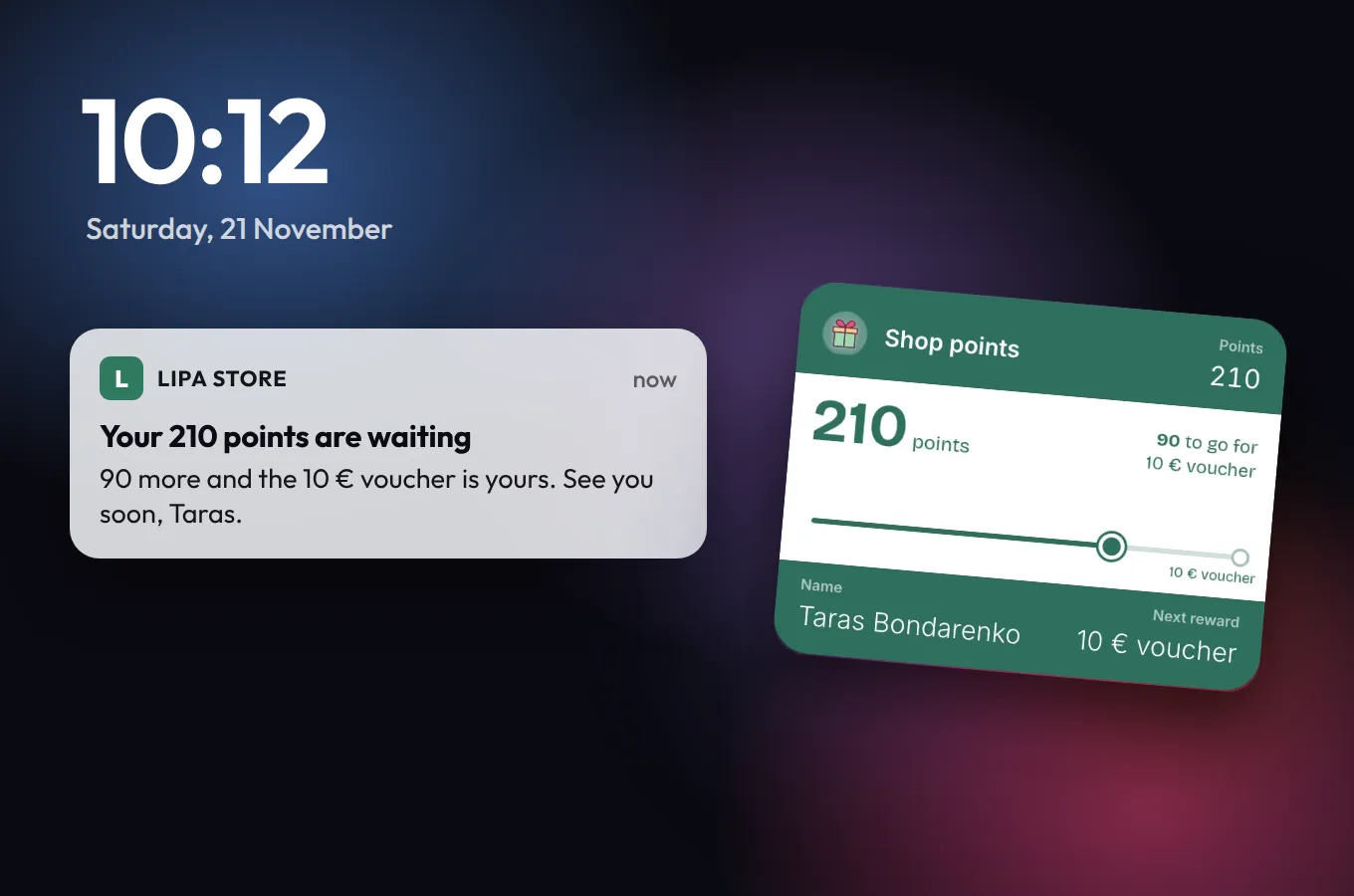
A loyalty card in Apple Wallet or Google Wallet can show a message on the customer's lock screen when a reward is waiting or when they have not visited for a while. In Loyalius, a loyalty platform that puts stamp, points and cashback cards in Apple Wallet and Google Wallet, those reminders and win-back messages go out on their own once you switch them on. "You have a free juice waiting" gets the same visit as "your stamps expire Friday", and nobody walks away annoyed.
When expiry does make sense
I'm against expiry on earned stamps and points, not against dates altogether. Three cases are different.
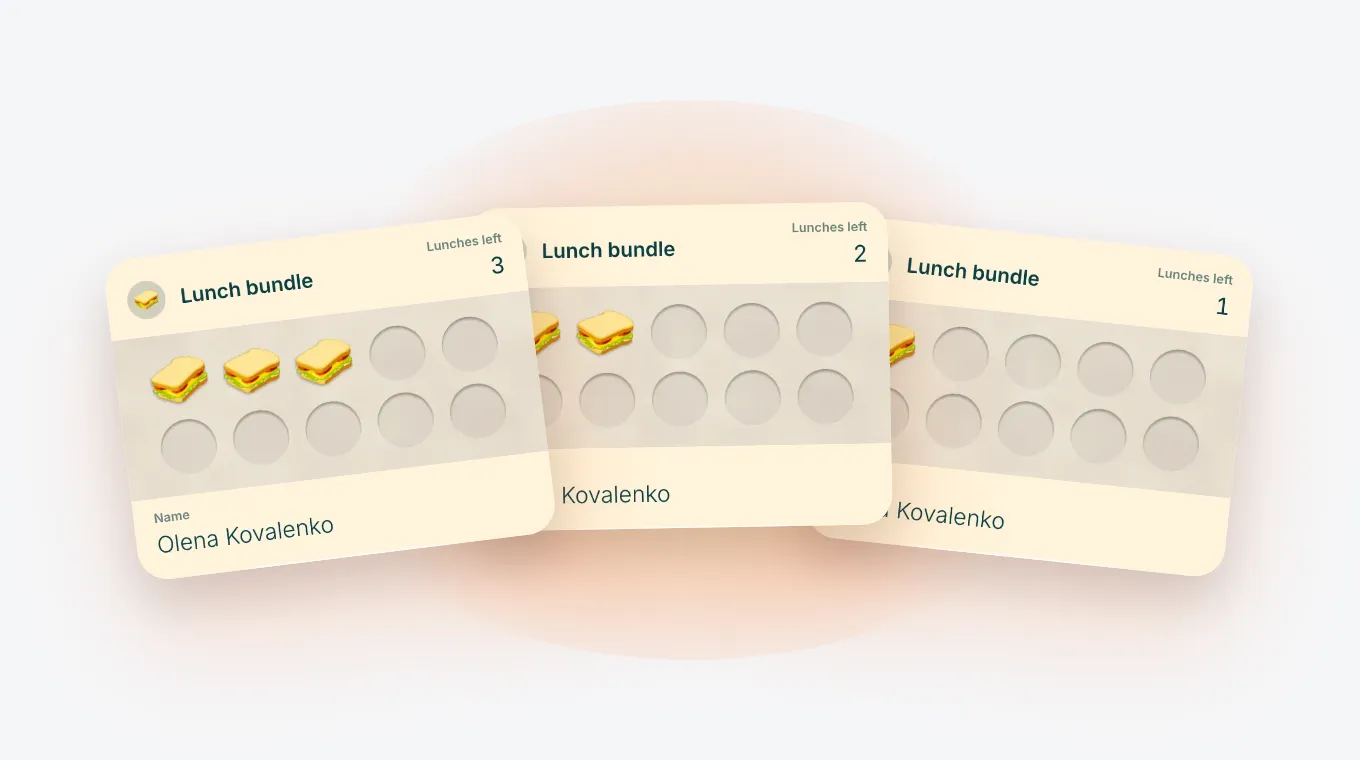
- Prepaid bundles. When a customer pays upfront for ten lunches or five car washes, a validity date can be fair, as long as it is generous and printed at the till. Our prepaid bundle card only expires if you set a validity, and each new bundle restarts the clock.
- Campaign extras. A bonus stamp for coming in during January, or double points for one week, can carry its own end date, because the customer knows from the start that it is a limited offer.
- Large chains with real liability. If you run 50 or 100 locations, unredeemed points can become a real number on the balance sheet. Ask your accountant how to treat it, and use the rolling 12-month rule with a warning message, never a calendar reset.
What owners ask about expiry
How long should loyalty points last before they expire?
If you use expiry at all, 12 months without a visit is a fair standard. It removes cards of people who have truly gone while never touching anyone who still comes in, even only twice a year.
Is it legal for loyalty points to expire?
Rules differ by country, and consumer law in Europe generally expects programme terms to be clear and fair to the customer. Write any expiry rule into your terms, show it when people join, warn them before anything lapses, and ask a local adviser if you are unsure. This is not legal advice.
What happens to stamps when I change my loyalty programme?
Keep them. When you change the reward or move from paper to a digital card, carry every existing stamp across, as described in switching from paper loyalty cards. A customer who loses progress because you changed something will remember it longer than any reward.
One thing to change this month
If your current card has a date on it, especially 31 December, take it off before December starts. Tell your regulars their stamps and points now stay as long as they keep visiting, and switch on one reminder for people who are close to a reward. You will give away a few more free coffees in January, and I think that is the cheapest goodwill you will buy all year.
More stories
 Regular customers stopped coming? How to spot it early and win them back
Lost regulars rarely leave in anger. How to see who has gone quiet, why they drift away, and how to bring them back with one small reason and a date.
 Should you close your restaurant on slow days? Do this sum first
Quiet Mondays? Work out what the day really earns, how many guests would beat closing it, and how to fill it if it is worth keeping. A bistro example.
 How to get staff to upsell when they hate sounding pushy
Staff never recommend anything? Give them one product, one sentence and one moment at the till each week, then count. A bakery example with the sums.