
Switching from paper loyalty cards to digital: what to do with the half-full ones
 Oleksii Andriiuk
Founder
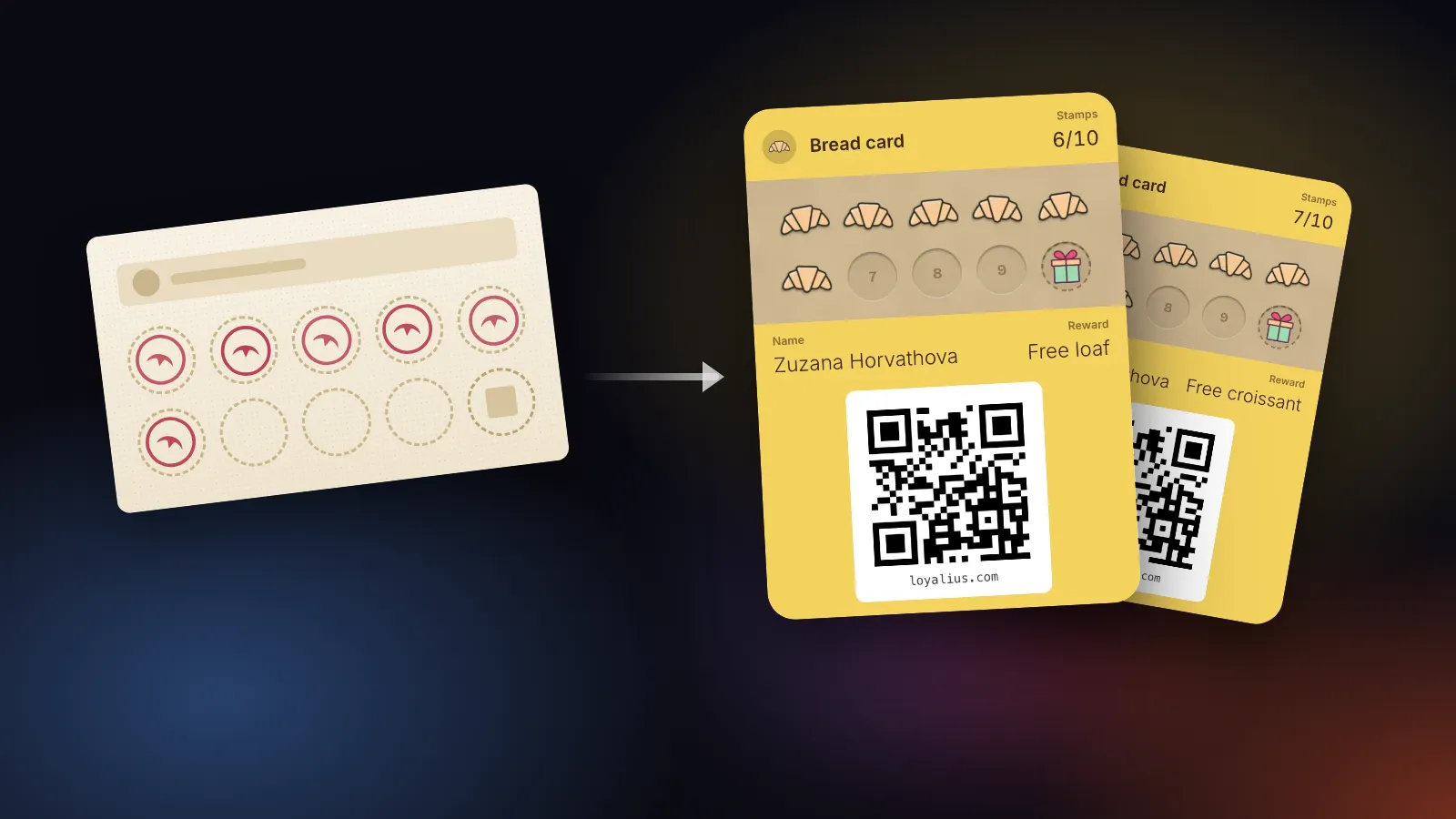
The hard part of switching from paper loyalty cards to digital is not the new card, it is the old ones: the regulars with six stamps on paper who do not want to start again. The fix is to copy every stamp across at the till the first time each customer joins, keep the same number of stamps and the same reward, stop handing out paper on one day, and give paper one clear last date about ten weeks later. Nobody starts from zero, and everyone knows when paper ends.
Every bakery that has run a paper card has the same drawer by the till: a pile of blank cards, the rubber stamp with the croissant on it, and a few cards customers forgot on the counter, half full, no name. Out in town there are dozens more, in coat pockets and car door pockets, each one a small promise you made. Moving to a digital stamp card takes an afternoon. Keeping those promises while you move is the part worth planning.
Why the half-full card is the problem
A customer with 6 stamps on a paper card has already bought 6 loaves towards the free one. If the new card starts them at 0, it feels like you took 6 loaves of goodwill back. Most won't say so; they just stop counting, and start trying the bakery across the street.
There is a second problem: you have no idea how many paper cards are out there. A paper stamp card has no list behind it, so you cannot message the people holding one or tell a weekly regular from someone who came once in June.
And paper invites a long goodbye. Run both cards with no end date and your staff will be stamping two kinds of card next autumn.
This morning I read the switch notices of two food businesses that dropped paper. One stopped accepting paper cards on a fixed date and let any unused stamps lapse, because its new system could not carry them over. The other let customers bring the old card to the counter, moved every stamp across, and handed over the free drink on the spot when a card was already full. I know which notice I would want my regulars to read.
How to switch from paper loyalty cards to digital
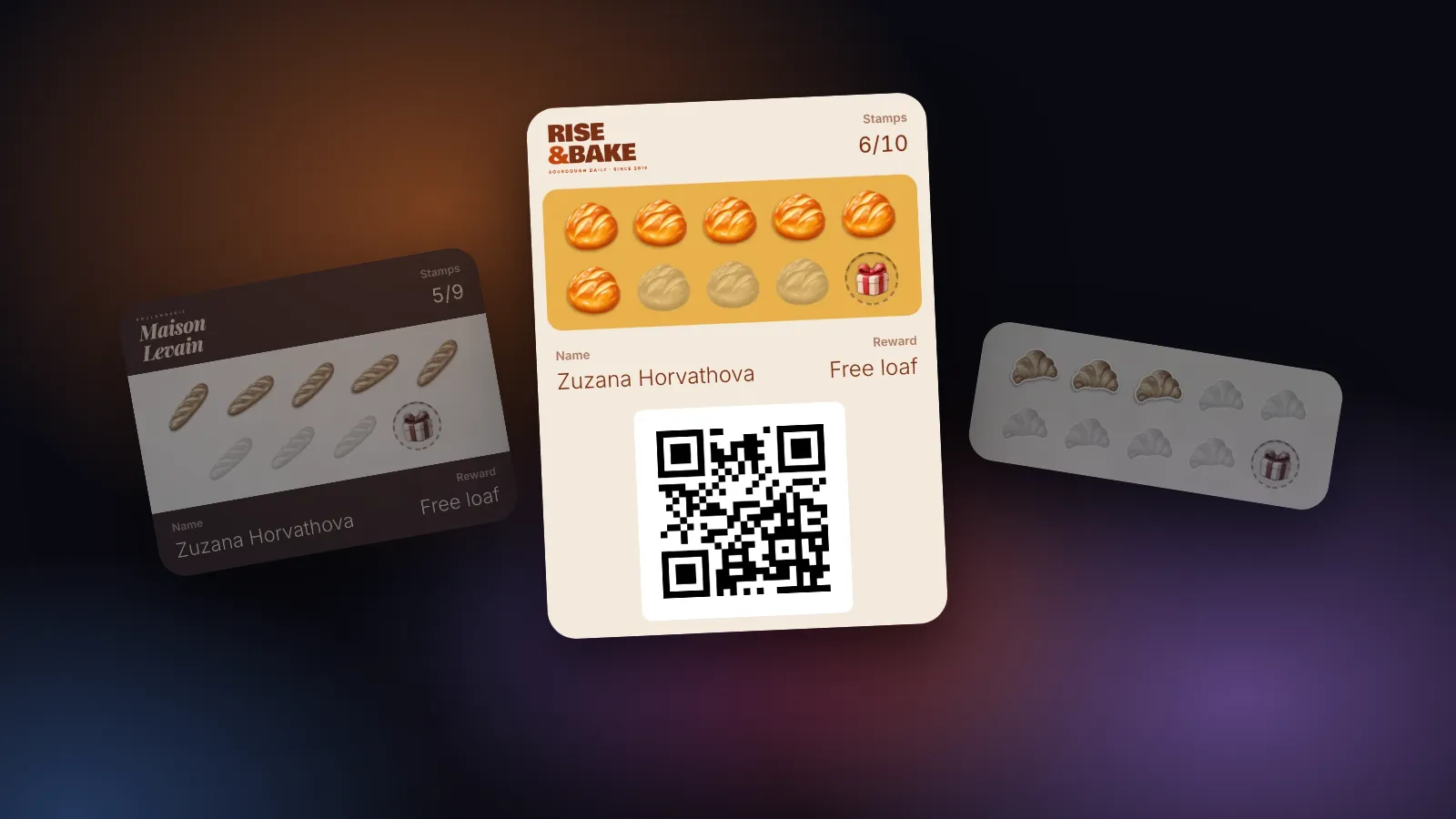
The whole switch fits in one picture: the six stamps on paper become six stamps in the phone, and the reward stays the same.
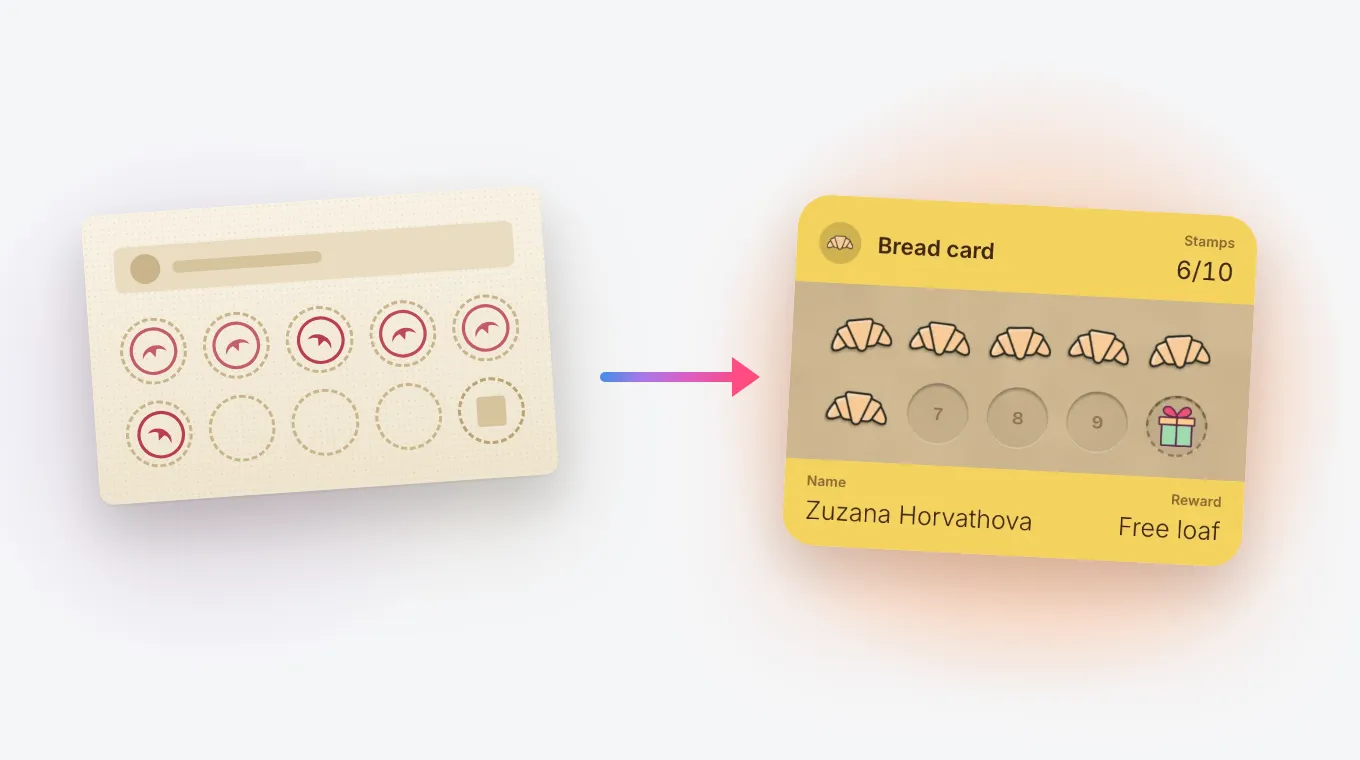
- Keep the card the same. Same number of stamps, same reward. If paper was 10 stamps for a free loaf, the digital card is 10 stamps for a free loaf. If you want a different reward, change it in March, once everyone is on the new card.
- Pick a start day and stop giving out paper. From that day nobody gets a new paper card. A customer without one scans the QR poster instead and gets the first stamp for today's purchase.
- Copy the stamps at the till. A regular hands over the paper card, scans the poster, and the card lands in Apple Wallet or Google Wallet. Staff then add the stamps the paper already shows. In Loyalius, a loyalty platform that puts stamp, points and cashback cards in Apple Wallet and Google Wallet, staff add those existing stamps right after the customer joins. The paper card goes into the drawer, not back into the customer's pocket, so it cannot be counted twice.
- Give the reward for a full paper card now. Do not move 10 stamps onto a new card. Hand over the loaf, then start the digital card with today's stamp.
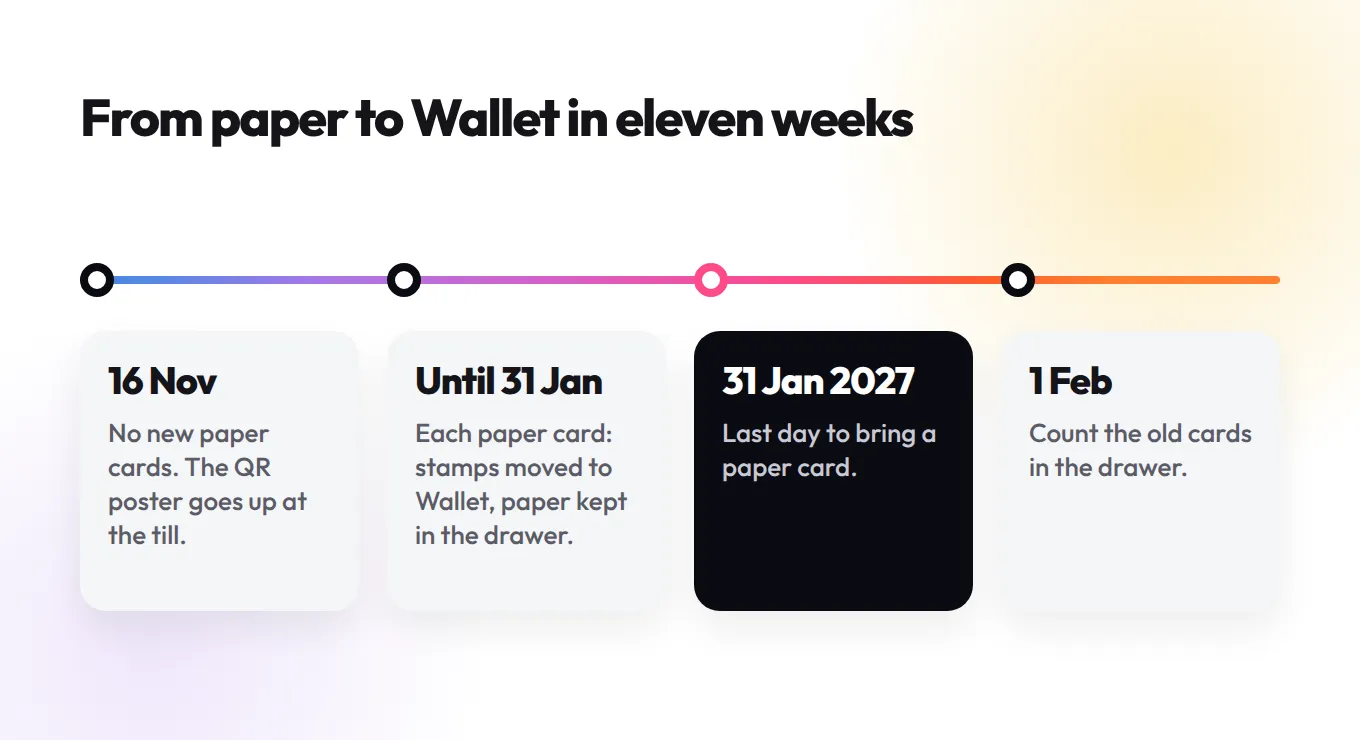
- Set one last day for paper, about ten weeks out. Write it on the poster and say it at the till. If you start this month, I'd pick 31 January 2027 rather than 31 December: it covers the Christmas weeks, when the once-a-month regulars come in, and the first weeks of January, when people who were away come back.
- Give staff one sentence. "We're moving the cards to your phone, and your stamps come with you." That sentence answers the only question most regulars have.
Here is the same plan on a calendar, for a bakery starting next Monday.
What do staff do with each paper card?
Staff follow one of five rules, decided before the first card crosses the counter, so nobody has to ask the owner on a busy Saturday.
| The customer brings | What staff do |
|---|---|
| A half-full paper card | Customer joins with the poster, staff add the same number of stamps, the paper card stays in the drawer |
| A full paper card | Give the reward now, start the digital card with today's stamp |
| Several half-full cards | Add them up, give a reward for every full 10, move the rest |
| No paper card | Customer joins with the poster, first stamp for today |
| A paper card after the last day | Move it anyway, once, with a smile |
The last row is my opinion, not a rule you have to follow. The end date exists so staff stop stamping paper, not to punish someone who spent January at their mother's.
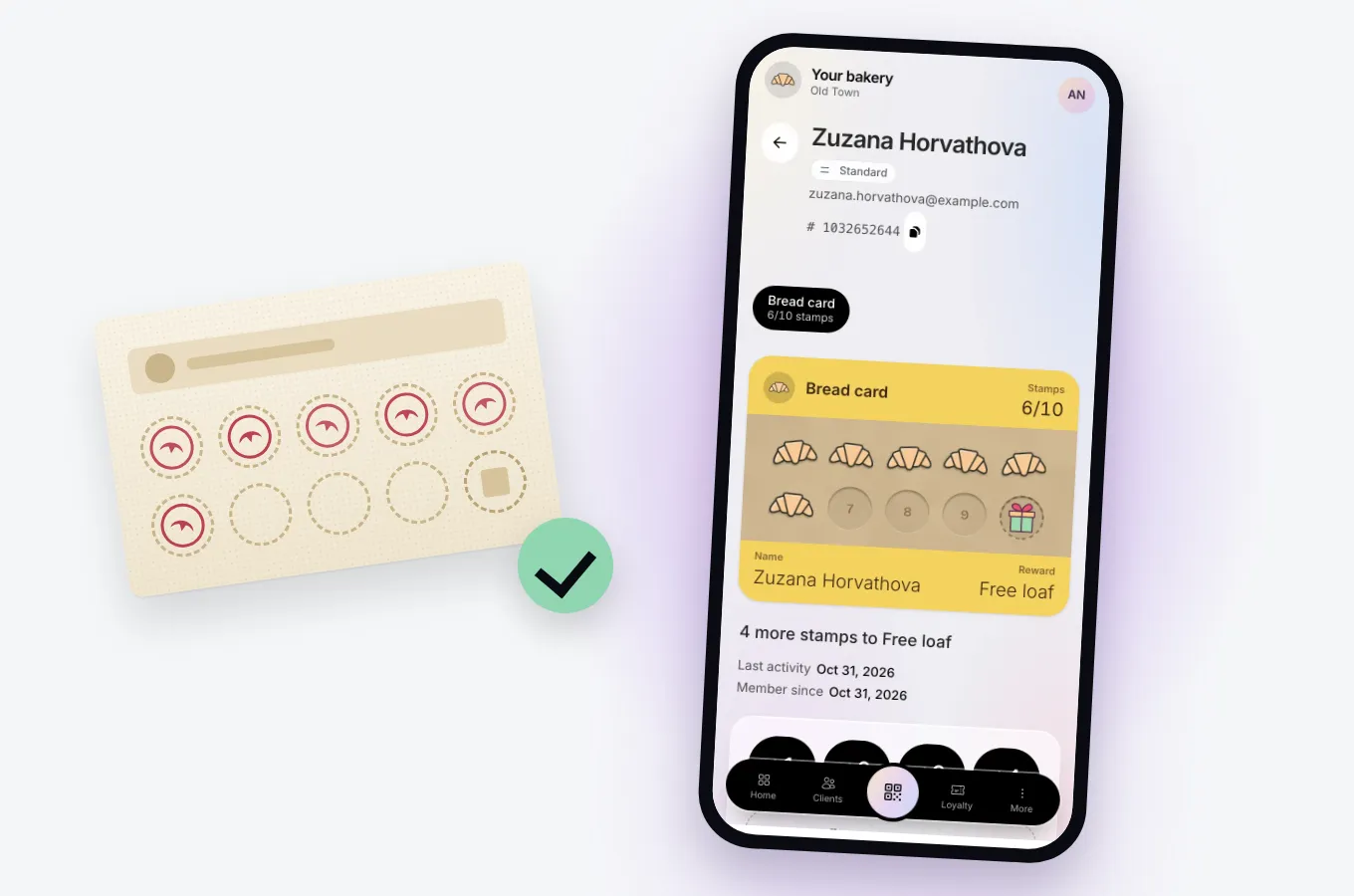
This is the screen staff see after a regular with a half-full paper card has joined: the bread card at 6 of 10, the same count the paper showed.
Someone brings five half-full cards. Is that fair?
Yes, I'd honour anything that carries your stamp. Paper stamp cards were always easy to fake with a rubber stamp from the stationery shop, and a pile of them can look suspicious, but the maths is on the customer's side. A free loaf costs you its ingredients and a few minutes of baking, not its shelf price, as the real cost of a loyalty reward shows, and the regular who saved five cards is exactly the person you want in the new programme. A digital stamp card ends the faking problem anyway: a stamp in Wallet can only be added by your staff or your till.
Short answers before you switch
Do customers need to download an app for a digital stamp card?
No. A digital stamp card in Apple Wallet or Google Wallet is added by scanning a QR code, with no app to install. Customers whose phone has neither get a web card in the browser that staff scan the same way, as explained in how a Wallet loyalty card works.
What about regulars who don't use a smartphone?
Let them finish their paper card, even after the last day. Most bakeries have a handful of customers like this, and a few paper cards in the drawer will not break anything. The point of the switch is to stop printing new paper, not to turn anyone away.
Should I give a bonus stamp for switching?
One welcome stamp for everyone who joins in the first weeks is enough, and it helps the people who had no paper card feel included. A bigger bonus teaches customers that the card is about gifts rather than about coming back.
The drawer tells you something
On 1 February, count the paper cards in the drawer. It is the first time you will know how many people actually carried your card. From then on the count is real, and it goes up with every new card in a phone. If it grows slower than you hoped, the card is rarely the reason; it is usually the ask at the till.
More stories
 Regular customers stopped coming? How to spot it early and win them back
Lost regulars rarely leave in anger. How to see who has gone quiet, why they drift away, and how to bring them back with one small reason and a date.
 Should you close your restaurant on slow days? Do this sum first
Quiet Mondays? Work out what the day really earns, how many guests would beat closing it, and how to fill it if it is worth keeping. A bistro example.
 How to get staff to upsell when they hate sounding pushy
Staff never recommend anything? Give them one product, one sentence and one moment at the till each week, then count. A bakery example with the sums.