
Opening a second location without emptying the first one
 Oleksii Andriiuk
Founder
Opening a second location is less about the new shop and more about where its first customers come from. A new branch rarely fills from the street alone: plan to move a small, counted group of regulars from your first location (only as many as it turns away), get the new address on the map before the doors open, and make every first visit end with a reason for a second one. That second visit decides how many months the new place loses money.
Here is a number that puts the street in perspective: at the end of 2025 there were 80,118 hair salons registered in Germany, according to the German hairdressers' association (press release of 29 June 2026). That is roughly one for every thousand people. Whatever you run, your new location opens next to someone people already go to. They will not switch because you put up a sign. They switch because someone they trust sends them, or because the first visit was good enough to come back.
I use a hair salon as the example below, because salons feel this most: clients follow people, not addresses. The same mistakes show up in bakeries, cafés and shops, and in chains opening their tenth branch.
Mistake 1: waiting for the street to find you
Most second locations open with a party, a flyer drop and a hope. Then the first Tuesday is empty.
Do this instead: start six weeks before. Google lets you add a future opening date to your Business Profile, and once it is verified, the profile shows up on Google 90 days before that date (Google Business Profile Help, as of November 2026). Put up photos of the fit-out, your hours and a post about the opening. Tell the neighbours who share your customers: the café opposite, the gym, the flower shop. A sign in the window with the opening date does more than a flyer, because people walk past it every day.
Mistake 2: moving your best regulars without doing the sum
The fastest way to fill a new salon is to move clients from the old one. It is also the fastest way to have two half-empty salons.
Do this instead: count how many bookings your first location turns away each week. Only that many visits can move without hurting it. Then look through your client list for the people who live or work nearer the new address and invite them personally, before opening, with a date and a named stylist. If the first salon is not full, do not move anyone: fill the new place from its own street.
How do you get customers to a new location?
You get customers to a new location from three places: your existing customers who live closer to it, its neighbours, and people searching nearby on Google Maps. The first group is small but certain. The other two take months. A plan for opening a second location should count each group separately, which is what the example below does.
A worked example: one salon, a second address
Take a hair salon with four chairs on a residential street, call it Salon Lipa. It is booked out on Fridays and Saturdays and turns away about 15 bookings a week. The owner opens a second salon with three chairs in another part of town, 2.5 km away, with two stylists. All numbers are example numbers, set at levels typical for a small European salon.
First, what the new salon has to do to stop losing money:
| Second salon, per month | Example |
|---|---|
| Rent, energy and other costs | 2,100 € |
| Two stylists, with employer costs | 5,800 € |
| Left from a 45 € visit after products and card fees | 39.60 € |
| Visits needed to break even | about 200 (46 a week) |
Clients come every six weeks, so 46 visits a week means about 276 regulars. Staff costs will not stand still either: Germany's minimum wage is 13.90 € an hour and rises to 14.60 € on 1 January 2027 (Federal Government, as of November 2026). If your team's pay sits close to it, your wage bill goes up in January.
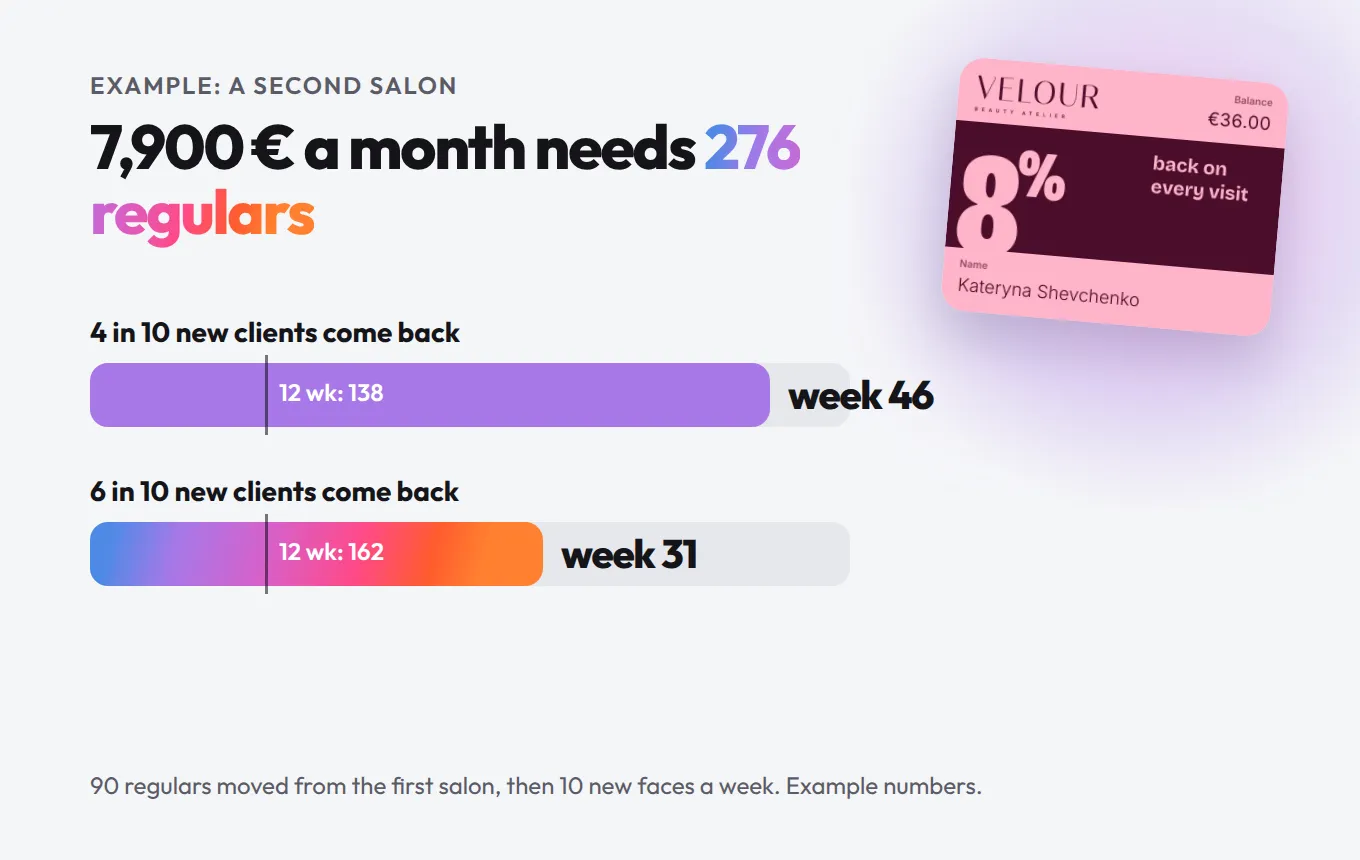
Where do 276 regulars come from? The first salon turns away 15 visits a week, which on a six-week cycle is 90 regulars. Those 90 can move. Everyone else has to be new. Say the window, the map listing and the neighbours bring 10 new faces a week. What matters is how many of them come back:
| 4 in 10 return | 6 in 10 return | |
|---|---|---|
| Moved from the first salon | 90 | 90 |
| New regulars a week | 4 | 6 |
| Regulars after 12 weeks | 138 | 162 |
| Weeks to 276 regulars | about 46 | about 31 |
Same street, same rent, same stylists. Raising the return rate from four in ten to six in ten gets the new salon to break even about 15 weeks sooner, which is three and a half months of losses it does not have to carry. Put your own numbers into the two tables: rent, team, average visit, cycle. The answer is rarely as bad as it feels in week two, and rarely as quick as the business plan said.
Mistake 3: an opening discount on the first visit
Half price on opening week fills the chairs with people who came for half price. Many of them will not pay full price next time.
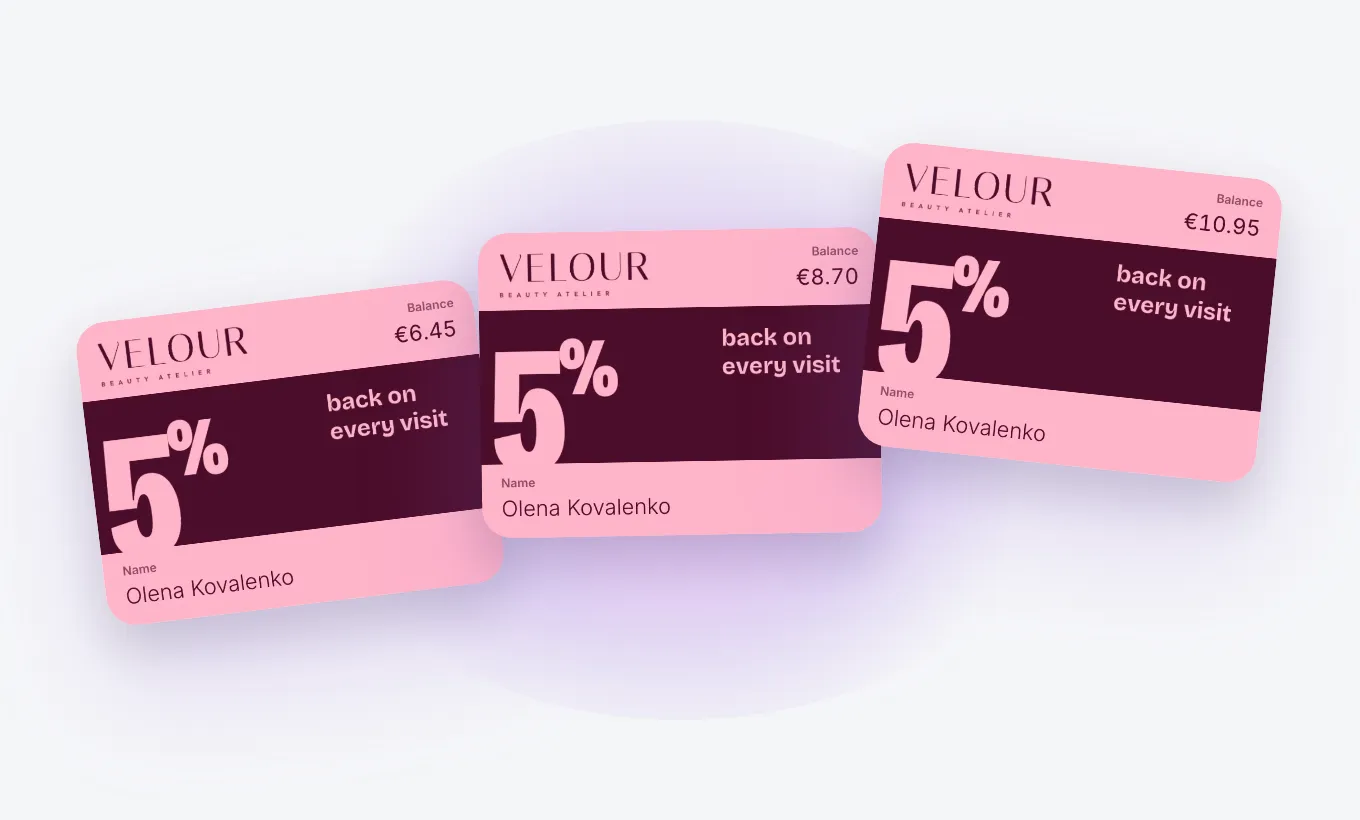
Do this instead: give the first visit at full price and the reward for the second one. Book the next appointment before the client leaves the chair, and give them a reason to keep it: a balance on a card they can spend next time, a free treatment on visit two. I wrote more about turning first-time visitors into repeat customers; a new location is that problem at full volume.
Mistake 4: sending only new staff to the new place
A new team in a new place, with no one the moved regulars know, gives those 90 people no reason to stay.
Do this instead: put at least one familiar face in the new location for the first eight weeks, ideally the stylist whose clients live nearby. In a café or bakery, the same goes for the person who knows the regulars' orders. Hire the new person into the old location, where the team can carry them.
Mistake 5: two locations that do not know each other
A customer who buys at one branch and is a stranger at the other notices it. So does the one whose card only works in one place.
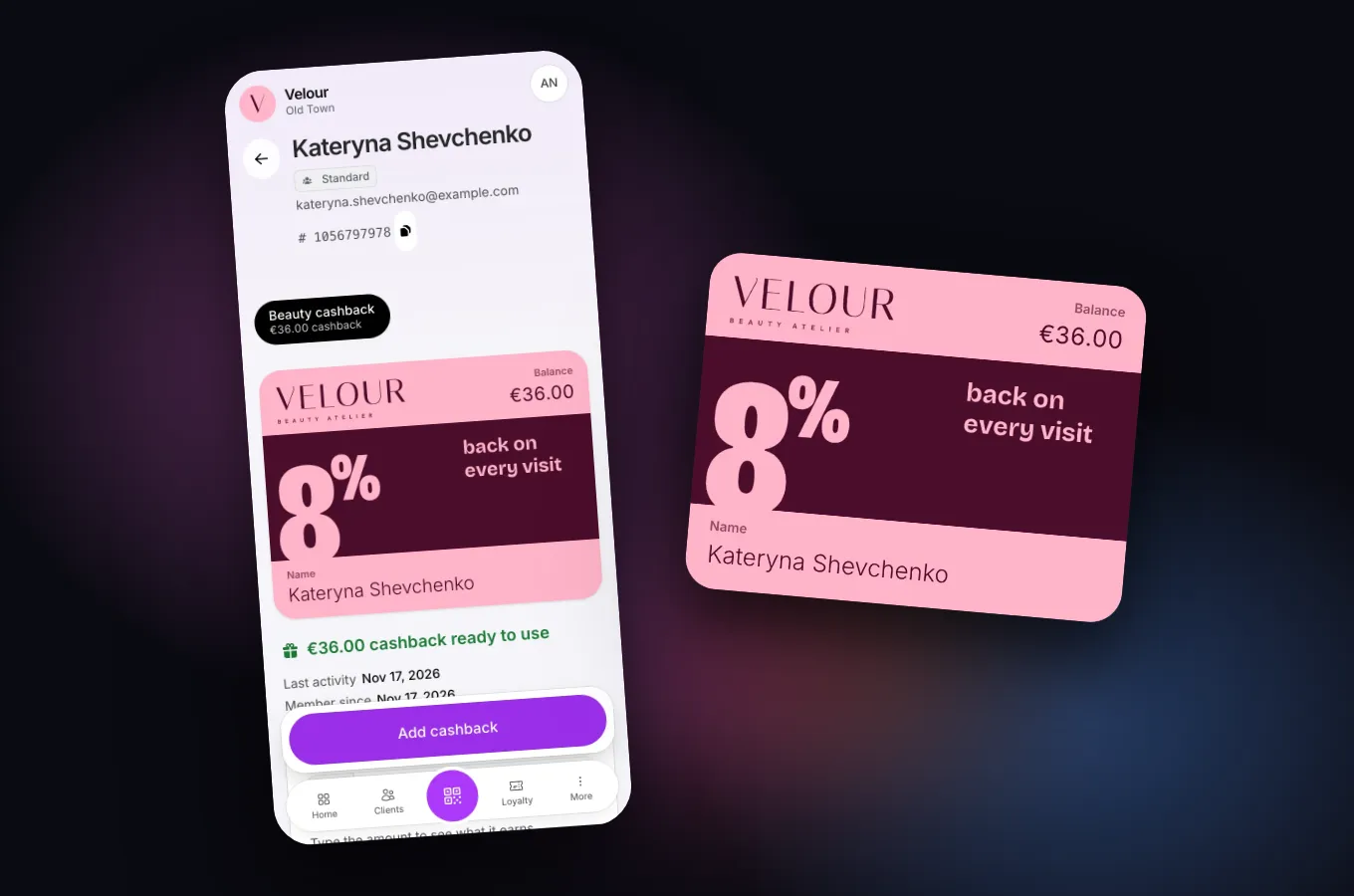
Do this instead: same prices, same rules and one loyalty card that counts at both addresses. With Loyalius, a loyalty platform that puts stamp, points and cashback cards in Apple Wallet and Google Wallet, one card works across all your branches, and staff add the visit from either till. Our loyalty program for beauty and hair salons shows how a cashback card like this is set up. If you run more than a handful of shops, the rollout plan for multiple locations covers who decides what.
Mistake 6: judging the branch in week four
Week four is too early for any verdict. Most of the people who will become regulars have not had their second visit yet.
Do this instead: count three numbers every Monday: new faces, second visits, and regulars. Draw the line from the worked example for your own place and check whether you are above it or below it. If after three months one number lags clearly, the advice on diagnosing a store that underperforms tells you where to look.
Questions about opening a second location
How far apart should two locations be?
Far enough that each has its own street of customers, close enough that you or a manager can get between them in half an hour. If most of your current clients would pass both, the second shop will mostly take visits from the first.
How long does a new location take to become profitable?
It depends on your rent, team and how often customers come. In the example above, it takes seven to eleven months. Do the sum before you sign the lease, and keep enough cash to cover the gap at the slower rate.
Should the second location have the same name?
Yes, in most cases. The name is the reason your existing customers trust the new place, and it is the name people search for on Google Maps. A different name only makes sense if the second shop sells something different.
Open quietly, celebrate in week six
I would open the doors on a normal weekday with no fuss, let the team find its rhythm for a few weeks, and throw the opening party in week six. By then the first new clients are coming back for their second visit, and the people who walk in for a glass of something see a salon that already looks busy. That is a much better first impression than a launch day with balloons and nobody in the chairs on Tuesday.
More stories
 How to stop no-shows at your barbershop without scaring off new clients
Deposits stop no-shows but can cost you more in lost bookings. The sums for a three-chair barbershop, and who should really pay up front.
 Roadworks outside your shop? How to keep your regulars until the street reopens
The diggers take your passing trade, but your regulars can stay. A plan for the months of roadworks, with the sums for one café.
 January slump in retail: a plan for small shops that starts in December
Retail sales fall by up to a fifth after Christmas, and February is even quieter. A dated plan for small shops that starts with December's gift buyers.